
How TapLook and BabaTap Help Seniors Live Independently at Home in Medicine Hat. Growing older does not necessarily mean giving up the comfort, privacy, and familiarity of home. For many older adults in Medicine Hat, Alberta, remaining at home can be an important part of maintaining independence, daily routines, personal connections, and a sense of control over everyday life. However, living independently may become more difficult when seniors need help with transportation, household tasks, personal appointments, beauty services, errands, shopping, companionship, or other non medical activities. This is where practical support from trusted community based services can complement formal health and continuing care resources. Home Care for Seniors may refer to a broad range of support depending on the provider, while government funded home care can involve professional or personal care based on an individual assessment. Alberta Health Services states that its Home and Community Care system is designed to help people live at home independently for as long as possible, with services coordinated according to assessed needs. In Medicine Hat, families may therefore consider several layers of support rather than assuming that every senior who needs assistance requires residential care. TapLook and BabaTap can fit into this broader independence focused approach by helping seniors manage everyday non medical needs at home and in the community. TapLook can support seniors with convenient personal beauty and wellness related services, while BabaTap can provide practical companion style assistance such as errands, grocery shopping, household help, and everyday support. Together, these types of services can help reduce the pressure placed on family caregivers and make it easier for an older adult to continue living safely and comfortably in a familiar environment. For families researching Senior Home Care in Medicine Hat, understanding the difference between medical home care, personal support, companion services, transportation, and lifestyle assistance is essential. The goal is not simply to add more services, but to build the right combination of support around the senior so that independence can continue for as long as it is appropriate and safe.

Aging in Place in Medicine Hat
Aging in place generally means remaining in a familiar home or community while receiving the health and social support necessary to live safely and independently.
The Government of Alberta describes aging in community as having the health and social supports needed to live safely and independently in one’s home or community for as long as a person wishes and is able.
This concept is particularly important because independence is rarely lost all at once.
A senior may still be able to prepare meals, manage medications, communicate with family members, make decisions, and maintain a household, but certain everyday activities may gradually become harder.
For example, a senior might be able to live alone but no longer feel comfortable driving at night.
Another person may be perfectly capable of preparing breakfast but struggle with grocery shopping.
Someone else may manage household responsibilities but have difficulty arranging transportation to appointments, visiting a salon, or maintaining regular social activities.
These situations do not automatically mean that a senior needs institutional care.
Instead, they may indicate that additional support should be introduced into the person’s routine.
This is where the concept of Senior Home Care becomes broader than medical treatment.
Families often search for Home Care for Seniors when what they actually need is a combination of practical assistance, companionship, transportation, personal services, and formal healthcare support.
Understanding those differences can help families make more appropriate arrangements.
Understanding Senior Home Care in Medicine Hat
The term Senior Home Care can describe many different types of assistance, but families should carefully determine what a particular provider actually offers.
Alberta Health Services provides formal Home Care Services for people with medical needs who require support to remain in their own homes or communities. Services can include nursing, personal care, respite, palliative care, wound care, and other assessed supports.
These services are different from ordinary household assistance or lifestyle support.
A senior may simultaneously receive formal healthcare support while using private services for non medical needs.
For example, an older adult could receive professional healthcare assistance through Alberta Health Services while using a companion service for grocery shopping or household tasks.
This distinction matters because a companion does not replace a registered nurse, physician, therapist, or other healthcare professional.
Instead, companion support can address the everyday activities that fall outside clinical care.
BabaTap can be positioned within this non medical support category.
The purpose is to help seniors with practical aspects of everyday living so that ordinary responsibilities do not become unnecessary barriers to remaining at home.
How BabaTap Supports Independent Living
BabaTap is designed around the idea that seniors may need help with everyday life without necessarily needing full time medical care.
This distinction can be particularly valuable for families who are trying to support an aging parent from a distance.
Consider a senior who lives independently in Medicine Hat.
The person may still manage personal decisions, communicate with relatives, prepare simple meals, and maintain a familiar home.
However, carrying groceries, completing errands, doing certain household tasks, or getting through a busy day may become increasingly tiring.
BabaTap can help fill some of these practical gaps.
Grocery Shopping Assistance
Grocery shopping is one of the most common everyday responsibilities that can become difficult with age.
Walking through a large store, carrying bags, loading groceries into a vehicle, and bringing everything into the home can require more physical effort than some seniors can comfortably manage.
Companion based grocery assistance can reduce this burden.
Instead of asking an older adult to handle every part of the process independently, a companion can provide practical assistance according to the agreed service arrangement.
This can help a senior maintain access to preferred foods and familiar shopping routines.
It can also reduce the need for family members to make frequent emergency trips simply because groceries are needed.
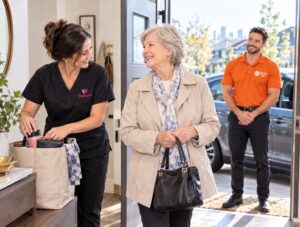
Household Assistance
A clean and organized home can contribute to comfort and confidence.
Yet some household tasks become increasingly demanding as mobility, stamina, or balance changes.
BabaTap can support seniors with everyday household assistance such as light cleaning and other practical tasks that help maintain the home environment.
This should not be confused with skilled nursing or medical care.
The value is in helping with ordinary responsibilities that may otherwise consume a senior’s limited energy.
For some families, even a few hours of practical support can make the difference between feeling overwhelmed and maintaining a manageable weekly routine.
Errands and Everyday Tasks
Aging does not eliminate the need to run errands.
Seniors may need to pick up household items, visit local businesses, collect groceries, or take care of routine personal responsibilities.
When driving becomes less convenient, these tasks can become even more complicated.
A companion service can provide practical support around these activities, depending on the services available and the senior’s specific needs.
The goal is not to take control away from the senior.
Instead, the goal is to make it easier for the senior to continue participating in everyday life.
That distinction is central to meaningful independence.
Companion Care and the Importance of Human Connection
Physical assistance is only one part of aging independently.
Social connection can also be extremely important.
A senior who lives alone may have everything needed from a practical perspective but still experience long periods without meaningful interaction.
Companion Care for Seniors focuses on the human side of everyday support.
A companion can provide conversation, presence, encouragement, assistance with ordinary activities, and social interaction.
This type of support may be particularly useful for seniors whose adult children work full time or live in another city.
Family members may care deeply about their parents but cannot always be physically present every day.
A companion service can help bridge some of that practical gap.
The objective is not to replace family relationships.
Rather, it can provide another layer of support around the senior’s existing family and community network.
How TapLook Adds Personal Care and Lifestyle Support
Independence is not only about groceries, cleaning, and transportation.
Personal appearance, grooming, and self confidence can also influence how seniors feel about themselves and their daily lives.
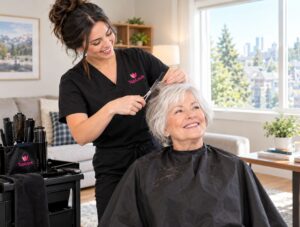
TapLook can support seniors through convenient personal beauty and wellness services that can be arranged around the client’s needs.
For an older adult who finds it difficult to travel to a salon or beauty location, having appropriate services brought closer to home can make personal care more accessible.
This can be especially useful when transportation is inconvenient or when a senior simply prefers the privacy and comfort of home.
Beauty Services Can Support Confidence
Personal grooming may seem like a small part of daily life, but it can have significant emotional and social value.
Getting a haircut, manicure, pedicure, or another appropriate personal service can help seniors maintain routines they have enjoyed for many years.
For some people, these routines are connected with identity and self expression.
For others, they provide an opportunity to prepare for family gatherings, birthdays, community events, or ordinary social activities.
TapLook’s role is therefore complementary to practical senior support.
It does not replace healthcare.
Instead, it can contribute to the lifestyle side of independent living.
Creating a More Complete Support System for Seniors
One of the biggest mistakes families can make is treating senior support as a single service.
In reality, an older adult may need different kinds of assistance at different times.
For example, a senior might need:
Professional healthcare support from an appropriate healthcare provider
Transportation to appointments or community destinations
Grocery shopping assistance
Light household assistance
Companionship
Personal beauty services
Family involvement
Emergency planning
Home safety adjustments
These services do not all have to come from one provider.
In fact, separating medical, transportation, companion, and lifestyle needs can make the overall support plan clearer.
Alberta Health Services specifically notes that Home and Community Care does not provide every service a client may need and can help clients navigate other community supports.
That creates an important opportunity for complementary services such as BabaTap and TapLook.
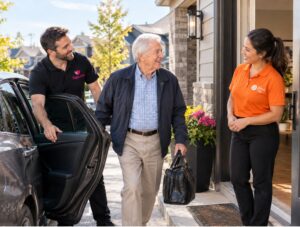
When Seniors Return Home After a Hospital Stay
Another important situation occurs when an older adult is discharged from a hospital.
A senior may be medically cleared to leave the hospital but still need practical help returning home.
This is where families need to distinguish between medical transportation and non medical transportation.
A non medical hospital discharge transportation service is intended to help the patient travel from the hospital to home when specialized medical transport is not required.
In many discharge situations, the transportation provider may need to meet the patient at the hospital unit or ward rather than simply waiting at the front entrance.
The process can involve going to the appropriate hospital department, meeting the patient after discharge arrangements are completed, helping the patient leave the unit, and accompanying them toward the vehicle.
This is different from simply picking someone up from a regular curbside location.
Some facilities may instead arrange for the patient to meet transportation staff in a lobby or designated waiting area.
The exact procedure depends on the hospital, discharge instructions, patient condition, and transportation provider.
For a senior returning home, reliable transportation is only the first part of the transition.
The more important question may be what happens after the vehicle arrives.
Will someone be available to help the senior settle back into the home?
Are groceries available?
Is the home reasonably organized?
Can the senior manage ordinary daily activities?
Does the family need temporary companion assistance?
These questions show why transportation and in home support can work together as complementary services.
Medicine Hat’s Existing Community Health Framework
Medicine Hat already has healthcare and rehabilitation resources designed to help older adults remain connected to community living.
Medicine Hat Regional Hospital’s Geriatrics and Continuing Care South Zone services include geriatric assessment, rehabilitation, support for re entering the community, and a Home Rehabilitation Team for adults experiencing a recent decline in independence, function, or mobility.
This illustrates an important principle.
Independent living is not necessarily about refusing assistance.
It is about using the appropriate assistance to maintain the highest practical level of independence.
A senior may receive rehabilitation while also using companion support.
A family may coordinate formal home care while arranging grocery assistance.
A senior may use transportation support while continuing to live in the same home.
TapLook and BabaTap can therefore be viewed as complementary services within a larger network of support rather than replacements for professional healthcare.
The Difference Between Medical Home Care and Companion Support
Families searching online can easily encounter overlapping terminology.
Home Care for Seniors may refer to professional healthcare services, private personal assistance, companion services, housekeeping, or a combination of these depending on the provider.
That is why families should ask direct questions before arranging care.
Does the provider offer medical care?
Does the provider employ healthcare professionals?
Does the service include personal care?
Does it provide companionship?
Can it help with groceries?
Can it assist with household tasks?
Does it provide transportation?
Can services be scheduled for only a few hours?
What happens if the senior’s needs change?
Clear answers help families select support that matches the actual situation.
BabaTap is particularly relevant when the senior needs practical, non medical assistance that makes ordinary life easier.
TapLook addresses another part of independent living by making personal beauty and lifestyle services more convenient.
Together, they can contribute to a support structure that respects the senior’s preferences and routines.
Building a Practical Independent Living Plan for Seniors in Medicine Hat
The most effective approach to independent living is rarely about finding one service that does everything. Instead, families can look at the senior’s daily routine and identify the specific areas where support would make life easier while allowing the older adult to remain involved in decisions.
For a senior living in Medicine Hat, this may mean combining formal healthcare services with non medical assistance, transportation, companionship, household support, and personal services. The resulting plan can be flexible rather than permanent. Some seniors may need only a few hours of assistance each week, while others may need more frequent support after a hospitalization, injury, or significant change in mobility.
TapLook and BabaTap can contribute to this type of flexible support model.
BabaTap can address practical everyday needs such as errands, grocery shopping, household assistance, and companionship. TapLook can make personal beauty and lifestyle services more accessible by bringing appropriate services closer to the senior’s home. Neither service should be considered a substitute for professional medical care when clinical assistance is required. Instead, they can complement healthcare and community resources by addressing the everyday activities that help a senior maintain a familiar lifestyle.
A Few Hours of Help Can Make a Significant Difference
Not every senior needs someone in the home for an entire day.
Sometimes the challenge is concentrated around particular activities.
A senior may be independent during most of the week but struggle with grocery shopping on weekends. Another may need assistance with household tasks every Tuesday. Someone else may appreciate a companion for errands or social activities.
This is one reason flexible support can be valuable.
Rather than assuming that an older adult needs full time care, families can identify the specific activities that are becoming difficult.
For example, a weekly arrangement could include grocery assistance, light household support, and companionship. Another arrangement might focus on errands and transportation coordination.
This approach can help preserve the senior’s existing routines.
The senior remains the person making everyday choices while receiving assistance where it is genuinely useful.
Supporting Seniors Who Live Alone
Living alone does not automatically mean that an older adult cannot live independently.
Many seniors successfully live alone for years.
However, living alone can make ordinary problems more difficult to solve.
If a senior cannot carry groceries, there may be no one nearby to help.
If a household task becomes difficult, it may remain unfinished.
If transportation becomes inconvenient, the senior may start skipping activities.
If social interaction decreases, the person may spend increasingly long periods alone.
These challenges can gradually reduce independence even when the senior remains capable of making decisions and managing many aspects of daily life.
BabaTap can provide an additional layer of practical and social assistance.
Home Care for Seniors is often discussed as though it means continuous personal care, but independent living can involve much more than medical or personal care. Practical support, companionship, errands, household assistance, and access to community activities can all contribute to a senior’s ability to continue living at home.
Maintaining Familiar Daily Routines
One of the benefits of remaining at home is the ability to maintain familiar routines.
A senior knows where everything is.
They may have a preferred grocery store, favorite coffee shop, regular appointments, familiar neighbors, and established relationships within the community.
Moving away from that environment can represent a major change.
Practical support can sometimes help seniors continue participating in those routines.
A companion can assist with an errand rather than completing every task on behalf of the senior.
A helper can assist with groceries while allowing the senior to choose what to purchase.
A personal beauty professional can provide a service at home instead of requiring a difficult trip across town.
These small forms of assistance can support autonomy.
The objective is not to make the senior dependent on a helper for every activity.
Instead, the objective is to remove unnecessary barriers.
TapLook and the Personal Side of Aging at Home
Personal care is sometimes overlooked when families create a senior support plan.
Healthcare needs understandably receive significant attention.
Food, medication, transportation, and household safety may also become priorities.
But quality of life matters too.
A senior may want to maintain a familiar grooming routine, prepare for a family celebration, or simply enjoy the experience of receiving a beauty service.
TapLook can help make selected beauty and personal wellness services more convenient for seniors who prefer services in the comfort of their home.
This can be particularly useful for people who find regular salon visits difficult because of transportation challenges, mobility limitations, scheduling issues, or personal preference.

Personal Grooming and Social Confidence
Looking after personal appearance can remain important at every age.
A haircut or other beauty appointment can be part of a person’s normal routine.
For seniors, maintaining that routine may help them feel prepared for social activities and family events.
It can also create a positive sense of normalcy.
The service itself may be relatively simple, but the convenience of receiving it at home can remove one more obstacle from the senior’s schedule.
TapLook therefore fits naturally into a broader independent living strategy.
The focus is not medical treatment.
It is accessibility, convenience, personal choice, and lifestyle.
BabaTap and the Practical Side of Aging at Home
Where TapLook can address personal beauty and lifestyle needs, BabaTap can help with practical everyday activities.
This distinction makes it easier for families to understand how the two services can complement each other.
Imagine a Medicine Hat senior who still enjoys preparing meals and deciding what groceries to buy but finds carrying heavy bags difficult.
The senior does not necessarily need someone to take over meal preparation.
The person may simply need assistance with shopping.
Another senior may be able to maintain a home but find certain cleaning tasks physically tiring.
Light household assistance may provide enough support to keep the home manageable.
Another person may simply benefit from regular conversation and help with errands.
Companion services can address that need without turning the senior’s entire routine into a care schedule.
This type of support can be especially useful for families who want to help an aging parent while respecting the parent’s independence.
Family Caregivers Need Support Too
Family members often become informal caregivers when an older relative begins experiencing difficulties at home.
Adult children may coordinate appointments, shop for groceries, clean the home, provide transportation, make phone calls, and check on their parents.
At first, this may be manageable.
Over time, however, these responsibilities can become difficult to combine with employment, children, travel, and other family obligations.
A support service can reduce some of these practical responsibilities.
That does not mean the family becomes less involved.
Instead, family members may have more time to focus on the relationship itself rather than spending every visit completing household tasks.
A daughter might spend an afternoon talking with her mother instead of cleaning the entire house.
A son might use his visit to have lunch with his father instead of spending the entire time grocery shopping.
This distinction can improve the quality of family interaction.
Companion Support Is Different From Clinical Care
Families should also understand the limits of companion support.
A companion is not automatically a nurse.
Companion assistance should not be presented as a replacement for professional assessment, medication management, clinical monitoring, wound care, or other healthcare services.
If a senior has medical needs, families should contact an appropriate healthcare provider or Alberta Health Services.
Alberta Health Services explains that Home and Community Care services are based on assessment and may include healthcare professionals and other supports according to individual needs. (albertahealthservices.ca)
This creates a useful division of responsibilities.
Professional healthcare addresses clinical needs.
Complementary services can address practical, social, transportation, and lifestyle needs.
Supporting a Senior After Hospital Discharge
Hospital discharge is one of the moments when families may suddenly realize that an older adult needs more support than before.
A patient may be medically ready to leave the hospital but still feel tired, less mobile, or uncertain about managing the trip home.
Transportation becomes particularly important.
A non medical hospital discharge transportation provider may coordinate pickup directly with the hospital.
In the common arrangement described by RideSenior, the driver or transportation professional may go to the patient’s hospital ward or unit, meet the patient there after discharge arrangements are completed, and accompany the patient from the unit toward the vehicle.
This is important because some hospitals do not simply release a patient by having a transportation provider wait outside.
The patient may need to complete discharge paperwork and be released from the appropriate hospital unit first.
The transportation provider’s role is therefore more involved than an ordinary curbside ride.
In other situations, the hospital may direct the patient to a lobby or designated waiting area where the transportation provider can meet them.
The exact process should always be confirmed with the hospital and transportation provider in advance.
Once the senior arrives home, another question begins.
Who will help with groceries?
Who can help with basic household tasks?
Who can provide companionship during the first few days?
Who can help the family coordinate everyday needs?
This is where a transportation service and companion support may form complementary parts of a larger transition plan.
Transportation gets the senior home.
Appropriate in home support can then help make returning home more manageable.
A Sample Independent Living Support Plan
Every senior’s circumstances are different, but a hypothetical weekly plan illustrates how services can work together.
Consider a Medicine Hat senior who lives independently and does not require continuous medical supervision.
On Monday, the senior handles personal routines independently.
On Tuesday, BabaTap provides assistance with grocery shopping and selected household tasks.
On Wednesday, the senior attends a medical appointment using an appropriate transportation option.
On Thursday, the senior has time for family, hobbies, or community activities.
On Friday, a companion visit may provide social interaction and assistance with errands.
Later in the month, the senior may arrange a TapLook beauty service at home.
This is not a fixed prescription.
It is simply an example of how support can be built around specific needs rather than replacing independence entirely.
If circumstances change, the plan can change as well.
After a hospital stay, support might temporarily become more frequent.
As mobility improves, assistance may be reduced.
This flexibility can be particularly useful for seniors who do not need residential care but benefit from occasional assistance.
What Families Should Consider Before Choosing Support
When searching for services for an aging parent in Medicine Hat, families should look beyond the service name.
The most important questions concern what the provider actually does.
Ask whether the service is medical or non medical.
Ask which tasks the provider can perform.
Ask whether transportation is available.
Ask whether assistance can be scheduled for a few hours.
Ask how cancellations and schedule changes are handled.
Ask whether the provider works with families who live outside Medicine Hat.
Ask whether the service can accommodate recurring weekly arrangements.
Ask what happens if the senior’s needs become more complex.
For hospital discharge transportation, families should also ask where the driver meets the patient.
Will the provider come to the hospital ward?
Does the hospital require the patient to complete discharge paperwork before transportation begins?
Can the provider accompany the patient from the unit to the vehicle?
Is lobby pickup available when permitted?
These questions are particularly important for older adults who may have difficulty navigating a hospital independently.
Home Care for Seniors Should Be Based on Actual Needs
The phrase Home Care for Seniors can sometimes create the impression that every older adult needs the same type of support.
In reality, senior needs can vary significantly.
One person may need professional nursing.
Another may need rehabilitation.
Another may need assistance with personal care.
Someone else may primarily need companionship and transportation.
Another senior may simply need help with groceries and household responsibilities once a week.
The right support structure should therefore begin with the person’s actual circumstances.
Families should avoid assuming that a senior needs more care than necessary.
At the same time, they should not underestimate changing needs.
A senior who was independent six months ago may require additional assistance after a hospitalization, fall, illness, or change in mobility.
Regular communication between the senior, family, healthcare professionals, and service providers can help identify these changes.
Combining Companion Care With Other Services
Companion Care for Seniors can become especially valuable when it is integrated into a broader support system.
Companionship can be combined with errands.
A grocery trip can become an opportunity for social interaction.
A household assistance visit can include conversation.
A transportation arrangement can help a senior remain connected to appointments and community activities.
This integrated approach recognizes that independence involves more than physical survival.
People also need connection, routine, choice, dignity, and opportunities to participate in their communities.
For seniors in Medicine Hat, maintaining these elements can make home life more meaningful.
Why Independence Does Not Mean Doing Everything Alone
Independence is sometimes misunderstood as complete self sufficiency.
But an older adult can remain independent while receiving assistance.
A person can choose where to live while receiving grocery help.
They can make their own decisions while having a companion for errands.
They can manage their own schedule while using transportation.
They can remain responsible for their personal choices while receiving appropriate professional healthcare.
The presence of assistance does not automatically mean independence has disappeared.
In many situations, assistance can actually help preserve independence by allowing the senior to continue doing the things they value.
That is the fundamental principle behind a practical aging at home strategy.
Planning Ahead Before a Crisis Happens
Families often begin searching for senior support after something goes wrong.
A hospitalization, missed appointment, difficult grocery trip, or sudden mobility problem can force decisions to be made quickly.
Planning earlier can make the process less stressful.
Families can identify available community resources, discuss preferences with the senior, establish transportation options, and determine which everyday activities might require assistance.
The senior should ideally participate in these conversations.
After all, the purpose of support is to help the person live according to their preferences, not simply to make decisions on their behalf.
A plan can also be adjusted over time.
The services a senior needs at 70 may be different from those needed at 80.
Temporary assistance may be enough after a hospital discharge.
Longer term support may become appropriate later.
TapLook, BabaTap, and a More Connected Approach to Independent Living
The idea of independent living in Medicine Hat does not need to be limited to medical care.
A senior’s ability to remain at home can depend on many everyday factors.
Can they access groceries?
Can they manage household responsibilities?
Can they attend appointments?
Can they maintain personal grooming?
Can they interact with other people?
Can they get transportation when they need it?
Can family members provide enough support without becoming overwhelmed?
These questions demonstrate why different types of services can complement one another.
BabaTap can help address practical everyday activities and companionship.
TapLook can make selected beauty and lifestyle services more accessible at home.
RideSenior can address transportation needs, including non medical transportation for seniors returning home after hospital discharge.
Formal healthcare services can address clinical and assessed care requirements.
Together, these different layers can create a more complete support environment.
Final Thoughts for Medicine Hat Seniors and Families
Living independently at home can remain a realistic goal for many seniors when the right support is available at the right time.
The key is recognizing that independence does not require an older adult to handle every responsibility without assistance.
Sometimes a few hours of practical help can prevent everyday tasks from becoming overwhelming.
Sometimes companionship can make living alone feel more connected.
Sometimes transportation can keep a senior involved in appointments and community life.
Sometimes an at home beauty service can preserve an important personal routine.
And sometimes formal healthcare support is necessary when a senior’s needs become clinical or more complex.
For families researching Senior Home Care in Medicine Hat, the first step is to identify what the senior actually needs.
Formal healthcare requirements should be addressed through appropriate healthcare resources. Practical household and companion needs can be addressed through suitable non medical services. Personal lifestyle needs can be considered separately, allowing the senior to maintain routines and preferences wherever possible.
Companion Care for Seniors can provide an important layer of everyday support without taking away the senior’s role in making decisions.
Likewise, Home Care for Seniors should be understood according to the specific services being offered, because medical home care, personal assistance, companion services, transportation, and household help are not interchangeable.
TapLook and BabaTap can therefore be part of a broader independent living strategy for seniors in Medicine Hat. Their role is not to replace physicians, nurses, rehabilitation professionals, or formal healthcare programs. Instead, they can help address practical and lifestyle needs that exist alongside healthcare.
For a senior who wants to remain at home, these seemingly ordinary needs can matter greatly.
A stocked refrigerator.
A manageable home.
A reliable ride.
A friendly conversation.
A familiar grooming routine.
A helping hand after returning from the hospital.
Each individual form of assistance may appear small. Together, however, they can help create a home environment in which an older adult has more opportunity to continue living with familiarity, dignity, choice, and connection.
The most effective support plan is therefore one that starts with the senior as a person rather than simply focusing on a list of services. By understanding what the individual can do independently, what has become difficult, and what matters most to their quality of life, families can build a flexible network of support around them.
For Medicine Hat seniors and their families, that approach can make the journey of aging at home more organized, more practical, and more responsive to changing everyday needs.
Bài viết liên quan: