
How TapLook and BabaTap Help Seniors Live Independently at Home in Regina. As families in Regina, Saskatchewan look for ways to help aging parents remain comfortable, active, and independent at home, many are exploring practical solutions that go beyond traditional healthcare. The question is often not whether a senior needs to leave home, but how family members can make everyday life easier while allowing an older adult to continue living in a familiar environment. This is where Home Care for Seniors, Companion Care for Seniors, senior home care, transportation assistance, personal grooming support, household help, and everyday companionship can become important parts of an independent living plan. Regina is home to many older adults who value their neighborhoods, homes, routines, and connections with the local community. From Cathedral and Lakeview to Douglas Park, Whitmore Park, Harbour Landing, and other established residential areas, seniors may prefer to continue living at home rather than immediately moving into a retirement residence or long-term care setting. At the same time, adult children may live in different parts of Regina, in other Saskatchewan communities, or outside the province, making it difficult to provide hands-on assistance every day. TapLook and BabaTap can help address different parts of this challenge. TapLook focuses on convenient personal grooming and beauty services that can make routine self-care easier for older adults, while BabaTap provides non-medical companionship and practical everyday assistance such as transportation, grocery shopping, household help, and errands. Together, these services can complement a family’s existing support system and help seniors maintain routines, dignity, social connection, and greater independence at home. For families searching for senior home care options in Regina, understanding the difference between medical care, personal services, companion support, and practical assistance is an important first step.

Why Independent Living Matters to Seniors in Regina
Home is more than a physical address for an older adult.
It can represent decades of memories, familiar neighbors, established routines, personal belongings, and a strong sense of identity. A senior who has lived in Regina for many years may know the local grocery store, pharmacy, community center, church, park, library, restaurant, and neighborhood businesses by heart.
Remaining at home can allow an older adult to continue enjoying those familiar surroundings.
However, independent living does not necessarily mean doing everything alone.
A senior may be able to manage most aspects of daily life but still need occasional help with transportation, shopping, household tasks, personal grooming, or social activities. These smaller forms of support can make a meaningful difference without changing the senior’s entire living arrangement.
This is one reason families increasingly look at different forms of senior home care and companion support separately.
Medical home healthcare serves a different purpose from non-medical practical assistance. A senior who does not require clinical care may still benefit significantly from having someone available to help with everyday activities.
BabaTap is designed around this practical companion model.
Understanding Senior Home Care Beyond Medical Services
The phrase senior home care can describe many different types of assistance, which can sometimes make it difficult for families to understand what service they actually need.
Some seniors require professional medical support because of a diagnosed condition, recovery process, or complex health needs. Other seniors primarily need practical assistance because certain everyday tasks have become more difficult with age.
For example, an older adult may still be perfectly capable of making decisions, communicating with family, managing personal routines, and enjoying hobbies but may no longer feel comfortable driving at night.
Another senior may be able to prepare simple meals but find grocery shopping increasingly tiring.
Someone else may enjoy living alone but appreciate having a companion for errands, appointments, shopping, or community activities.
These situations do not automatically mean that a senior needs institutional care or clinical home healthcare.
They may simply indicate that additional practical support would make independent living easier.
This distinction is important for Regina families searching for Home Care for Seniors because the most appropriate solution depends on the individual’s actual needs.
How BabaTap Supports Everyday Life at Home
BabaTap is a non-medical companion service for seniors.
Its role is focused on practical support and companionship rather than medical treatment.
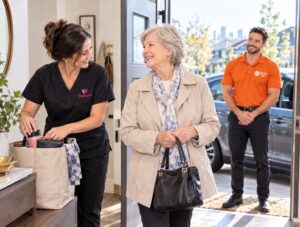
For an older adult living independently in Regina, practical assistance can include transportation, grocery shopping, household cleaning, errands, and other everyday activities that become more difficult when someone is aging alone.
Consider a senior who no longer drives.
Without transportation, a simple grocery trip can become a major logistical challenge. The senior may have to depend on a relative’s schedule, use public transportation, arrange multiple trips, or postpone shopping altogether.
With practical transportation assistance, the senior can have more flexibility.
The same principle applies to household tasks.
A senior may still want to remain responsible for their home but may appreciate assistance with cleaning or other routine chores. Having someone help with these activities can reduce the burden of maintaining a household while allowing the senior to continue living in a familiar environment.
BabaTap can also provide companionship around everyday activities.
That might mean going shopping together, helping with an errand, accompanying a senior while they complete a task, or simply providing another person to interact with during part of the day.
For families, this can provide an additional layer of practical support without turning the senior’s life into a medical-care routine.
Transportation Can Be a Major Part of Independent Living
Mobility is closely connected to independence.
When older adults stop driving, their world can become smaller unless alternative transportation is available.
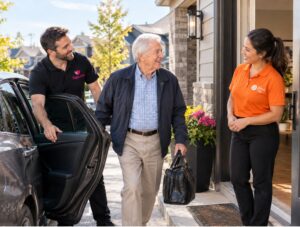
Regina’s broad residential layout means that everyday destinations may not always be within comfortable walking distance. A senior may need to travel to a grocery store, pharmacy, community center, family gathering, restaurant, salon, or other destination.
Transportation support can therefore have benefits beyond simply moving from one location to another.
It can help a senior continue participating in everyday life.
For example, an older adult might want to attend a family lunch but no longer drive. Instead of canceling the outing, transportation assistance can make participation possible.
A senior might also want to visit a favorite local business or meet a friend for coffee.
These ordinary activities can be important for maintaining social connection and personal routine.
BabaTap’s practical transportation support can fit into this broader concept of independent senior living.
Grocery Shopping and Everyday Errands
Grocery shopping is another example of an ordinary task that can become challenging with age.
Carrying bags, navigating a large store, remembering multiple items, and transporting everything home can be tiring for an older adult.
Yet grocery shopping is also part of maintaining independence.
Some seniors may prefer to shop themselves with assistance rather than having someone completely take over the task.
This distinction matters.
The goal of companion support is often to assist the senior while preserving their participation and decision-making.
A companion can help with transportation and practical aspects of the trip while the senior continues choosing what they want to purchase.
The same concept can apply to other errands.
Whether it is visiting a local store, picking up household items, or completing a simple task in the community, practical assistance can make everyday life more manageable.
Household Support Without Changing the Senior’s Lifestyle
Maintaining a home requires regular effort.
Cleaning, organizing, shopping, and completing household errands may become physically tiring for some older adults.
When these tasks accumulate, the home environment can become stressful.
Practical household assistance can help seniors maintain a comfortable living space while continuing to live independently.
This does not necessarily mean taking over every household responsibility.
Instead, support can be focused on the tasks that are most difficult for the individual senior.
For one person, that might be cleaning.
For another, it might be shopping or transportation.
For another, it might simply be having someone available to accompany them while completing everyday activities.
This flexible approach can be especially useful for families who want to support an aging parent without unnecessarily changing their living arrangement.
The Role of TapLook in Senior Independence
Independent living is not only about transportation and household tasks.
Personal grooming and self-care can also play an important role in how seniors feel about themselves and their daily routines.
As people age, going to a salon or nail appointment may become less convenient.
Transportation can become difficult, mobility may change, and waiting in a busy environment may be uncomfortable.
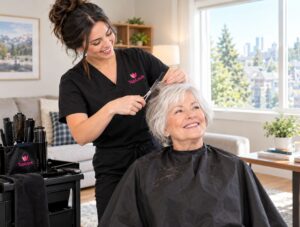
TapLook addresses another part of this everyday challenge by making personal grooming services more convenient for clients who prefer services at home or in a comfortable setting.
For older adults, convenience can make routine self-care easier to maintain.
Personal Grooming and Dignity
Personal appearance is closely connected with confidence and routine.
A senior may enjoy having their nails cared for, receiving beauty services, or simply maintaining the personal grooming habits they have followed for decades.
When transportation becomes difficult, these routines can gradually disappear.
TapLook can help bring personal grooming services closer to the senior.
This can be particularly helpful for an older adult who prefers the comfort of home.
Instead of arranging transportation, waiting at a salon, and traveling back home, the senior may be able to receive a convenient service without leaving their familiar environment.
For families, this can be another small but meaningful way to support quality of life.
TapLook and BabaTap Address Different Everyday Needs
TapLook and BabaTap do not perform the same function.
Their roles can complement each other.
TapLook focuses on personal grooming and beauty-related convenience.
BabaTap focuses on non-medical companionship and practical everyday assistance.
A senior may use TapLook when personal grooming support is needed and BabaTap when transportation, grocery shopping, household help, errands, or companionship is needed.
This creates a broader support structure around independent living.
Instead of viewing senior support as a single service, families can think about the different areas of daily life that may require assistance.
Transportation is one area.
Household tasks are another.
Personal grooming is another.
Social connection and companionship can also be important.
Together, these areas contribute to a senior’s ability to continue participating in everyday life.
Helping Aging Parents Without Taking Away Their Independence
One of the biggest concerns for adult children is finding the right balance between helping a parent and allowing that parent to remain independent.
Too little support can leave a senior struggling with tasks that have become difficult.
Too much support can make an older adult feel that they are losing control over their own life.
A practical companion model can help families find a middle ground.
Instead of doing everything for the senior, support can focus on specific activities.
The senior can continue making choices.
They can decide where to go.
They can choose what groceries to buy.
They can maintain their household routines.
They can continue participating in community activities.
The companion simply helps make those activities more manageable.
This approach can preserve a sense of autonomy while giving families greater peace of mind.
Companion Support Can Reduce Everyday Isolation
Living independently does not always mean feeling connected.
An older adult can live safely at home while experiencing fewer social interactions than they once had.
Friends may move away.
A spouse may pass away.
Family members may become busy with work and children.
Transportation limitations can make social activities more difficult.
These changes can gradually reduce the number of interactions a senior has during an ordinary week.
Companionship can therefore be an important component of independent living.
Companion Care for Seniors can involve simple activities rather than complicated programs.
A conversation, grocery trip, community outing, coffee visit, or shared errand can provide social interaction while helping the senior complete something practical.
BabaTap’s non-medical companion model can fit into this type of routine.
The emphasis is on helping seniors remain engaged with everyday life.
Supporting Seniors Who No Longer Drive
Driving cessation can represent a major transition.
For many seniors, a driver’s license represents freedom.
When driving becomes difficult or a senior decides to stop driving, family members may suddenly become responsible for transportation.
This can create challenges for everyone.
Adult children may have work commitments.
Family members may live across Regina or outside Saskatchewan.
Appointments and errands may occur during inconvenient times.
A dedicated transportation and companion service can provide an additional option.
Instead of depending entirely on relatives, a senior can receive practical transportation assistance for everyday needs.
This can help preserve independence while reducing the transportation burden on family members.
Grocery Trips Can Become Social Activities
There is another important aspect of companion transportation.
A grocery trip does not have to be treated simply as a chore.
For some seniors, shopping is part of their weekly routine and an opportunity to leave the house.
Having assistance with transportation can allow the senior to continue participating.
The senior can select their own food, compare products, interact with people, and maintain familiar routines.
This is different from simply having groceries delivered.
Delivery may be convenient, but companion support can preserve the social and personal aspects of the activity.
Helping Seniors Stay Connected to Regina
Regina offers many opportunities for seniors to remain connected with their communities.
Libraries, parks, community organizations, shopping areas, restaurants, cultural activities, family events, and neighborhood gatherings can all provide opportunities for engagement.
The challenge is often getting there.
A senior may be interested in attending an event but unable to drive.
They may want to visit a friend but feel uncomfortable using unfamiliar transportation.
They may simply need someone to accompany them.
Practical transportation and companionship can help reduce these barriers.
For families searching for Companion Care for Seniors, the value may therefore extend beyond assistance inside the home.
It can include helping the senior maintain a connection with the world outside the front door.
Creating a More Flexible Senior Support Plan
Every senior is different.
A support plan that works for one family may not work for another.
Some older adults need only occasional transportation.
Others may need weekly grocery assistance.
Some may benefit from household support.
Others may primarily want companionship and help getting out of the house.
This is why flexible support can be useful.
Families can consider the senior’s current lifestyle and identify specific areas where assistance would make the biggest difference.
For example:
Transportation may be needed once or twice per week.
Grocery shopping may require assistance every weekend.
Household cleaning may be needed periodically.
Personal grooming may be scheduled according to the senior’s preferences.
Companionship may be useful during selected outings or errands.
This type of arrangement can evolve as the senior’s needs change.
Senior Home Care and Non-Medical Companion Services Are Not the Same
Families searching online for help may encounter many terms, including senior home care, home healthcare, personal care, companion care, retirement living, assisted living, and long-term care.
These terms should not automatically be treated as interchangeable.
Medical home healthcare is intended for healthcare-related needs.
BabaTap is positioned as a non-medical companion service.
Its practical role includes everyday support such as transportation, grocery shopping, household cleaning, errands, and companionship.
This distinction helps families understand what type of assistance they are actually looking for.
A senior who does not need medical care may still benefit from substantial practical assistance.
Likewise, a senior with medical needs may require professional healthcare services in addition to other forms of support.
The appropriate combination depends on the individual’s circumstances.
When Families Should Consider Additional Support
There are several practical signs that an older adult may benefit from additional everyday assistance.
A family may notice that an aging parent has stopped driving.
They may find that grocery shopping has become difficult.
Household chores may be accumulating.
The senior may be spending more time alone.
Regular outings may have decreased.
Personal grooming appointments may have become less frequent because transportation is inconvenient.
Family members may also realize that they are becoming responsible for more and more small errands.
None of these situations automatically means that a senior cannot live independently.
Instead, they can indicate that additional support could make independent living more sustainable.
The goal is not necessarily to replace independence.
The goal can be to support it.
A Family-Centered Approach to Aging at Home
Families often want to remain involved in an aging parent’s life even when they cannot be physically present every day.
A daughter may live on one side of Regina while her parent lives in another neighborhood.
A son may work full-time and have young children.
Another family member may live in another Saskatchewan community.
These circumstances are common.
Practical companion services can provide an additional layer of support between family visits.
This does not replace family relationships.
Instead, it can help with everyday responsibilities that family members cannot always handle themselves.
The family can continue checking in, visiting, making important decisions together, and staying emotionally connected.
Meanwhile, practical support can help with some of the routine activities of daily life.
How TapLook and BabaTap Can Work Together
The combination of TapLook and BabaTap illustrates how senior support can involve multiple everyday services.
Imagine a Regina senior who lives independently and no longer drives.
The senior may need transportation for grocery shopping.
They may also want help with household errands.
At the same time, maintaining personal grooming remains important.
BabaTap can support transportation, shopping, household assistance, errands, and companionship.
TapLook can provide convenient personal grooming services.
Neither service needs to replace the senior’s independence.
Instead, each can address a different practical barrier.
This approach allows families to think about aging at home in a more complete way.
Independent living is rarely determined by one single activity.
It is the combination of mobility, household comfort, personal routines, social interaction, and practical support that can make living at home easier.
Why Familiar Surroundings Matter
For many seniors, remaining at home means remaining connected to a lifetime of memories.
The kitchen may be where family meals were prepared.
The living room may contain photographs of children and grandchildren.
The neighborhood may include familiar faces.
The local grocery store may be part of a weekly routine.
These details can contribute to a strong sense of belonging.
When practical difficulties arise, the first response does not always have to be moving the senior somewhere else.
Sometimes, adding targeted support can make the existing environment more manageable.
Transportation, household assistance, companionship, and convenient personal grooming are examples of support that can help preserve familiar routines.

Supporting Independence While Respecting Personal Choice
One of the most important principles in senior support is respecting the older adult’s preferences.
Aging does not eliminate the need for autonomy.
Seniors should be able to participate in decisions about their routines, activities, shopping, transportation, and personal services whenever possible.
A companion can assist without controlling.
For example, a senior can decide which grocery store they prefer.
They can choose what products to purchase.
They can decide whether they want to visit a friend or attend an activity.
They can select the personal grooming service they want.
This makes practical assistance feel more like support and less like dependence.
A Practical Path Toward Aging at Home in Regina
For families researching Home Care for Seniors, the first question should be: what does the senior actually need help with?
If the primary challenge is medical, the family may need professional healthcare resources.
If the challenge is transportation, errands, shopping, household tasks, or companionship, a non-medical companion service may be more relevant.
If personal grooming has become inconvenient because traveling to a salon is difficult, an at-home beauty service may offer another practical option.
TapLook and BabaTap address these everyday needs from different directions.
TapLook can make personal grooming more convenient.
BabaTap can provide practical non-medical assistance and companionship.
Together, they can become part of a broader family support plan designed around the senior’s lifestyle.
Frequently Asked Questions
What is senior home care?
Senior home care is a broad term that can refer to different forms of assistance provided to older adults at home. Depending on the provider, it may include healthcare, personal support, household assistance, transportation, or companionship. Families should review exactly what a service provides before choosing it.
Is BabaTap a medical home care provider?
No. BabaTap is a non-medical companion service for seniors. Its practical support can include transportation, grocery shopping, household cleaning, errands, and companionship.
How can BabaTap help a senior living alone in Regina?
BabaTap can provide practical assistance that may make everyday life easier for a senior living independently. Depending on the family’s needs, this can include transportation, grocery shopping, household help, errands, and companionship.
Can transportation help seniors remain independent?
Yes. Reliable transportation can help older adults continue accessing stores, social activities, family gatherings, community destinations, and everyday errands after they stop driving.
How does TapLook help older adults?
TapLook can make personal grooming and beauty services more convenient by bringing services closer to the client. This can be useful for seniors who find traveling to a salon difficult or prefer the comfort of their own environment.
Is companion support the same as medical care?
No. Companion support focuses on practical assistance, everyday activities, and social interaction. Medical care involves healthcare-related needs and should be provided by appropriately qualified healthcare professionals.
Can companion services help adult children?
They can provide an additional layer of practical support when adult children cannot be physically available for every grocery trip, errand, transportation need, or household task.
What should families consider when choosing senior support?
Families should consider the senior’s actual needs, preferences, mobility, transportation situation, household responsibilities, social routine, and whether medical services are required. Understanding the difference between medical and non-medical support can help families identify appropriate resources.
Final Thoughts
Helping a senior remain independent at home is not necessarily about doing everything for them.
It can be about removing the practical barriers that make everyday life unnecessarily difficult.
For a senior in Regina, that might mean having reliable transportation instead of giving up community activities. It might mean receiving help with groceries rather than depending entirely on family members. It might mean getting assistance with household tasks while continuing to manage personal routines. It might mean having companionship during an outing or simply having someone available for practical everyday support.
Personal grooming can also be part of maintaining a satisfying daily routine.
TapLook and BabaTap address different sides of this picture.
TapLook focuses on convenient personal grooming services.
BabaTap focuses on non-medical companionship and practical support such as transportation, grocery shopping, household cleaning, and errands.
For families exploring Companion Care for Seniors, these services can be considered as part of a broader strategy for helping an aging parent continue living at home.
The central idea is simple: independence does not have to mean doing everything alone.
With the right combination of practical assistance, transportation, companionship, personal services, family involvement, and appropriate professional resources when necessary, seniors can have more opportunities to remain connected to their routines and communities.
For families in Regina, supporting an aging parent can therefore begin with understanding what the senior wants to continue doing and identifying the practical assistance that can help make those activities possible.
That can create a more flexible approach to aging at home, one that respects the senior’s choices while giving families additional support for the everyday challenges that come with aging.
Bài viết liên quan: