
How TapLook and BabaTap Help Seniors Live Independently at Home in Surrey. Growing older does not have to mean giving up the comfort, privacy, and familiarity of home. For many older adults in Surrey, British Columbia, staying in their own home is closely connected with maintaining daily routines, personal dignity, social relationships, and a sense of independence. Yet everyday tasks can gradually become more difficult. A senior may still be capable of living at home but need some practical assistance with shopping, transportation, household tasks, personal grooming, or simply having someone nearby for companionship. This is where a flexible combination of senior-focused services can make a meaningful difference. Home Care for Seniors is often discussed broadly, but families should understand that different services address different needs. Fraser Health’s Home and Community Care programs, for example, provide professional and caregiver support intended to help people remain independent at home, while the City of Surrey also provides information about community resources for seniors and caregivers. In this environment, TapLook and BabaTap can complement a senior’s broader support network by focusing on practical, non-medical aspects of everyday life. TapLook can help seniors maintain comfortable personal grooming routines, while BabaTap is designed around companionship and practical assistance such as errands, grocery shopping, transportation, and household help. Together, these types of services can support a lifestyle in which seniors remain connected to their homes and communities rather than feeling that aging automatically requires a major change in living arrangements. For Surrey families researching Senior Home Care, Companion Care for Seniors, and other forms of support, understanding the difference between medical care, personal assistance, companionship, and lifestyle services is essential. The goal is not to replace professional healthcare when it is needed, but to help address the everyday challenges that can make independent living harder.

Why Independent Living Matters to Seniors in Surrey
Home is more than a physical address.
For an older adult, home may represent decades of memories, familiar furniture, personal routines, neighbours, family traditions, and a neighbourhood that feels comfortable. Moving away from that environment can be emotionally and practically significant.
This is why independent living has become an important consideration for seniors and their families.
Independence does not necessarily mean doing absolutely everything without assistance. Instead, it can mean having enough appropriate support to continue making personal choices.
A senior may need help carrying groceries but still want to choose what food to buy.
They may appreciate transportation to appointments or community activities while continuing to decide where they want to go.
They may want help with household tasks without giving up control over their daily routine.
They may enjoy having a companion for an outing while still maintaining their own friendships and interests.
This distinction is important when families begin searching for Senior Home Care in Surrey.
The question should not always be, “Does my parent need care?”
A more useful question can be, “What specific parts of everyday life have become difficult, and what type of support could make those activities easier?”
That approach can help families identify the right combination of services.
Understanding Different Types of Senior Support
The phrase home care can refer to many different services.
Some organizations provide professional healthcare or personal care. Others focus on companionship, transportation, errands, housekeeping, social activities, or lifestyle assistance.
Fraser Health explains that Home and Community Care includes a range of home and community-based professional and caregiver services designed to help people remain independent at home.
At the same time, Surrey’s community resources include programs designed specifically around non-medical assistance and social connection.
For example, the City of Surrey’s 2026 Healthy Active Aging Guide describes Better at Home as supporting non-medical needs of older adults and helping eligible seniors with day-to-day tasks so they can continue living independently in their homes and remain connected to their communities.
This illustrates an important point: independent senior living can require several different kinds of support.
A senior could simultaneously benefit from:
• Professional healthcare when medically necessary
• Assistance with daily household tasks
• Transportation and accompaniment
• Grocery shopping support
• Social companionship
• Personal grooming
• Help maintaining an active routine
TapLook and BabaTap fit into this broader picture by addressing lifestyle and practical needs rather than attempting to replace medical professionals.
What BabaTap Can Mean for Seniors Living at Home
BabaTap is built around companionship for seniors.
The concept is straightforward: an older adult may not require medical care, but everyday life can still become easier when another person is available to provide practical assistance and companionship.
This distinction is particularly valuable for families.
Imagine a senior who lives independently in Surrey but finds grocery shopping increasingly tiring.
The senior may not need a nurse.
They may not need assisted living.
They may simply benefit from someone who can accompany them while they shop.
Another senior may have a list of household tasks that have become difficult.
Again, the issue may not be medical.
It may simply be that certain physical tasks require an extra pair of hands.
This is where Companion Care for Seniors can provide a practical layer of support.
BabaTap can be positioned around everyday activities such as:
• Grocery shopping
• Transportation and accompaniment
• Household cleaning
• Everyday errands
• Social outings
• General companionship
• Practical assistance around the home
These services can help seniors maintain routines that contribute to a sense of independence.
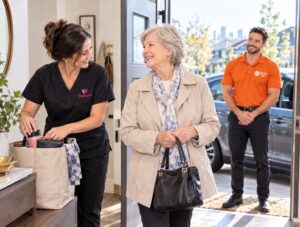
Companionship Is More Than Simply Having Someone Nearby
Companionship is sometimes underestimated.
Families often focus on physical tasks because those needs are easier to identify.
But social connection also matters.
An older adult who spends much of the day alone may gradually participate less in activities they previously enjoyed.
A companion can help create opportunities to leave the house, visit a local destination, complete an errand, or simply have a conversation.
The objective is not to take over the senior’s life.
The objective is to support participation.
That distinction is central to a modern approach to Companion Care for Seniors.
The senior remains the person making decisions.
The companion provides support that can make those decisions easier to act on.
This can be especially useful in a diverse city such as Surrey, where seniors may have different cultural backgrounds, family structures, languages, routines, and community connections.
Grocery Shopping and Everyday Errands
Grocery shopping can appear simple until mobility, fatigue, weather, transportation, or carrying bags becomes challenging.
A senior may still enjoy visiting a supermarket and choosing products personally.
The problem may simply be getting there and completing the task comfortably.
With practical companionship, the senior can remain involved instead of having someone else automatically make every decision.
The same principle applies to everyday errands.
A trip to a pharmacy, community centre, shopping area, library, or other local destination can be easier when assistance is available.
The purpose is not to remove independence.
It can actually help preserve it.
Household Help Can Support Independent Living
Maintaining a home requires continuous effort.
Cleaning floors, organizing rooms, changing bedding, tidying spaces, and handling routine household tasks can become more demanding with age.
A senior may still want to live at home but find certain chores tiring.
Practical household assistance can reduce that burden.
This is another reason families should avoid treating Senior Home Care as one single category.
Different needs require different solutions.
Professional healthcare should remain under the direction of qualified healthcare providers.
Non-medical household support can address another part of daily living.
Companionship can address another.
Personal grooming can address another.
Together, these services can create a more complete support structure.
Where TapLook Fits Into Independent Senior Living
Personal grooming is another part of independence that deserves attention.
As people age, grooming routines can sometimes become more difficult because bending, reaching, maintaining balance, or travelling to appointments may require more effort.
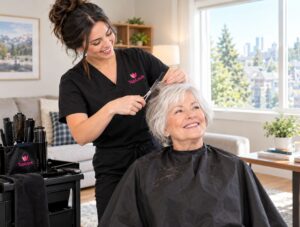
TapLook focuses on senior-friendly nail care and personal grooming experiences.
The concept can be particularly relevant to seniors who want to maintain their usual appearance and grooming routine while enjoying an environment designed with older adults in mind.
For some seniors, a manicure or pedicure is not simply cosmetic.
It can be part of feeling comfortable, presentable, and socially confident.
Maintaining these routines can also encourage seniors to continue participating in social activities.
A senior who feels comfortable going out may be more inclined to attend lunch with friends, visit family, participate in community activities, or enjoy an afternoon outside the home.
TapLook and the Emotional Side of Grooming
Personal care routines can have an emotional dimension.
Many older adults have spent decades developing personal preferences about clothing, hairstyles, grooming, and appearance.
Age should not automatically eliminate those preferences.
A senior-friendly grooming service can help preserve a sense of normality.
The experience can become something to look forward to rather than another task to manage.
For families, this can be an overlooked aspect of supporting independence.
Independence is not only about safety.
It is also about identity.
A senior should still have opportunities to express personal style and make choices about how they want to look and feel.
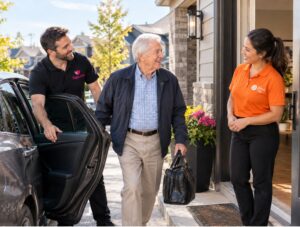
How TapLook and BabaTap Work Together
The strength of combining TapLook and BabaTap is that they can address different aspects of everyday senior life.
TapLook focuses on senior-friendly nail care and grooming.
BabaTap focuses on companionship and practical everyday assistance.
One addresses personal grooming.
The other can support daily activities and social participation.
Consider a hypothetical Surrey senior named Margaret.
Margaret wants to continue living at home.
She enjoys shopping, visiting friends, and maintaining her regular grooming routine.
However, she finds some errands tiring and sometimes avoids activities because arranging transportation or finding someone to accompany her feels inconvenient.
A practical support plan could allow Margaret to receive assistance with everyday errands while maintaining her preferred grooming routine through a senior-focused service.
The key is that Margaret remains involved in her decisions.
She chooses what she wants to do.
She decides what she wants to buy.
She maintains her personal preferences.
The support simply makes those activities more manageable.
Independence Does Not Mean Doing Everything Alone
One of the most important ideas for families to understand is that accepting assistance does not necessarily mean losing independence.
In many cases, appropriate assistance can make independence more sustainable.
A senior who receives help with groceries may continue living at home.
A senior who has companionship for outings may remain socially active.
A senior who receives household assistance may be able to maintain a familiar home environment.
A senior who continues personal grooming may feel more confident participating in community life.
The goal is not maximum self-sufficiency.
The goal is meaningful autonomy.
That is why Home Care for Seniors should be considered in terms of the individual’s actual lifestyle.
Surrey’s Existing Senior Support Environment
Families in Surrey do not have to navigate senior support entirely on their own.
The City of Surrey maintains community and health resource information for seniors and caregivers, including links to Fraser Health, BC211, and local organizations.
Fraser Health also provides Home and Community Care services through local access points, including locations serving Surrey.
The local Better at Home network also illustrates how non-medical assistance can contribute to independent living. Its listed services can include grocery shopping assistance, housekeeping, transportation, accompaniment, and social support depending on the participating organization.
These resources are important because families should distinguish between different levels of need.
A senior who requires clinical care needs an appropriate healthcare pathway.
A senior who mainly needs practical assistance may benefit from non-medical services.
A senior who needs more social interaction may benefit from companionship.
And a senior who simply wants to maintain grooming and personal routines can consider senior-focused lifestyle services.
Creating a Personalized Support Plan
Every senior is different.
A support plan that works well for one person may be unnecessary or unsuitable for another.
Families can begin by identifying what the senior can already do comfortably.
Then identify what has become difficult.
For example:
Daily activities
Can the senior prepare meals, shop for groceries, clean the home, and manage routine errands?
Transportation
Can the senior comfortably travel to appointments, shopping areas, salons, community centres, and social events?
Social connection
Does the senior regularly interact with friends, family, neighbours, or community groups?
Personal grooming
Can the senior comfortably maintain their preferred grooming routine?
Home environment
Are routine household tasks becoming physically demanding?
Healthcare
Are there medical or clinical needs that should be addressed through qualified healthcare providers?
This assessment helps families avoid choosing a single service simply because it has a broad “home care” label.
When Families Should Consider More Professional Support
Non-medical companionship and lifestyle services are not substitutes for healthcare.
If a senior has medical needs, significant mobility concerns, medication-management requirements, wounds, or other clinical issues, the appropriate healthcare professional should be involved.
Fraser Health’s Home and Community Care system includes professional services and assessment processes for people who need support at home.
This distinction protects seniors and gives families a clearer understanding of what each service is designed to accomplish.
TapLook and BabaTap can contribute to the non-medical side of independent living.
They should be viewed as complementary services rather than replacements for medical or clinical care.
Supporting Dignity Through Choice
Dignity often comes from having control over ordinary decisions.
What time should I go shopping?
What would I like to buy?
Which activities do I enjoy?
How do I want my home maintained?
When would I like to have my nails done?
Who would I like to spend time with?
These choices may seem small, but together they form a person’s daily life.
Senior support should ideally preserve as many of these choices as reasonably possible.
That is one of the strongest principles behind Companion Care for Seniors.
The companion is there to assist, not automatically take control.
A Practical Example for a Surrey Family
Imagine a family whose parent lives independently in Surrey.
The parent can cook, dress, communicate, make decisions, and manage most personal activities.
However, grocery shopping has become tiring.
Household cleaning is becoming harder.
The parent also misses going out socially.
Instead of immediately considering a major change in living arrangements, the family could first explore practical support options.
BabaTap-style companionship could help with everyday errands, grocery shopping, household tasks, and outings.
TapLook could support the senior’s grooming routine.
Professional home and community services could be considered separately if healthcare needs arise.
This creates a layered support model.
Each service has a clear role.
The senior remains at the centre.

The Bigger Goal: Aging at Home With Confidence
Aging independently is not about pretending that nothing changes.
Things do change.
Energy levels may change.
Mobility may change.
Social circles may change.
Household responsibilities may become more difficult.
But change does not automatically mean a senior must give up their home.
The right support can help adapt everyday life to new circumstances.
Surrey already has a range of community resources intended to support healthy aging and independent living.
TapLook and BabaTap can fit into this broader ecosystem by addressing practical and lifestyle needs that are sometimes overlooked.
The result is a more holistic understanding of Senior Home Care.
Rather than asking whether a senior can live independently without any help, families can ask what support would make independent living sustainable.
That shift can lead to more personalized decisions.
Final Thoughts
The path to independent living for seniors is rarely about one service.
It is usually about combining the right types of support for the individual’s circumstances.
Professional healthcare can address clinical needs.
Community programs can provide additional resources.
Companionship can reduce isolation and make everyday activities easier.
Practical assistance can help seniors continue managing their homes and errands.
Senior-friendly grooming services can help preserve personal routines and confidence.
For Surrey families exploring Home Care for Seniors, it is therefore useful to look beyond a single definition of care.
BabaTap can support the practical and social dimensions of everyday life through companionship, errands, grocery shopping, household assistance, and outings.
TapLook can support personal grooming and senior-friendly nail-care routines.
Together, these services represent a broader approach to helping older adults remain connected with their homes, routines, and communities.
Most importantly, independent living should continue to reflect the senior’s own preferences.
Support should make everyday life easier without unnecessarily taking away choice.
For many seniors in Surrey, that can mean staying in the home they know, continuing familiar routines, enjoying personal grooming, completing everyday activities, spending time with others, and maintaining as much control over daily life as possible.
That is the practical meaning behind creating a support system around the senior rather than simply providing care to the senior.
When families understand the difference between healthcare, household assistance, companionship, transportation, and personal grooming, they can build a more thoughtful approach to aging at home.
And when those services are coordinated around personal preferences, independence can become not simply an ideal, but a realistic everyday goal.
Bài viết liên quan: