
How TapLook and BabaTap Help Seniors Live Independently at Home in Toronto. Growing older does not necessarily mean giving up the comfort, familiarity, and independence of home. For many older adults in Toronto, staying at home can be an important part of maintaining daily routines, personal dignity, social connections, and a sense of control over everyday decisions. At the same time, families may begin to notice that simple activities are becoming more difficult. Grocery shopping, getting around the city, keeping the home organized, preparing meals, attending appointments, maintaining personal grooming, or simply having someone available for conversation can become challenging. This is where practical senior support can make a meaningful difference. Families searching for Senior Home Care, Home Care for Seniors, or Companion Care for Seniors may not always need traditional medical care or a full-time caregiver. In many situations, the better fit can be flexible, non-medical assistance that helps an older adult continue managing life at home. In Toronto, organizations and services supporting aging in place recognize the importance of helping seniors remain safely connected to their homes and communities. The City of Toronto provides information about home support, community services, transportation, housing, and other resources for older adults. TapLook adds another layer of at-home convenience by bringing beauty and wellness services directly to seniors, while BabaTap can support everyday activities such as companionship, transportation, grocery shopping, meal preparation, technology assistance, and light home support. Together, these types of services illustrate an important idea: independence does not mean doing everything alone. It can mean having the right assistance at the right time while remaining in control of one’s own life.

What Does Independent Living Mean for a Senior in Toronto?
Independent living can look different for every older adult.
For one person, independence may mean continuing to live in the family home for another decade. For another, it may mean staying in a condominium near downtown Toronto where friends, familiar stores, parks, libraries, and community activities are easily accessible.
For another senior, independence may simply mean being able to choose when to wake up, what to eat, when to shop, who to visit, and how to spend the day without having to move into a more intensive care environment.
This is why conversations about Senior Home Care should not automatically focus on medical needs.
There is a significant difference between medical care and practical support.
A senior may not require nursing care, medical treatment, or personal medical assistance but may still benefit from someone who can provide transportation, grocery shopping, household support, companionship, or help with everyday errands.
The City of Toronto specifically provides resources designed to help older adults continue living at home and access community supports. Its aging-at-home information includes options involving daily tasks, housekeeping, laundry, meal preparation, and other forms of support.
The goal is not necessarily to replace independence.
The goal can be to protect it.
Why Small Everyday Challenges Can Affect Independence
Independence can gradually become difficult because of many small obstacles rather than one major event.
A senior might still be completely capable of making personal decisions but have difficulty carrying several grocery bags.
Another person may enjoy going to a salon but find transportation, stairs, winter weather, parking, or long waiting periods increasingly inconvenient.
Someone who has lived independently for decades may still be comfortable preparing meals but may not want to clean an entire home every week.
A senior may also feel lonely even when they are physically capable of living alone.
These situations demonstrate why flexible Home Care for Seniors can be broader than people sometimes assume.
Practical assistance can reduce the pressure created by ordinary tasks while allowing the older adult to remain involved in decisions.
This distinction is especially important for adult children.
A daughter living in North York may have a demanding job and children of her own.
A son living in Mississauga may want to help his father in Toronto but cannot visit every day.
A family member living outside Ontario may worry about a parent but cannot provide regular in-person assistance.
In these situations, support does not have to mean taking over.
It can mean filling the gaps.
How BabaTap Supports Everyday Independence
BabaTap is designed around practical everyday support for seniors.
Its service model includes companionship, transportation, grocery shopping, technology help, meal preparation, home support, and hospital companion services.
These services can be particularly useful because they address the everyday barriers that can make independent living more difficult.
Transportation Assistance
Transportation can have a major impact on a senior’s independence.
Toronto is a large and active city, but navigating public transportation, arranging rides, finding parking, walking long distances, or coordinating appointments can become stressful.
A senior may need a ride to a doctor’s office, grocery store, community centre, pharmacy, family gathering, or social activity.
With transportation assistance, the older adult can continue participating in activities rather than depending entirely on relatives.
This can also help families maintain a healthier balance.
Instead of an adult child taking time off work every time a parent needs to go somewhere, a scheduled support service may handle the practical transportation need.
The senior still chooses where to go and when.
That is an important part of maintaining independence.
Grocery Shopping Support
Grocery shopping sounds simple until mobility, weather, transportation, heavy bags, or fatigue become obstacles.
BabaTap’s grocery shopping support can help seniors obtain food and household essentials without requiring them to carry everything themselves.
The important point is that assistance with shopping does not necessarily mean removing the senior from the process.
A senior can still decide what foods they want.
They can create a shopping list.
They can discuss preferences.
They can maintain control over household choices while receiving practical assistance with the physical part of the task.
Meal Preparation
Food is closely connected to daily routine and quality of life.
When shopping and cooking become tiring, seniors may begin relying on less varied meals or skipping preparation altogether.
Meal preparation support can reduce that burden while helping maintain familiar food routines.
For families, this can provide reassurance that an older relative has practical help available without requiring a full-time live-in caregiver.
Light Home Support
Keeping a home comfortable can require continuous effort.
Laundry, organizing, light housekeeping, and everyday household tasks may become increasingly tiring.
BabaTap’s home support services are positioned around these practical needs.
This can be particularly valuable for seniors who remain mentally and socially independent but have less physical energy for household chores.
The purpose is not to change the senior’s lifestyle.
It is to make that lifestyle easier to maintain.
Companionship Is Part of Independent Living
Independence is not only physical.
Social connection matters too.
A senior may live safely at home but experience long periods without meaningful conversation.
Adult children may call regularly, but phone calls cannot always replace face-to-face interaction.
This is where Companion Care for Seniors can provide an important form of non-medical support.
Companionship may involve conversation, friendly visits, accompanying a senior during an outing, helping them participate in activities, or simply spending time together.
BabaTap identifies companionship as one of its core services, describing it as friendly visits, conversations, and meaningful companionship.
For some older adults, the most valuable part of the service may not be a particular task.
It may simply be knowing that someone will arrive.

How TapLook Brings Personal Care Into the Home
Personal grooming can be another overlooked part of independence.
Getting a haircut, manicure, pedicure, or wellness service may appear optional, but personal appearance and routine can influence confidence, comfort, and emotional well-being.
For an older adult who finds salon travel difficult, an at-home alternative can make these routines much easier.
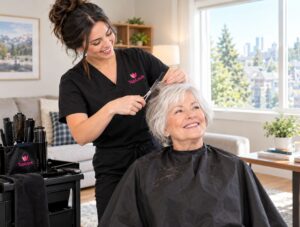
TapLook provides mobile beauty and wellness services for seniors in Toronto, including mobile nail services, haircuts, and massage-related services. Its Toronto service page describes appointments taking place at homes, hospitals, and retirement residences.
This creates a different kind of convenience.
The senior does not need to organize transportation simply to receive a haircut.
They do not have to sit in a busy salon for an extended period.
They can receive a familiar personal-care service in an environment where they already feel comfortable.
Why At-Home Beauty Services Can Matter to Seniors
Personal care is often connected with identity.
Someone who has always enjoyed having neatly styled hair may want to continue that routine at age 75, 80, or 90.
A person who has regularly maintained their nails may still want that experience.
A senior may also prefer receiving services in a quiet home environment instead of a busy commercial setting.
TapLook’s mobile model addresses this preference by bringing the professional to the senior rather than requiring the senior to travel.
That can reduce unnecessary travel while preserving familiar routines.
In this sense, mobile beauty services can complement Home Care for Seniors without being traditional home health care.
The services solve a different problem.
One focuses on practical daily living.
The other brings personal grooming and wellness experiences directly into the home.
Together, they can contribute to a more comfortable independent lifestyle.
TapLook and BabaTap Address Different Everyday Needs
It is useful to think of these services as complementary rather than interchangeable.
BabaTap focuses on practical everyday support.
TapLook focuses on bringing beauty and wellness services to the senior.
For example, imagine an 82-year-old Toronto resident who lives alone.
She can prepare simple meals and manage her finances but finds grocery shopping tiring.
She also has difficulty getting to a salon.
Her family does not need to arrange full-time care.
Instead, she may benefit from occasional grocery assistance, transportation, companionship, and a mobile haircut or nail appointment.
This is a much more flexible approach than assuming every senior who needs help requires traditional full-time home care.

The Role of Family Caregivers
Family caregivers often want to do everything themselves.
However, this can become difficult over time.
A daughter may feel responsible for shopping, transportation, appointments, housekeeping, meals, and social visits.
A son may try to manage these responsibilities while working full-time.
Eventually, the caregiver may experience exhaustion.
Flexible Companion Care for Seniors can help distribute some of these everyday responsibilities.
That does not mean family involvement becomes less important.
Instead, family members can spend more time focusing on meaningful relationships rather than treating every visit as a list of chores.
A son can visit his mother because he wants to have lunch with her rather than because he needs to spend the entire afternoon cleaning.
A daughter can spend time talking with her father rather than using the whole visit to run errands.
That distinction can change the quality of family relationships.
Independent Living Does Not Mean Living Without Help
One of the biggest misconceptions about independence is that accepting help means losing independence.
In reality, many independent adults use services every day.
People order groceries.
They use taxis.
They hire cleaners.
They visit salons.
They ask friends for rides.
They use delivery services.
For seniors, these forms of support can simply become more important as certain physical tasks become harder.
The senior remains the decision-maker.
The support simply removes obstacles.
This is one reason families researching Home Care for Seniors should look beyond the assumption that every service is medical or full-time.
There are many levels of assistance between doing everything alone and moving into a long-term care environment.
Toronto itself provides information about multiple community-based services designed to help seniors remain at home.
Start With the Senior’s Actual Needs
A useful independent-living plan begins with the person, not the service.
Ask what has become difficult.
Do they struggle with transportation?
Are groceries becoming difficult to carry?
Is housekeeping exhausting?
Are they spending too much time alone?
Do they miss regular salon appointments?
Would they appreciate someone accompanying them to activities?
Do they need occasional rather than daily assistance?
These questions help families identify practical gaps.
The answer may not be traditional home health care.
It may be several small services used at different times.
For example, one senior might need transportation twice a week and companionship once a week.
Another might need grocery support every Saturday.
Another might want a monthly haircut and regular nail care at home.
Another may benefit from occasional meal preparation.
The flexibility of this approach is one of the most important advantages of non-medical senior support.
Creating a Weekly Support Routine
A predictable schedule can make independent living easier.
Consider a hypothetical Toronto senior named Margaret.
On Monday, she receives grocery assistance.
On Wednesday, she has a companion visit.
On Friday, she receives transportation to a community activity.
Once a month, TapLook comes to her home for a haircut or nail service.
Her family checks in by phone and visits when their schedules allow.
None of these services necessarily replaces Margaret’s independence.
Instead, they create a support structure around it.
This kind of routine can also make it easier for family members to notice changes.
If a senior suddenly stops wanting to go grocery shopping, becomes reluctant to leave the home, or begins cancelling regular activities, the family may recognize that additional support should be considered.
Combining Practical Help With Personal Choice
Good senior support should leave room for personal preference.
One senior may want help with groceries but prefer to cook independently.
Another may want companionship but not housekeeping.
Someone else may want transportation but prefer to manage every other household task personally.
This is why flexible Home Care for Seniors can be useful when it is designed around individual needs rather than a fixed package.
The senior should have a voice in the schedule.
They should know what assistance is being provided.
They should be able to communicate preferences.
They should also be able to change services as their circumstances change.
Supporting Aging in Place in Toronto
Aging in place means continuing to live in a familiar home and community as a person grows older.
Toronto provides multiple resources related to aging at home, health services, housing, transportation, community programs, and caregiver support.
The City also identifies Ontario Health atHome as a resource for determining eligibility for government-funded home care and connecting residents with health and community services.
This distinction is important.
BabaTap and TapLook should not be understood as replacements for medical professionals, nursing services, emergency care, or publicly funded healthcare programs.
Instead, they can occupy a practical space within the broader ecosystem of senior support.
A family may use healthcare services for medical needs while using BabaTap for everyday assistance and TapLook for mobile personal care.
Different services can solve different problems.
When Seniors Need More Than Everyday Support
Families should also recognize when a senior’s needs have changed.
If an older adult begins experiencing significant difficulty with medication management, bathing, mobility, cognitive changes, serious falls, or other health-related concerns, the family may need to seek appropriate healthcare assessment.
The City of Toronto recommends Ontario Health atHome and other community resources for seniors who need support with healthcare and aging at home.
In other words, practical companion support should be part of a larger plan when health needs become more complex.
The purpose of services like BabaTap is not to pretend that medical needs do not exist.
It is to address the everyday needs that fall outside traditional medical care.
The Difference Between Companion Support and Medical Home Care
The term home care can mean different things to different families.
Some people use it to describe nursing or personal support.
Others use it broadly to describe almost any service delivered at home.
This can create confusion when searching for senior services in Toronto.
Traditional healthcare-related home services may involve clinical or personal-care needs.
Companion services generally focus on social connection and practical everyday assistance.
BabaTap’s service offering illustrates this distinction through services such as companionship, transportation, grocery shopping, technology help, meal preparation, and home support.
Families should therefore ask a simple question:
What does the senior actually need help with?
If the answer is transportation, shopping, companionship, household support, or meal preparation, a non-medical companion service may be relevant.
If the answer involves clinical needs, families should consult appropriate healthcare professionals and public healthcare resources.
Personal Grooming Can Be Part of a Senior’s Routine
It is easy for families to focus on food, medication, transportation, and safety while overlooking personal grooming.
However, feeling presentable can matter emotionally.
A haircut can restore confidence.
A manicure can feel relaxing.
A pedicure can become part of a familiar monthly routine.
A wellness service can give a senior something positive to look forward to.
TapLook’s Toronto services are specifically designed to bring mobile beauty and wellness experiences to seniors at home and other senior environments.
That means a senior can maintain personal-care routines without organizing a separate trip across Toronto.
For people with limited mobility or transportation challenges, that convenience can be meaningful.

How Families Can Introduce Support Without Making Seniors Feel Dependent
Some older adults resist help because they associate assistance with losing independence.
The way families introduce services can make a difference.
Instead of saying:
“You cannot manage this anymore.”
A family member can say:
“Would it make your week easier if someone helped with groceries?”
Instead of:
“You need a caregiver.”
Try:
“Would you like someone to accompany you when you go out?”
Instead of:
“You cannot go to the salon anymore.”
Try:
“Would you like to have your haircut at home?”
This language keeps the focus on choice.
It recognizes that the senior is still an adult who can make decisions.
The objective is to make life easier, not to take control away.
Companion Care Can Support Social Connection
Loneliness can be difficult to identify because it is not always visible.
A senior may have a comfortable apartment, sufficient food, and regular healthcare but still spend most days alone.
Regular companionship can introduce conversation and social interaction into the weekly routine.
Companion Care for Seniors can involve simple experiences.
A conversation over coffee.
A short walk.
A trip to a local store.
Watching a favourite television program together.
Going to a community event.
Helping with technology so the senior can communicate with family.
BabaTap also lists technology help among its services, which can be particularly relevant as more everyday communication and services move online.
Technology Support Can Strengthen Independence
Technology can be empowering for seniors when it is accessible.
A smartphone can help someone communicate with family.
A tablet can provide access to entertainment and information.
Video calls can help families stay connected.
Online grocery ordering can reduce travel.
Digital appointment systems can make scheduling easier.
But technology can also become frustrating.
Passwords, applications, updates, notifications, and unfamiliar interfaces can discourage some older adults.
Practical technology support can therefore become another way to protect independence.
Rather than having family members manage everything remotely, the senior can learn how to use the tools themselves.
That maintains participation and confidence.
A More Connected Model of Senior Support
The future of aging at home does not have to be built around one service.
It can involve a network of specialized support.
Healthcare providers address medical needs.
Community programs provide social resources.
Transportation providers help seniors get around.
Companion services address everyday assistance and social connection.
Mobile beauty providers bring personal care into the home.
Family members remain emotionally connected.
This broader approach recognizes that independent living involves many dimensions.
It is physical.
It is social.
It is emotional.
It is practical.
It is also personal.
How TapLook and BabaTap Can Work Together
TapLook and BabaTap serve different but complementary needs.
BabaTap can help with the practical side of everyday living through transportation, grocery shopping, companionship, meal preparation, technology support, and home assistance.
TapLook can bring mobile beauty and wellness services directly to a senior’s home, including nail care and hair services.
Imagine a senior living independently in Scarborough.
On Saturday, BabaTap helps with groceries.
During the week, a companion visit provides social interaction.
The following week, a BabaTap ride helps the senior attend a community activity.
At the end of the month, TapLook provides an in-home haircut and nail appointment.
The senior remains in the same home.
They continue making decisions.
They maintain familiar routines.
The services simply make those routines more manageable.
Why This Approach Can Help Families Too
Independent living is not only about the senior.
It affects the entire family.
When practical responsibilities become overwhelming, family relationships can become dominated by logistics.
Who will drive Mom?
Who will buy groceries?
Who will prepare dinner?
Who will take Dad to his appointment?
Who will help with household tasks?
Who will make sure he has someone to talk to?
When selected services address some of these practical needs, family members may have more time to focus on emotional connection.
That can make family visits more enjoyable.
Instead of arriving with a checklist of chores, relatives can spend time talking, sharing meals, looking at photographs, or simply enjoying one another’s company.
Choosing the Right Level of Support
Families should avoid choosing more support than necessary.
They should also avoid waiting until a situation becomes a crisis.
A practical approach is to begin by identifying the most difficult tasks.
Then consider whether those tasks happen daily, weekly, or occasionally.
For example:
Daily need: companionship or meal support.
Weekly need: groceries or transportation.
Monthly need: haircut, manicure, or pedicure.
Occasional need: technology help or special transportation.
This creates a personalized support schedule.
As needs change, the schedule can change too.
Questions Families Can Ask Before Arranging Senior Support
Before choosing a service, families can ask:
What type of assistance does the senior actually need?
Is the service medical or non-medical?
Can the senior choose the schedule?
Does the provider come to the home?
Can family members coordinate appointments?
What happens if the senior needs to reschedule?
Is transportation included?
Does the service focus on companionship, practical tasks, personal care, or wellness?
Are the providers experienced in working with older adults?
These questions can help families compare services based on actual needs rather than choosing simply because a service is described as “senior care.”
Senior Independence Is About Choice
The most important part of independent living is not doing every task alone.
It is maintaining meaningful choice.
A senior should be able to decide where they live, what they eat, when they go out, who they spend time with, how they maintain their appearance, and what kind of assistance they want.
Support should make those choices easier to exercise.
That is why Companion Care for Seniors can be valuable even when there is no medical condition involved.
A companion can help remove practical and social barriers while allowing the senior to remain engaged in everyday decisions.
Building a Comfortable Home-Based Lifestyle in Toronto
Toronto offers a wide range of neighborhoods, services, community resources, healthcare organizations, recreation opportunities, and senior programs.
For an older adult, staying connected to that environment can be meaningful.
Aging at home does not have to mean staying inside all day.
It can mean continuing to visit friends.
It can mean going shopping.
It can mean attending community activities.
It can mean receiving personal services at home.
It can mean having someone available for conversation.
It can mean getting practical help before a small challenge becomes a major problem.
The City of Toronto’s senior resources reflect this broader approach by connecting older adults with healthcare, housing, transportation, community, caregiver, and aging-at-home resources.
A Practical Path Forward for Toronto Families
For families exploring Home Care for Seniors, the first step does not need to be choosing a large package of services.
Start with a conversation.
Ask the senior what is becoming difficult.
Ask what they want to continue doing.
Ask which activities they miss.
Ask where they would appreciate help.
Then build support around those answers.
If transportation is difficult, consider transportation assistance.
If grocery shopping is tiring, consider grocery support.
If loneliness is a concern, consider companionship.
If meal preparation has become burdensome, consider meal support.
If personal grooming requires difficult travel, consider mobile services.
If technology is frustrating, consider technology assistance.
If the home requires occasional light support, consider practical home assistance.
This creates a more personalized approach to aging in place.
TapLook and BabaTap as Part of an Independent Living Strategy
TapLook and BabaTap represent two different ways of making home-based senior living more convenient.
TapLook brings personal beauty and wellness services directly to the senior.
BabaTap provides everyday assistance that can help older adults manage practical activities while remaining at home.
Neither service needs to define the entire senior-care plan.
Instead, each can fill specific gaps.
That is especially important because every Toronto senior has different preferences, abilities, routines, family circumstances, and support requirements.
The goal is not to make every senior follow the same model.
The goal is to help each person create a living arrangement that works for them.
Final Thoughts
Living independently at home can remain a realistic goal for many seniors when practical support is available at the right time.
Independence does not require doing everything alone.
It can mean choosing when to accept assistance while continuing to control the decisions that shape everyday life.
For Toronto seniors, that support may come from several sources.
Healthcare and community programs can address health-related and broader aging-at-home needs.
Family members can provide emotional connection.
BabaTap can help with everyday tasks such as transportation, grocery shopping, companionship, meal preparation, technology assistance, and home support.
TapLook can bring mobile beauty and wellness experiences into the home, helping seniors maintain familiar grooming and self-care routines without unnecessary travel.
Together, these forms of assistance demonstrate a simple principle: receiving help does not automatically mean giving up independence.
For a senior living in Toronto, the right combination of services can make everyday life more manageable while preserving personal choice, familiar routines, social connection, and dignity.
The best support is often not about doing everything for an older adult.
It is about helping them continue doing the things that matter to them.
Bài viết liên quan: