
How TapLook and BabaTap Help Seniors Live Independently at Home in Ottawa. As more older adults in Ottawa choose to remain in familiar surroundings, families are increasingly looking for practical ways to support aging at home without taking away independence. How TapLook and BabaTap Help Seniors Live Independently at Home in Ottawa is an important topic for older adults, adult children, caregivers, and families exploring alternatives to moving into a retirement residence or long term care home. Ottawa has a growing network of programs and community resources designed to help older adults remain active, connected, and supported in their own homes. The City of Ottawa’s Older Adult Plan 2025 to 2030 specifically focuses on helping Ottawa become a supportive community where people can age with choice and dignity. Ontario also recognizes that many seniors can continue living at home when appropriate support is available, including home care, community support services, transportation, homemaking, meal delivery, and social programs. Within this broader landscape, services such as TapLook and BabaTap can address everyday needs that are sometimes overlooked when families think about senior care. TapLook focuses on personal beauty and wellness services delivered where seniors are, while BabaTap provides practical companion support such as transportation, errands, grocery shopping, household assistance, and everyday help. Together, these types of services can make aging at home more comfortable, convenient, socially connected, and manageable. They are not a replacement for nursing or clinical healthcare. Instead, they can complement appropriate health and community resources by helping seniors maintain routines, personal care, mobility, confidence, and connection to the community.

Aging at Home Is Becoming an Important Choice for Ottawa Seniors
Aging independently does not necessarily mean doing everything alone.
For many seniors, independence means having control over where they live, how they spend their day, who they invite into their home, and how they maintain their routines. A person may need assistance with certain tasks while still being fully capable of making decisions about their lifestyle.
This distinction is important for families.
An older adult might be comfortable living in a house or condominium in Ottawa but find certain everyday activities increasingly difficult. Driving may become inconvenient. Carrying groceries may be physically demanding. Cleaning a home may take longer. Getting to a salon may require arranging transportation. A family member may live across the city or have a full time job and children of their own.
These challenges do not automatically mean that a senior needs to leave home.
Ontario’s public information for seniors recognizes a broad range of community support services that can help people continue living safely and comfortably in their own homes. These services can include transportation, friendly visiting, homemaking, meal delivery, social programs, respite services, and personal support.
This creates an opportunity for families to think about senior support as a collection of practical services rather than one single solution.
That is where complementary services such as TapLook and BabaTap can become relevant.
What Does Independent Living Mean for Seniors in Ottawa?
Independent living can look different from one person to another.
For one senior, independence may mean preparing breakfast, reading the newspaper, walking around the neighbourhood, and visiting friends.
For another, it may mean remaining in a long time family home while receiving help with transportation and household tasks.
For someone else, it may involve having personal wellness services delivered directly at home instead of travelling across Ottawa.
The goal is not necessarily to eliminate every challenge. The goal is to provide enough practical support that an older adult can continue participating in daily life with greater confidence.
This approach can also benefit family caregivers.
Adult children often want to help their parents but cannot always be available during business hours. A daughter may work in Kanata while her mother lives in Orleans. A son may live in Barrhaven while his father needs assistance in Nepean. Family members may want to visit regularly but cannot drive across Ottawa every time a senior needs groceries, an appointment ride, or help with an everyday task.
Reliable companion and lifestyle services can help fill some of those practical gaps.
Understanding Senior Home Care in Ottawa
The phrase Senior Home Care can refer to many different forms of support.
It is important to distinguish between medical care, personal support, home support, companion services, and lifestyle services.
Ontario Health at Home coordinates eligible home and community care services across Ontario. Depending on individual needs and eligibility, services may include nursing, physiotherapy, occupational therapy, speech language therapy, personal support, and other forms of care.
At the same time, community support services can address practical needs that allow seniors to remain at home. Ontario identifies transportation, home help, homemaking, friendly visiting, meal delivery, social programs, and other supports as examples of community services.
Private services can also be used when a family wants additional assistance.
This distinction matters when considering TapLook and BabaTap.
TapLook and BabaTap should be understood as complementary lifestyle and companion services rather than medical providers. Their value comes from helping with the everyday aspects of independent living that can become difficult as people age.
How BabaTap Supports Everyday Independence
BabaTap is designed around practical companionship and assistance for seniors.
For an older adult living independently, small tasks can sometimes become significant obstacles.
A grocery trip may require driving, parking, walking through a large store, carrying bags, and returning home safely.
A simple household errand may require transportation and physical effort.
A senior may also appreciate having another person present during an outing, especially when family members cannot be available.
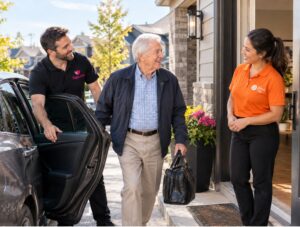
BabaTap can provide practical support such as:
• Driving and rides
• Grocery shopping
• Errand assistance
• Household support
• Practical assistance around everyday activities
• Companion support for seniors
These services can help seniors maintain routines without requiring a family member to manage every individual task.

Transportation Can Protect Independence
Transportation is one of the most important pieces of independent living.
When an older adult stops driving, everyday independence can become more complicated. A senior may still want to visit friends, attend appointments, shop for groceries, go to a salon, visit a community centre, or participate in activities.
Ontario’s community support information specifically identifies transportation for seniors and people with disabilities as one type of support available in communities.
A companion transportation service can therefore be part of a larger aging at home strategy.
Instead of asking an adult child to leave work every time transportation is needed, a family may arrange appropriate companion transportation for selected activities.
The result is not simply a ride.
It can mean greater freedom to maintain a normal weekly routine.
Grocery Shopping and Errands
Grocery shopping is another area where practical assistance can make a meaningful difference.
A senior may still want to choose their own food, decide what meals to prepare, and maintain control over household purchases. The challenge may simply be getting to the store, carrying heavy items, or managing the trip.
Companion assistance can allow the senior to remain involved in the process.
Depending on the arrangement, a companion may help with transportation, shopping, carrying groceries, or completing an errand.
This preserves an important element of independence: the senior remains involved in making decisions.
Household Support and a More Comfortable Home
A comfortable home plays a major role in aging independently.
The City of Ottawa provides Home Support Services for eligible low income residents with a documented medical reason affecting their ability to complete homemaking tasks and limited support in the community. Services can include light housekeeping such as floors, bathrooms, laundry, kitchen cleaning, and light dusting.
However, not every senior qualifies for every publicly funded program.
Ontario notes that private companies can also provide services for people who do not qualify for publicly funded home care or who want additional assistance.
This is one reason families may consider private companion and household support alongside government or community programs.
BabaTap can fit into this broader support structure by helping seniors with practical tasks that make everyday life easier.
Why Companion Care for Seniors Can Matter
Social connection is an important part of aging well.
A senior can live independently while still experiencing loneliness or reduced social interaction. Transportation difficulties, weather, reduced mobility, and the loss of a driver’s licence can gradually reduce opportunities to see other people.
Ontario recognizes friendly visiting, social and recreational programs, and other community services as ways to support seniors living at home.
Companion Care for Seniors can provide another layer of practical human connection.
A companion does not need to provide medical treatment to make a meaningful difference.
Sometimes the benefit is simply having someone accompany a senior to an appointment, help with an errand, go shopping together, or provide assistance during an outing.
That can help an older adult remain engaged with everyday life.
How TapLook Supports Seniors at Home
TapLook approaches senior independence from another direction: personal beauty, wellness, and self care.
For many people, personal grooming is part of identity and confidence.
As mobility becomes more limited, travelling to a salon or wellness location may become inconvenient. A senior may have difficulty getting into a vehicle, waiting in a salon, navigating stairs, or coordinating transportation.
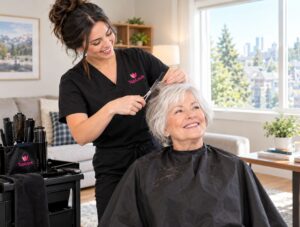
TapLook brings selected beauty and wellness services closer to the senior.
Its services can include:
• Nail care
• Massage therapy
• Haircuts
• At home services
• Bedside services when appropriate
• Services for events
• Gift certificates
• App based booking
This type of service can complement other forms of senior support.
The goal is not simply appearance.
Personal grooming can help someone feel prepared for a family gathering, birthday, holiday, appointment, community event, or ordinary day at home.
Personal Care and Confidence
Consider an older adult who used to visit a salon every few weeks.
Over time, driving becomes difficult.
Public transportation may no longer feel convenient.
Family members are busy.
The senior gradually stops getting regular haircuts or other personal services.
This may appear to be a minor lifestyle change, but it can affect confidence and routine.
A service that comes to the senior can remove some of the logistical barriers.
Instead of arranging a trip across Ottawa, the family can explore whether an appropriate provider can deliver the service at home.
That is one of the ways TapLook can contribute to an independent living strategy.
TapLook and BabaTap Work Around the Senior’s Lifestyle
The strongest benefit of combining different services is that they can address different parts of everyday life.
BabaTap can help with practical mobility and errands.
TapLook can help with personal beauty and wellness.
A healthcare provider can address medical needs.
Community organizations can provide social programs.
Ontario Health atHome can coordinate eligible home and community care.
These services do not need to compete with one another.
They can operate as different pieces of a larger support network.
For example, imagine a senior living independently in Ottawa who wants to remain at home.
The person may need occasional transportation.
BabaTap could assist with selected rides or errands.
The senior may also want a haircut without travelling to a salon.
TapLook could provide an appropriate service at home.
If the person also qualifies for publicly funded healthcare or personal support, those services can remain part of the overall care plan.
This layered approach recognizes that independent living involves more than healthcare alone.
Building a Complete Support System for Seniors in Ottawa
Independent living works best when support is matched to actual needs.
A senior who only needs transportation should not necessarily be treated as someone requiring intensive care.
Similarly, a senior who needs medical assistance should not rely exclusively on a companion service.
The first step is understanding the difference between the types of support available.
A practical senior support plan may include several categories:
Medical support: nursing, therapy, medical assessments, and other clinical services when required.
Personal support: assistance with activities of daily living when eligibility and needs justify it.
Household support: cleaning, laundry, shopping, meal preparation, and other homemaking tasks.
Transportation: rides to appointments, shopping, social activities, and community destinations.
Companionship: human interaction and assistance during everyday activities.
Beauty and wellness: haircuts, nail care, massage therapy, and similar lifestyle services.
This broader perspective can make conversations between seniors and their families more productive.
Home Care for Seniors Is Not One Single Service
When families search for Home Care for Seniors, they may have very different needs in mind.
One family may be looking for nursing.
Another may need help with bathing or dressing.
Another may simply need transportation and grocery assistance.
Another may be searching for companionship because a senior is spending too much time alone.
This is why families should look beyond a single label and identify the specific tasks that are becoming difficult.
Ontario’s senior support resources describe multiple forms of home and community assistance, including professional healthcare, personal support, homemaking, transportation, meal delivery, friendly visiting, and social programs.
For seniors who need clinical care, appropriate healthcare professionals remain essential.
For everyday lifestyle needs, services such as TapLook and BabaTap can provide complementary assistance.
Home Care for Seniors and the Goal of Aging in Place
Aging in place means remaining in a familiar home and community for as long as it is safe and appropriate.
This can provide continuity.
The senior knows the neighbourhood.
The home contains familiar belongings.
Friends and neighbours may live nearby.
The person may already know local shops, parks, community centres, libraries, and places of worship.
Ottawa’s Older Adult Plan 2025 to 2030 emphasizes choice and dignity as part of creating a supportive community for older adults.
Supporting independence at home can therefore involve more than preventing a move.
It can involve preserving the person’s relationship with the community.
Transportation and companionship are especially important in this context.
If a senior cannot easily leave home, access to the community may shrink.
When practical support makes outings easier, the senior may have more opportunities to maintain relationships and routines.
Companion Care for Seniors and Family Caregivers
Family caregivers often want to provide everything themselves.
But this is not always sustainable.
An adult child may have employment responsibilities.
A spouse may have their own limitations.
A family may live several hours away.
Siblings may live in different parts of Ottawa or different cities.
Instead of treating family caregiving as an all or nothing responsibility, families can divide tasks.
Family members may continue making important decisions and providing emotional support while private services handle selected practical tasks.
Companion Care for Seniors can therefore become one component of a larger family support plan.
For example, an adult daughter might handle financial matters and weekly visits while a companion helps her parent with selected errands.
A son might coordinate medical appointments while a transportation companion helps the senior travel to and from them.
This arrangement can reduce the pressure on family members without removing the family’s role.
Maintaining Social Connections in Ottawa
Ottawa provides many opportunities for older adults to remain involved in community life.
Ontario’s Seniors Active Living Centre programs support social, cultural, learning, recreational, and community participation activities across the province. These programs are designed to support seniors with different levels of independence.
The challenge for some seniors is not finding an activity.
It is getting there.
A transportation or companion service can help bridge this gap.
A senior may want to attend a community program but hesitate because they no longer drive.
A companion ride can make participation more practical.
This illustrates an important principle: transportation is not only about getting from one location to another. It can influence whether a senior remains connected to the wider community.
Seasonal Challenges for Seniors in Ottawa
Ottawa’s changing seasons can also affect independent living.
Winter conditions can make walking and driving more difficult.
Snow and ice may create additional concerns around entrances, sidewalks, parking areas, and transportation.
Ontario identifies home maintenance services such as snow shovelling and other practical supports among community resources that may be available to seniors.
During difficult weather, families may want to reduce unnecessary travel.
At home services can become especially convenient during these periods.
Instead of arranging transportation for every personal service, a senior may be able to receive appropriate beauty or wellness services at home.
Similarly, practical companion support can help with necessary errands when travelling independently becomes less convenient.
Choosing the Right Combination of Services
Every senior has different priorities.
Before arranging services, families can create a simple list of daily and weekly challenges.
Ask:
What activities are becoming difficult?
Does the senior still drive?
Is grocery shopping becoming physically demanding?
Is housekeeping becoming difficult?
Does the senior have regular social interaction?
Are salon or wellness appointments difficult to reach?
Does the senior need help leaving and entering the home?
Are there medical or personal care needs that require qualified healthcare professionals?
The answers can help determine which type of support is appropriate.
A senior who only needs occasional rides may not need extensive home support.
A senior who requires clinical assistance should be connected with appropriate healthcare services.
A senior who primarily struggles with errands and isolation may benefit from companion support.
A senior who finds salon visits difficult may appreciate an at home wellness option.
Home Care for Seniors and the Importance of Personal Choice
One of the most important principles of independent aging is respecting the senior’s preferences.
Family members sometimes focus entirely on safety and forget that independence also involves choice.
An older adult may have lived in the same Ottawa neighbourhood for decades.
They may have strong preferences about meals, clothing, personal grooming, daily schedules, social activities, and household routines.
Support should ideally make those choices easier rather than replacing them unnecessarily.
This is another reason services such as TapLook and BabaTap can be useful as complementary options.
The senior can remain involved.
They can decide when they want assistance.
They can choose which activities matter most.
They can continue living according to familiar routines while receiving support where needed.

A Practical Example of Independent Living in Ottawa
Consider a hypothetical Ottawa senior named Margaret.
Margaret lives in her own home and is generally independent.
She can prepare meals, manage her personal schedule, communicate with her family, and make her own decisions.
However, she no longer feels comfortable driving.
Her daughter lives nearby but works full time.
Margaret needs groceries once a week and occasionally wants to attend activities in her community.
She also enjoys getting her hair done and receiving wellness services, but travelling to a salon has become inconvenient.
Instead of assuming Margaret needs to move into a residential setting, her family can look at the specific barriers.
BabaTap could potentially assist with transportation, grocery shopping, or practical errands.
TapLook could potentially bring selected beauty and wellness services into the home.
If Margaret has healthcare needs, her family could separately explore appropriate services through Ontario Health atHome and other healthcare providers.
This creates a support network around Margaret without automatically replacing her independent lifestyle.
The important point is that each service addresses a different need.
The Difference Between Companion Services and Medical Care
Families should understand the boundaries between different forms of senior support.
Companion and lifestyle services are not substitutes for healthcare professionals.
A companion may help someone travel to an appointment, but the companion does not diagnose a medical condition.
A beauty professional may provide a haircut or nail service, but that service is not medical treatment.
A household support provider may help with everyday tasks, but that does not necessarily mean the provider is qualified to perform clinical care.
Ontario’s home and community care system includes professional services such as nursing, occupational therapy, physiotherapy, nutrition and dietetics, social work, and speech language therapy for eligible individuals.
Families should therefore match the service to the need.
This approach improves clarity and helps seniors receive appropriate assistance.
Why At Home Services Can Be More Convenient
Convenience is a significant part of independent living.
For an older adult, leaving home may involve several steps.
Getting dressed.
Preparing personal belongings.
Getting to the vehicle.
Entering the vehicle.
Travelling.
Finding parking.
Walking to the destination.
Waiting.
Completing the appointment.
Returning home.
For someone with reduced mobility, fatigue, or transportation challenges, a simple appointment can become a major event.
At home services reduce some of those steps.
This can make personal wellness services more accessible and less disruptive to the senior’s routine.
Creating a Senior Support Routine
Families can also use these services proactively rather than waiting for a crisis.
For example, a weekly routine could include grocery support, a scheduled social outing, and household assistance.
A monthly routine could include a haircut or wellness appointment.
Transportation can be arranged around important community activities.
Healthcare appointments can remain coordinated separately with qualified providers.
This kind of routine creates predictability.
Seniors often appreciate knowing when assistance will arrive and what the day will look like.
Predictability can also make family caregiving easier.
How Families Can Talk With Seniors About Support
The conversation should focus on independence rather than loss of independence.
Instead of saying:
“You can no longer do this yourself.”
Families can say:
“How can we make this easier for you?”
Instead of:
“You need someone to take care of you.”
Consider:
“Would it be helpful to have someone assist with errands?”
This language respects autonomy.
The purpose of support is not to take control away from the senior.
It is to remove unnecessary barriers.
A Broader View of Senior Home Care in Ottawa
The future of aging at home is unlikely to depend on one service alone.
It is more likely to involve connected layers of support.
Healthcare professionals provide medical services.
Community organizations provide social and practical programs.
Family members provide emotional connection and advocacy.
Transportation services help seniors access the community.
Companion services assist with everyday activities.
Beauty and wellness providers help seniors maintain personal routines.
Technology can make scheduling and communication easier.
Together, these elements can create an environment where seniors have more opportunities to remain at home while receiving appropriate support.
How TapLook and BabaTap Fit Into the Larger Picture
The value of TapLook and BabaTap is their focus on everyday life.
BabaTap can address practical mobility, errands, household tasks, and companionship.
TapLook can address personal beauty and wellness needs through services designed to come closer to the senior.
Neither service needs to replace healthcare.
Instead, they can complement a broader support network.
This distinction is particularly important for families researching Home Care for Seniors in Ottawa.
The question should not simply be, “What care does my parent need?”
It can also be:
“What parts of everyday life are becoming difficult, and what type of support could make those activities easier?”
That question can lead to more personalized solutions.
Supporting Dignity Through Everyday Choices
Independence is often preserved through small decisions.
Choosing what groceries to buy.
Choosing when to get a haircut.
Choosing whether to attend a community activity.
Choosing when to visit a friend.
Choosing what to do during the weekend.
Choosing who provides assistance.
These decisions may appear ordinary, but they are part of personal autonomy.
Services that support seniors without unnecessarily taking control can help preserve this sense of independence.
For many families, that is the real meaning of aging in place.
When More Support May Be Needed
Independent living should always be evaluated in the context of safety and actual care needs.
If a senior develops significant mobility problems, confusion, repeated falls, medication concerns, difficulty with essential personal care, or other serious changes, families should seek appropriate professional assessment.
Ottawa provides resources for older adults experiencing health changes, isolation, disabilities, or barriers to accessing care. The City directs residents toward Home and Community Care, Community Support Services, geriatric assessment resources, and other programs.
Ontario Health atHome can also assess eligibility for appropriate home and community care services.
Companion and lifestyle services should be viewed within this larger system.
Final Thoughts: Helping Ottawa Seniors Stay Independent at Home
How TapLook and BabaTap Help Seniors Live Independently at Home in Ottawa is ultimately about more than two individual services.
It is about recognizing that independent living has many dimensions.
A senior may need transportation without needing medical care.
They may need help with groceries without needing residential care.
They may want companionship without wanting someone to take over their daily routine.
They may want a haircut or wellness treatment but find travelling to a salon difficult.
They may need occasional household assistance while continuing to manage most aspects of life independently.
This is where flexible support can make a meaningful difference.
BabaTap can help address practical everyday needs such as transportation, errands, grocery shopping, household assistance, and companionship.
TapLook can help seniors maintain beauty, grooming, and wellness routines through convenient services delivered where appropriate.
Together, these services can complement the broader network of healthcare, community programs, family caregiving, transportation, and home support available in Ottawa.
For families exploring Home Care for Seniors, the most useful approach is often to start with the individual’s actual needs and preferences rather than choosing a single category of care.
The same principle applies when considering Companion Care for Seniors.
Support should help the senior participate in life, not simply manage tasks around them.
Ottawa already has a range of public and community resources intended to help older adults remain active, connected, and supported. The City of Ottawa’s current Older Adult Plan emphasizes choice, dignity, and stronger community partnerships, while Ontario provides information about home care and community support options for seniors who want to remain at home.
For many older adults, the path to independent living is not about doing everything alone.
It is about having the right support at the right time.
With appropriate healthcare when needed, practical assistance when useful, transportation when mobility becomes challenging, companionship when social connection matters, and accessible beauty and wellness services when personal routines become difficult, seniors can have more opportunities to continue enjoying the homes and communities they know.
In that sense, Home Care for Seniors is best understood as part of a larger ecosystem of support.
And Companion Care for Seniors can be one of the practical pieces that helps connect an older adult’s home life with the wider Ottawa community.
The objective is simple: help seniors maintain choice, dignity, comfort, connection, and as much independence as safely possible while allowing families to build a support system that fits real life.
Bài viết liên quan: