
How TapLook and BabaTap Help Seniors Live Independently at Home in Hamilton is an important topic for older adults, families, caregivers, and anyone looking for practical ways to support aging in place. For many seniors in Hamilton, Ontario, staying at home is about more than remaining in a familiar house. It can mean maintaining daily routines, staying connected with family and friends, preserving personal dignity, and continuing to make choices about everyday life.
As seniors age, however, some everyday activities can become more difficult. Transportation, household tasks, personal grooming, errands, social activities, and simple companionship may require additional support. This is where the broader concept of Senior Home Care becomes important. Not every older adult needs medical care or full-time assistance. Many seniors simply need flexible, respectful support that makes independent living more comfortable and practical.
Home-based support can take many forms. Ontario recognizes a range of home and community services designed to help seniors remain in their homes and communities for as long as possible. These can include personal support, transportation assistance, homemaking, community programs, and other services depending on an individual’s needs and eligibility.
For families searching for Home Care for Seniors, the goal is often not to take away independence but to help preserve it. Similarly, Companion Care for Seniors can provide meaningful human connection while helping older adults continue participating in familiar routines and activities.
TapLook and BabaTap can be positioned within this broader aging-in-place approach by addressing different everyday needs. TapLook focuses on convenient mobile beauty and personal care experiences that can be delivered where the senior is most comfortable. BabaTap focuses on companionship and practical everyday assistance, helping seniors with activities such as errands, shopping, household support, transportation, and spending time together.
Together, these services can contribute to a more comfortable and independent lifestyle for seniors living in Hamilton and surrounding communities.

Understanding Aging in Place in Hamilton
Aging in place means continuing to live in a familiar home and community while receiving the appropriate level of support as circumstances change.
For many seniors, the familiar environment of home provides emotional comfort. The neighbourhood may contain years of memories, established relationships, favourite stores, community connections, and routines that are difficult to replace.
Hamilton offers a diverse environment for older adults, with established neighbourhoods, suburban communities, apartment buildings, retirement options, community organizations, and access to healthcare and social services.
The City of Hamilton provides resources for seniors and older adults, including information about housing, community support, healthcare, and other services. Hamilton’s age-friendly initiatives also recognize the importance of helping older adults remain connected, supported, and independent in their communities.
The idea of independence does not necessarily mean doing everything alone.
Instead, independence can mean having enough support to continue making personal decisions and participating in daily life.
A senior may still want to prepare breakfast independently but appreciate help with grocery shopping. Another person may manage their own household but need transportation to appointments. Someone else may be comfortable living alone but enjoy having a companion for an afternoon walk, coffee, or a trip to a local store.
This distinction is important when families consider Senior Home Care options.
What Seniors Actually Need to Live Independently
Every senior has different needs.
Age alone does not determine how much support someone requires. A healthy and active 80-year-old may need very little assistance, while another senior may need regular help with transportation, household activities, or social connection.
Some of the most common areas where additional support can make independent living easier include:
Transportation and errands
Grocery shopping
Light household assistance
Personal grooming
Beauty and nail care
Social companionship
Visits and conversations
Outdoor activities
Family visits
Appointments and community activities
Shopping and everyday errands
Assistance with maintaining routines
These services can be especially useful when adult children live outside Hamilton or have demanding work and family responsibilities.
Instead of replacing the senior’s independence, practical support can allow the senior to continue doing the things they enjoy.
How TapLook Supports Seniors at Home
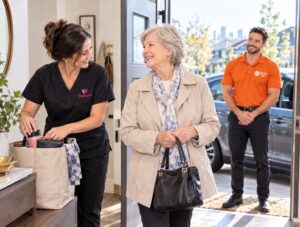
TapLook brings beauty and personal care services directly to the client instead of requiring the client to travel to a traditional salon or spa.
For seniors, this can be particularly convenient.
Traveling to a salon may involve arranging transportation, getting dressed, walking through unfamiliar spaces, waiting for an appointment, and returning home afterward. For someone with limited mobility or simply a preference for staying home, these additional steps can make a routine beauty appointment unnecessarily difficult.
A mobile service changes the experience.
Instead of asking the senior to travel, the service can come to the senior.
This home-based model can support seniors who prefer familiar surroundings or who find outside appointments tiring.
Mobile Nail and Beauty Care for Older Adults
Personal grooming is not simply about appearance.
For many seniors, maintaining nails, hands, feet, hair, and general grooming contributes to comfort, confidence, and a sense of normal routine.
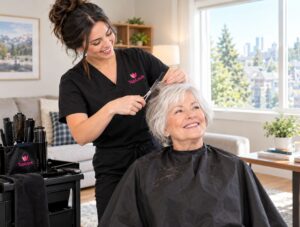
TapLook’s mobile beauty approach can make these services more accessible by bringing the experience into the senior’s home or another appropriate location.
A manicure, nail service, or personal beauty appointment can become a pleasant social moment rather than another complicated trip outside the house.
For families, this can also provide reassurance that their loved one can continue enjoying familiar self-care routines without having to organize transportation for every appointment.
Convenience for Seniors With Limited Mobility
Mobility limitations do not always mean that someone needs medical care or residential care.
Sometimes, a senior simply needs services adapted to their circumstances.
A mobile beauty appointment can reduce unnecessary travel and allow the senior to remain in a familiar environment.
This is particularly relevant for seniors who:
Prefer home-based services
Have difficulty traveling long distances
Become tired during extended outings
Depend on family members for transportation
Have limited mobility
Prefer quiet and familiar surroundings
Need flexible appointment arrangements
The principle is simple: make everyday services easier to access without unnecessarily reducing independence.
BabaTap and Practical Everyday Support
While TapLook can address personal beauty and grooming needs, BabaTap serves a different part of the aging-in-place experience.
BabaTap is positioned as a senior companion service rather than a medical care provider.
That distinction matters.
Many seniors do not need a nurse or medical professional every day. They may simply need someone to help with ordinary activities that have become more difficult.
This can include going grocery shopping, getting to an appointment, picking up items, helping around the home, going for a walk, or spending a few hours together.
This type of assistance can be especially valuable for seniors who live alone.
Why Companionship Matters
Loneliness can become an important issue for older adults, particularly when mobility decreases or social routines change.
A senior may have fewer opportunities to meet friends, attend community events, visit stores, or participate in activities outside the home.
Companionship can help maintain social interaction.
Companion support may involve something as simple as having a conversation over coffee, watching a favourite television program together, taking a walk, visiting a local shop, or helping with an everyday errand.
These activities may appear small, but they can make a meaningful difference in the structure of a person’s day.
For seniors, companionship is often about maintaining connection rather than receiving intensive care.
How Companion Support Can Preserve Independence
There is an important difference between doing something for a senior and helping a senior continue doing something independently.
For example, a companion might accompany an older adult while grocery shopping rather than doing all the shopping alone.
A companion might drive a senior to an activity while allowing the senior to choose where they want to go.
A companion might help organize household tasks while allowing the senior to remain involved in decisions.
This approach respects personal choice.
Companion Care for Seniors can therefore be part of an independence-focused lifestyle rather than a replacement for independence.
The senior remains at the centre of the decision-making process.
Supporting Grocery Shopping and Everyday Errands
Grocery shopping is a good example of how small challenges can affect independent living.
A senior may still enjoy choosing food, comparing products, visiting a familiar store, and preparing meals. The challenge may simply be transportation, carrying bags, or managing a longer shopping trip.
A companion can help make the experience easier.
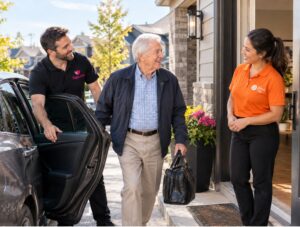
Depending on the arrangement, support may involve transportation, carrying groceries, assisting during the shopping trip, or helping bring items into the home.
The senior can continue participating in the activity instead of losing it completely.
This is one of the key principles behind practical aging in place.
Helping Seniors Stay Connected to Their Community
Independent living should not mean staying isolated inside the home.
Community connection is an important part of quality of life.
Hamilton seniors may have interests ranging from shopping and dining to community programs, family visits, religious or cultural activities, hobbies, parks, libraries, and social gatherings.
Transportation and companionship can help make these activities more accessible.
A companion may help a senior attend an event, visit a friend, go shopping, or simply get outside for a change of scenery.
This can support both physical activity and social connection while maintaining the senior’s existing lifestyle.
The Family Perspective
Adult children often want their parents to remain independent, but they may not live nearby or have enough time to handle every practical task.
This can create a difficult situation.
A daughter may live in another part of Ontario.
A son may work full-time and have young children.
Another family member may live outside Canada.
Even when family members are deeply involved, they cannot always provide transportation, errands, household help, and companionship every day.
This is where supplemental services can help.
Rather than replacing family involvement, services such as TapLook and BabaTap can complement it.
Family members can remain emotionally connected while practical support is provided locally.
Creating a Personalized Support Routine
There is no single formula for independent living.
Some seniors may need support once a week.
Others may benefit from several short visits throughout the week.
A senior may use mobile beauty services once or twice a month while receiving companion support for errands every week.
Another person may only need occasional assistance during periods when family members are unavailable.
The important principle is flexibility.
Support should reflect the senior’s lifestyle, preferences, comfort level, and changing circumstances.
This is one reason why aging in place should be viewed as an ongoing process rather than a single decision.
Building a More Comfortable Senior Lifestyle at Home
The question is not simply whether a senior can live alone.
A more useful question is whether the senior has the right support to live comfortably, safely, socially, and according to their own preferences.
A senior who receives occasional help with errands may be able to continue living at home for longer.
A senior who has regular social interaction may feel more connected to the community.
A senior who can receive beauty services at home may avoid unnecessary travel.
A senior who has dependable transportation may continue attending appointments and activities.
These individual forms of support can work together to create a stronger daily routine.
This is where the combined concept behind How TapLook and BabaTap Help Seniors Live Independently at Home in Hamilton becomes especially relevant.
TapLook and BabaTap address different aspects of everyday life, but both can support the broader objective of helping seniors remain connected to the routines they value.
Senior Home Care Is Not One-Size-Fits-All
The term Senior Home Care can describe a wide range of support.
Some services involve healthcare professionals.
Other services focus on personal assistance.
Some focus on companionship.
Others help with transportation, housekeeping, meals, or community activities.
Ontario’s public home and community care system includes healthcare and personal support services for eligible individuals. Private services can also be used depending on the type of assistance a senior and family choose.
Families should understand the difference between medical care and non-medical companion services.
A senior requiring nursing, medication management, clinical assessment, or other healthcare services may need qualified healthcare professionals.
A senior who primarily needs company, transportation, shopping assistance, or help with everyday activities may be looking for a different kind of service.
BabaTap’s companion-focused approach belongs in this second category.
Home-Based Beauty as Part of Everyday Well-Being
Beauty and grooming are sometimes overlooked when families discuss senior independence.
Yet maintaining personal routines can contribute to confidence and emotional well-being.
For some seniors, having their nails cared for, receiving a beauty treatment, or simply enjoying time dedicated to personal grooming can provide a sense of normality.
A mobile beauty model removes one of the major barriers: travel.
Instead of organizing a ride to a salon, the senior can receive the service in a familiar environment.
This can be particularly appealing for seniors who prefer quiet surroundings or who become uncomfortable with long trips.
TapLook’s mobile approach can therefore complement other forms of senior support without turning beauty care into a medical service.
Companion Care for Seniors and Social Connection
Companionship can be valuable at many stages of aging.
Someone may be physically capable of living alone but still benefit from regular social interaction.
A companion can help create structure in the day.
For example, a few hours together might include:
Having coffee and talking
Going grocery shopping
Preparing simple household items
Going for a walk
Visiting a local shop
Attending an appointment
Picking up prescriptions or household items
Visiting a friend
Helping organize the home
Spending time on a favourite hobby
The activities themselves are often ordinary.
Their value comes from making them easier and more enjoyable for the senior.
Supporting Seniors Without Taking Away Their Choices
One of the most important principles of aging in place is respecting autonomy.
Support should not automatically mean making decisions for someone.
A senior may want to decide what groceries to buy.
They may want to choose which restaurant to visit.
They may want to decide when to go out.
They may want to select their preferred beauty service.
They may want to determine how their home is organized.
Companion support can make these choices easier to act on without taking ownership of those choices away from the senior.
This can create a healthier relationship between assistance and independence.
Helping Adult Children Feel More Connected
Family caregivers can experience pressure when they feel responsible for every practical need.
Regular support can reduce some of that pressure.
For example, instead of an adult child leaving work early to take a parent grocery shopping, a companion service may be able to assist.
Instead of a family member arranging a salon appointment and transportation, a mobile beauty service may provide an alternative.
The family can then focus more on the relationship itself.
A phone call can be about family news instead of scheduling appointments.
A weekend visit can be about spending quality time together instead of completing a long list of errands.
This distinction can improve the experience for both generations.
Safety and Practical Planning
Independence should always be balanced with safety.
Families considering home-based services should think about the senior’s mobility, home environment, transportation needs, communication preferences, emergency contacts, and the type of assistance required.
The City of Hamilton provides resources for older adults, while Ontario Health atHome provides information about publicly supported home and community care for eligible individuals.
Families should also understand that non-medical companion services are different from clinical healthcare.
If a senior has medical needs, families should consult appropriate healthcare professionals.
If the primary challenge is transportation, companionship, errands, household assistance, or access to personal services, non-medical support may be more appropriate.

When Families May Consider Additional Support
Several situations may indicate that a senior could benefit from additional everyday assistance.
For example, a family may notice that a parent:
Frequently cancels appointments because transportation is difficult
Has stopped going grocery shopping regularly
Spends more time alone
Finds household errands tiring
No longer participates in favourite activities
Has difficulty getting to beauty appointments
Needs occasional help around the home
Would benefit from more social interaction
Has adult children who cannot visit frequently
None of these circumstances automatically means that a senior cannot live independently.
Instead, they may indicate that additional support could make independent living easier.
Combining Different Services Around the Senior
A useful approach is to think about support as a network rather than one single service.
Healthcare providers may address medical needs.
Family members may provide emotional support.
Community programs may provide social activities.
Transportation services may help seniors travel.
Companion services may provide practical and social assistance.
Mobile beauty services may help seniors maintain grooming routines at home.
Each service can play a different role.
This approach avoids expecting one provider to meet every possible need.
A Typical Example of Aging in Place in Hamilton
Consider an older adult living independently in Hamilton.
She manages her own meals, medication, finances, and household routine. She does not need full-time care.
However, grocery shopping has become tiring, and she no longer enjoys travelling across the city for beauty appointments.
Her daughter lives nearby but works full-time.
A companion service could help with grocery shopping and occasional transportation.
A mobile beauty provider could visit the home for personal grooming services.
Her daughter could continue visiting on weekends and calling during the week.
Nothing about this arrangement requires the senior to surrender control over her daily life.
Instead, support is added around the areas that have become more difficult.
That is the practical meaning of aging in place.
How TapLook and BabaTap Complement Each Other
TapLook and BabaTap do not necessarily provide the same service.
Their value comes from addressing different parts of everyday senior life.
TapLook can focus on convenient mobile beauty and grooming experiences.
BabaTap can focus on companionship and practical everyday support.
Together, these services can contribute to a lifestyle where seniors have easier access to personal care, social interaction, errands, and everyday assistance.
This can be especially meaningful for families searching for Home Care for Seniors but discovering that their loved one does not necessarily need intensive medical care.
Sometimes the most useful support is practical, flexible, and personal.
Why Familiarity Matters for Older Adults
Home is more than a physical location.
For many older adults, it represents familiarity.
The kitchen where they have prepared meals for decades.
The living room where they have hosted family.
The neighbourhood where they know their neighbours.
The nearby store where they recognize familiar faces.
The chair where they read every morning.
Supporting seniors at home can therefore preserve more than convenience.
It can preserve continuity.
When services are brought to the home, seniors may be able to maintain more of their established routines without unnecessary disruption.
Supporting Independence Across Different Hamilton Communities
Hamilton includes a wide range of neighbourhoods and communities, from central Hamilton to areas such as Ancaster, Dundas, Stoney Creek, Waterdown, and other surrounding areas.
Senior needs can vary significantly between households.
Someone living close to shops and community facilities may need less transportation support than someone who lives farther from everyday services.
Likewise, a senior with nearby family may have different needs from someone whose children live outside the region.
Flexible support allows services to be adapted to individual circumstances.
The Role of Respect and Dignity
Any service involving older adults should prioritize respect.
Seniors should not feel that asking for help means they have failed.
Needing assistance with transportation, errands, grooming, or companionship is a normal part of life for many people.
The right support can make asking for help feel less like giving up independence and more like maintaining it.
That is an important mindset for families.
Instead of asking, “Can my parent still live alone?” families can ask, “What support would help my parent continue living the way they want?”
That question creates a much more constructive conversation.
Questions Families Can Ask Before Choosing a Service
When considering support for a senior in Hamilton, families may want to ask:
What type of assistance does the senior actually need?
Is the service medical or non-medical?
Can the service be provided at home?
Does the senior remain involved in decisions?
Is transportation included when appropriate?
Can the schedule be customized?
Does the service support the senior’s existing routine?
How are appointments arranged?
What happens if the senior’s needs change?
How does the provider communicate with the family when appropriate?
These questions help families identify services that match actual needs rather than choosing the most intensive option automatically.
Building Independence One Routine at a Time
Independence does not have to be measured by how much a senior can accomplish without help.
It can be measured by how much control the senior continues to have over their life.
A person can receive transportation assistance and still choose where to go.
A person can receive grocery support and still choose what to buy.
A person can receive household assistance and still decide how their home should feel.
A person can receive companionship and still maintain their own interests and relationships.
A person can receive mobile beauty care and still choose how they want to look and feel.
This is why practical support can become an important part of aging in place.
Making Everyday Life Easier for Hamilton Seniors
Independent living does not mean that an older adult has to manage every task without assistance. In many cases, independence becomes more sustainable when seniors can access the right support at the right time.
For an older adult living in Hamilton, a few hours of assistance each week may be enough to make everyday life significantly easier. Support with errands, transportation, household activities, personal grooming, and companionship can help seniors maintain routines that might otherwise become difficult.
This is particularly important for seniors who want to remain in their own homes instead of moving immediately into a retirement residence or another type of supportive living environment.
The objective is not to remove responsibility from the senior. Instead, it is to remove unnecessary obstacles.
A senior may still decide what to eat, where to go, who to visit, and how to spend the day. A companion or mobile service can simply make those choices easier to act on.
The Difference Between Assistance and Dependence
One concern families sometimes have is that accepting help could make an older adult feel dependent.
In practice, the opposite can happen when support is designed appropriately.
Consider transportation.
A senior who cannot comfortably drive anymore may stop attending social activities. Without transportation support, the senior’s world gradually becomes smaller.
With reliable transportation or a companion who can accompany the senior, the person may continue visiting friends, shopping, attending community activities, and participating in family events.
The senior has not lost independence.
The senior has gained another way to exercise it.
The same principle applies to household assistance and personal care.
Support should enable participation rather than replace it whenever possible.
How Companion Services Can Support Daily Routines
Daily routines provide structure.
For many seniors, having predictable activities can make the day feel more purposeful and organized.
A companion visit could become part of that routine.
For example, Monday could include grocery shopping. Wednesday could include a walk or coffee outing. Friday could involve household assistance or a visit to a local store.
The exact routine depends on the individual.
The important point is consistency.
Regular companionship can also make it easier for families to notice changes in an older adult’s routine. If someone who normally enjoys going outside suddenly wants to remain at home all the time, that may be something the family wants to understand.
Companion services are not medical monitoring, but regular human contact can naturally create more opportunities for communication and connection.
Helping Seniors Continue Favorite Activities
Aging does not mean that interests disappear.
Older adults may continue to enjoy gardening, reading, shopping, cooking, walking, visiting friends, attending community activities, watching sports, participating in hobbies, or spending time with grandchildren.
Sometimes the activity itself is not the problem.
The challenge may be getting there.
A senior might love visiting a particular market but no longer feel comfortable driving.
Another senior might enjoy meeting friends for lunch but find public transportation inconvenient.
Someone else might want to visit a family member but need assistance getting out of the house.
Companion support can help remove these practical barriers.
This is one reason Companion Care for Seniors can be an important part of an independent lifestyle.
Supporting Social Engagement in Hamilton
Hamilton offers many opportunities for older adults to remain socially connected.
Seniors may participate in community centres, libraries, recreational programs, cultural activities, shopping areas, parks, and local events.
However, access is not always equal.
Transportation, mobility, weather, confidence, and social circumstances can influence whether someone actually participates.
A senior who has stopped going out because every outing requires complicated planning may gradually become isolated.
A companion can make an outing simpler.
Even a short trip to a coffee shop, grocery store, community centre, or park can break up a long day at home.
Social engagement does not always need to involve a large event.
Sometimes a familiar conversation and a short outing are enough to make the day feel different.
Mobile Beauty Services and Personal Confidence
Personal grooming can also influence how seniors feel about themselves.
A regular manicure, nail appointment, or other beauty service can become a familiar part of personal routine.
For someone who finds salon travel difficult, receiving services at home can be considerably more convenient.
TapLook’s mobile approach can help seniors continue enjoying these routines without requiring a separate transportation arrangement.
The benefit is not simply convenience.
It can also be about maintaining personal identity.
Seniors should be able to continue caring about their appearance, preferences, style, and personal routines at every stage of life.
Reducing the Burden of Multiple Appointments
Families often spend considerable time coordinating appointments for older relatives.
One appointment may require transportation.
Another may require a family member to take time away from work.
A third may require arranging help at home.
When personal services can come directly to the senior, one layer of coordination can be reduced.
This is one of the practical advantages of mobile services.
Instead of organizing an entire outing around a beauty appointment, the senior can remain at home and continue with other activities before and after the appointment.
Supporting Seniors Who Live Alone
Living alone and being isolated are not the same thing.
Many seniors live alone successfully and enjoy the privacy and independence of their own homes.
The challenge arises when everyday tasks become difficult and there is no one nearby to help.
A senior living alone may need occasional assistance with groceries, transportation, household activities, or companionship.
This does not necessarily mean the person needs residential care.
It may simply mean that a flexible support system would make independent living more sustainable.
BabaTap’s companion-focused model can be relevant in situations where a senior wants to remain at home but would benefit from additional practical and social support.
The Importance of Flexible Support
Senior needs can change from week to week.
A senior may be completely independent during one period and require additional assistance during another.
For example, bad weather may make transportation more difficult.
A family member may temporarily be unavailable.
A senior may have several appointments during one week.
Visitors may be coming to the home.
There may be household tasks that require extra assistance.
Flexible support allows families to respond to these changes without immediately making major decisions about the senior’s living arrangement.
This can be particularly valuable for families trying to support aging parents while respecting their independence.
A Family-Centered Approach to Aging in Place
Independent senior living works best when the senior, family, and service providers understand their respective roles.
The senior remains the central decision-maker whenever possible.
Family members provide emotional support, communication, and assistance with larger decisions.
Service providers handle the specific tasks they are qualified to provide.
Healthcare professionals address medical needs.
Community organizations provide additional resources and social opportunities.
This creates a network rather than relying on one person to do everything.
For families in Hamilton, this can make aging in place more manageable.
When Adult Children Cannot Be Available Every Day
Many adult children want to help their parents but have other responsibilities.
They may work full-time.
They may have children of their own.
They may live in another city.
They may travel for work.
They may have health or family responsibilities that make daily visits impossible.
This does not mean they care any less about their parents.
It simply means that modern family structures sometimes require additional support.
A companion service can help fill practical gaps without replacing the family relationship.
The adult child can remain the daughter or son rather than becoming the sole driver, shopper, housekeeper, appointment coordinator, and social companion.
Supporting Dignity Through Choice
Dignity is closely connected to choice.
Older adults should be encouraged to participate in decisions about their routines and support.
Before arranging a service, families can ask the senior what kind of assistance would actually be useful.
Perhaps the senior does not want someone cleaning the entire house.
Maybe they only want help with grocery shopping.
Perhaps they do not want regular visits but would appreciate occasional transportation.
Maybe they would prefer a mobile beauty appointment because they dislike travelling to salons.
Listening to these preferences can make support feel collaborative rather than imposed.
How Families Can Introduce New Services
Introducing a new service may require sensitivity.
Some seniors may initially resist outside assistance because they feel that accepting help represents a loss of independence.
Families can approach the conversation by focusing on convenience rather than inability.
Instead of saying, “You cannot do this anymore,” they might discuss how assistance could make an activity easier.
For example:
“Would it be easier if someone came with you grocery shopping?”
“Would you enjoy having your beauty appointment at home?”
“Would you like someone to accompany you when you go out?”
“Would having help for a few hours make your week easier?”
This language gives the senior an opportunity to express preferences.
Building a Weekly Support Plan
A simple weekly plan can help families understand where support is actually needed.
For example:
Monday could be used for grocery shopping.
Tuesday could remain independent.
Wednesday could include companionship.
Thursday could be reserved for appointments.
Friday could include household assistance.
The weekend could remain focused on family visits.
This is only an example.
Every senior’s routine should be different.
The value of a plan is that it creates clarity.
Families can identify which tasks truly require assistance and which tasks the senior can continue doing independently.
When Home-Based Support Is Especially Valuable
Home-based services may be particularly useful for seniors who:
Prefer familiar surroundings
Have difficulty travelling
Do not drive
Live alone
Have limited access to family transportation
Want to maintain regular grooming routines
Need occasional help with errands
Enjoy social interaction
Want to remain active in the community
Prefer flexible support instead of a fixed care environment
These factors do not automatically indicate a need for healthcare.
They may simply indicate that practical support could improve everyday life.
Understanding the Limits of Non-Medical Companion Services
Families should also understand what companion services are and are not designed to do.
Companion support can involve everyday activities, social interaction, errands, transportation assistance, household help, and other non-medical needs depending on the service arrangement.
It should not be confused with nursing care, medical assessment, clinical treatment, or other professional healthcare services.
If an older adult has medical needs, families should consult qualified healthcare providers.
This distinction helps families select the right type of support.
Senior Home Care as a Broader Concept
The phrase Senior Home Care can refer to a broad ecosystem of support.
For one family, it may mean professional healthcare at home.
For another, it may mean personal assistance.
For another, it may involve companionship and transportation.
For another, it may include home-based beauty and grooming.
The most appropriate arrangement depends on the senior’s circumstances.
The key is matching the type and amount of support to actual needs.
Creating a Comfortable Home Environment
Independent living is influenced by the home environment itself.
Families may want to consider whether frequently used items are easy to reach, whether walking paths are clear, whether lighting is adequate, and whether everyday activities can be performed comfortably.
Support services can then complement the home environment.
For example, a companion may assist with shopping and household tasks while the senior continues managing other routines independently.
A mobile beauty professional can provide personal services without requiring the senior to travel.
Together, these small adaptations can make the home-centered lifestyle more practical.
The Emotional Value of Familiar Routines
Routine can provide a strong sense of stability.
A senior may have lived in the same home for many years.
They may have a favourite morning routine, preferred grocery store, regular beauty schedule, and established social habits.
Maintaining these routines can contribute to a sense of continuity.
Support should therefore be designed around the senior’s existing lifestyle whenever possible.
The goal is not to create an entirely new life.
The goal is to help the senior continue living the life they already value.
The Role of Transportation in Independence
Transportation is one of the most important practical factors in senior independence.
Without transportation, access to groceries, appointments, social activities, family visits, and community programs can become more difficult.
A senior who stops driving may gradually reduce activities simply because leaving home becomes inconvenient.
Companion transportation can help address this practical barrier when the service is available and appropriate.
Transportation does not have to mean taking over the senior’s schedule.
The senior can still decide where to go and when to go.
The transportation simply provides access.
Connecting Personal Care With Social Support
One of the interesting aspects of the TapLook and BabaTap model is that personal care and companionship address different dimensions of everyday life.
TapLook can support grooming and beauty routines.
BabaTap can support companionship and practical activities.
A senior may use both independently.
There is no requirement that every service be combined.
The broader concept is that seniors can create a personalized network of support based on their own needs.
What Families Should Look For in a Service
When researching services for an older adult in Hamilton, families can consider several factors.
First, identify exactly what the senior wants help with.
Second, determine whether the service is medical or non-medical.
Third, consider whether the service can come to the home.
Fourth, discuss scheduling and flexibility.
Fifth, consider communication and expectations.
Sixth, make sure the senior understands and agrees with the arrangement.
Most importantly, the service should fit the senior rather than forcing the senior to fit the service.
A Long-Term Approach to Independent Living
Independent living is not a one-time decision.
Needs can change.
A senior who needs only occasional assistance today may need additional support later.
Another senior may receive more help temporarily and then return to a more independent routine.
Families should therefore review support periodically.
Ask:
Is the current arrangement working?
Does the senior feel comfortable?
Are there activities they have stopped doing?
Are there new challenges?
Is additional professional healthcare needed?
Can some support be reduced?
This ongoing approach allows families to adapt without making assumptions.
Why Small Forms of Support Can Have a Large Impact
A few hours of companionship can provide social connection.
A grocery trip can maintain independence.
A ride can make an appointment possible.
A mobile nail appointment can preserve a personal routine.
Household assistance can reduce physical strain.
None of these activities necessarily represents major care.
Together, however, they can create an environment in which a senior is better able to remain active and independent.
This is the central idea behind practical aging in place.
How TapLook and BabaTap Fit Into the Hamilton Senior Support Landscape
Hamilton seniors and their families have different needs.
Some require professional healthcare.
Some need transportation.
Some need community resources.
Some need occasional practical assistance.
Some simply want convenient services that allow them to continue their routines.
TapLook and BabaTap can address specific non-medical aspects of this broader landscape.
TapLook can make beauty and personal grooming more accessible through mobile services.
BabaTap can provide companionship and practical assistance for everyday activities.
Neither needs to replace the family or professional healthcare system.
Instead, they can become additional pieces of a larger support network.
Final Conclusion
How TapLook and BabaTap Help Seniors Live Independently at Home in Hamilton is ultimately about a simple principle: seniors should have access to practical support without automatically giving up control over their lives.
Independent living can include receiving help.
It can include having someone accompany you to the grocery store.
It can include receiving beauty services at home.
It can include having transportation to an activity.
It can include spending a few hours with a companion.
It can include asking for help with everyday household tasks.
These forms of assistance can allow seniors to remain connected to the routines, people, places, and activities that matter to them.
For families, the goal is often to find a balance between safety, support, convenience, and autonomy.
TapLook and BabaTap can contribute to that balance in different ways.
TapLook brings personal beauty and grooming services closer to the senior.
BabaTap provides companion-focused support for practical everyday needs.
Together, these services illustrate how modern support can be flexible and centered around the individual.
For Hamilton seniors who want to remain at home, independence does not have to mean doing everything alone.
It can mean having the right people and services available when support is needed while continuing to make personal choices every day.
That is the broader value of Home Care for Seniors and Companion Care for Seniors: creating practical support around older adults while respecting their dignity, preferences, routines, and desire to remain connected to the life they have built.
Bài viết liên quan: