
How TapLook and BabaTap Help Seniors Live Independently at Home in Markham. Growing older does not automatically mean giving up the comfort, familiarity, and independence of home. For many older adults in Markham, Ontario, staying at home can remain a realistic and meaningful choice when the right everyday support is available. How TapLook and BabaTap Help Seniors Live Independently at Home in Markham is an important topic for families looking at practical ways to support aging parents without immediately moving them into a retirement residence or long term care setting. Markham is a rapidly growing and increasingly diverse community, and the City has recognized the importance of age friendly design, accessibility, transportation, recreation, community connection, and support services for older adults. Ontario also provides a broad network of home and community support options intended to help seniors remain safely and comfortably at home. For families searching for Senior Home Care, Home Care for Seniors, companionship, personal assistance, beauty services, transportation support, or practical help around the house, it is important to understand that not every type of support is the same. Some services are clinical or medical, while others focus on daily living, companionship, personal appearance, errands, household tasks, and quality of life. TapLook and BabaTap can fit into this broader picture by addressing everyday needs that can become more difficult as people age. BabaTap focuses on senior companion support such as driving, grocery shopping, house cleaning, errands, and spending meaningful time with older adults. TapLook brings personal beauty and grooming services directly to the home, helping seniors maintain personal care routines without the stress of travelling to a salon. Together, these services can support a more comfortable aging at home experience for seniors and greater peace of mind for families in Markham.

Aging at Home Is About More Than Medical Care
When families first begin thinking about support for an aging parent, the conversation often focuses on health.
Can Mom manage the stairs?
Can Dad get to appointments?
Who will help with groceries?
Who will clean the house?
Who can stay with a parent when adult children are working?
Who can help an older adult maintain personal grooming?
These questions reveal an important reality. Independent living is not based only on whether someone needs nursing care. It is also influenced by the ability to manage ordinary activities consistently and confidently.
Ontario describes home and community care as a way to support people who need assistance while living at home. Depending on eligibility, services may include professional health care, personal support, homemaking, transportation, meal services, friendly visiting, social programs, and other community supports.
That distinction matters for families in Markham.
A senior may not need full time medical care but may still benefit enormously from someone who can provide companionship, help with errands, drive them to an appointment, assist with shopping, help keep the home organized, or simply provide another familiar face during the week.
This is where practical senior support becomes valuable.
Understanding Senior Home Care in Markham
The phrase Senior Home Care can describe many different forms of assistance.
Some providers offer personal support services. Others specialize in nursing or rehabilitation. Some focus on homemaking and household assistance. Others provide companionship, transportation, respite, or social support.
Ontario’s current guidance explains that eligible home care can include nursing, physiotherapy, occupational therapy, speech language therapy, social work, nutrition services, and personal support. Homemaking support can include activities such as laundry, housecleaning, shopping, meal preparation, and other routine household activities.
For families, the key is to identify what the senior actually needs.
A parent who needs medication management and wound care may require clinical support.
A parent who is medically stable but no longer enjoys driving may primarily need transportation and companionship.
Another senior may be physically independent but struggle with grocery shopping, cleaning, social isolation, or getting to community activities.
Another may simply find it difficult to travel to a beauty salon.
These situations can require very different solutions.
The goal should not automatically be to arrange the highest level of care. The goal is to identify the appropriate support that helps the senior remain safe, comfortable, socially connected, and as independent as possible.
What Does Home Care for Seniors Really Mean?
For many families, Home Care for Seniors is used as a broad search term when they are actually looking for several different kinds of assistance.
This can create confusion.
Traditional medical home care is generally associated with health related services. Personal support may involve activities such as bathing, dressing, eating, mobility assistance, and other personal needs. Community support can involve transportation, friendly visiting, meal delivery, homemaking, social programs, and practical assistance.
BabaTap is positioned differently from a medical home health provider.
BabaTap is a senior companion service designed around practical everyday support rather than nursing or clinical treatment. That can make it particularly relevant to older adults who want to continue living at home but need help with the activities that make independent living easier.
For example, a senior may still be capable of making decisions, preparing simple meals, communicating with family, and managing personal routines but may no longer feel comfortable driving across Markham.
Instead of changing the senior’s entire living arrangement, the family may arrange companion transportation.
A senior may also enjoy living at home but find grocery shopping tiring.
A companion can help with the trip, shopping, carrying groceries, and returning home.
A senior may also find routine house cleaning increasingly difficult.
Practical household assistance can reduce the physical burden while allowing the senior to remain in control of the household.
The difference is important because independence does not necessarily mean doing everything alone.
Sometimes independence means having enough support to continue making your own choices.
How BabaTap Supports Independent Living
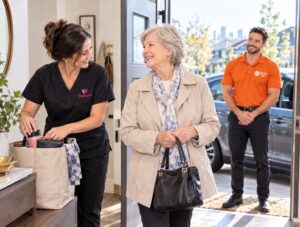
BabaTap can be viewed as an everyday companion layer around a senior’s existing lifestyle.
The objective is not to replace family members or medical professionals. Instead, companion support can help fill practical gaps between family visits, appointments, community activities, and everyday routines.
Transportation and Driving Support
Driving can become one of the first major challenges for an older adult.
A senior may decide to drive less frequently because of traffic, unfamiliar roads, nighttime driving, parking, or simply reduced confidence.
However, giving up driving can create another problem.
Without transportation, a person may make fewer trips to the grocery store, community centre, library, shopping area, social activities, or appointments.
That can gradually reduce independence and social engagement.
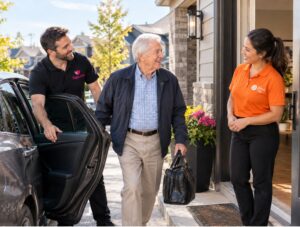
Companion transportation can provide an alternative.
Instead of asking an adult child to leave work every time a parent needs to go somewhere, a family can arrange practical transportation support when appropriate.
The companion may help the senior get ready, travel with them, wait when necessary, and return home with them.
This type of assistance can be especially valuable when the destination is part of a normal weekly routine.
Grocery Shopping
Grocery shopping is another example of a small task that can become a major challenge.
Large stores, heavy bags, long aisles, parking lots, weather conditions, and carrying groceries can all create difficulties for an older adult.
BabaTap’s companion model can help make grocery shopping more manageable.
The senior remains involved in choosing food and making decisions.
The companion provides practical assistance.
This is an important distinction.
The goal is not to take control away from the senior.
The goal is to make participation easier.
For many families, that approach can preserve a sense of normality and dignity.
House Cleaning and Everyday Household Support
Maintaining a home requires continuous effort.
Vacuuming, dusting, laundry, organizing, tidying, changing household items, and other routine chores can become tiring with age.
A home that once felt easy to manage may gradually become physically demanding.
Practical companion assistance can reduce some of this burden.
A safer, cleaner, more organized home can also make daily routines more comfortable.
Ontario’s community support guidance specifically identifies home help and homemaking as services that may help seniors remain safely and comfortably at home.
BabaTap can complement this broader philosophy by providing practical companion support according to the senior’s everyday needs.
Companionship and Social Connection
Companionship is sometimes underestimated because it does not look like a traditional care task.
Yet social connection is an important part of quality of life.
An older adult who lives alone may have groceries, a clean home, and transportation but still experience long periods without meaningful interaction.
A companion can provide conversation, shared activities, assistance with outings, and a sense of connection.
Ontario’s community support framework includes friendly visiting, telephone reassurance, social and recreational programs, and other services designed to support seniors living independently.
This reflects a broader understanding of aging.
Supporting an older adult means considering the whole person, not only physical tasks.
Why Personal Beauty Care Matters for Seniors
Personal grooming can appear like a small issue when families are dealing with more serious aging concerns.
But appearance and self care can have a strong connection with confidence and routine.
Hair, nails, skin care, and other personal grooming activities can help seniors feel more like themselves.
The difficulty is that travelling to a salon can become inconvenient.
Getting dressed, arranging transportation, walking through a parking lot, waiting for an appointment, and travelling home may turn a simple beauty appointment into a stressful outing.
For an older adult with limited mobility, even a short trip can require significant planning.
This is where TapLook can provide a different type of support.
How TapLook Brings Beauty Services to Seniors at Home
TapLook’s mobile beauty model is designed around convenience.
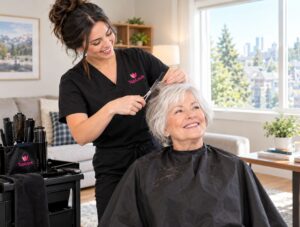
Instead of requiring the senior to travel to a salon, the beauty professional can come to the client’s home.
This can make personal grooming easier to incorporate into an older adult’s normal routine.
For seniors who prefer aging in place, this can be particularly meaningful.
The home becomes more than a place where the senior receives care.
It remains a place where the senior can live normally.
A beauty appointment can take place in familiar surroundings without the transportation challenges associated with visiting a traditional salon.
Hair and Grooming
Hair care is one of the most visible parts of personal appearance.
As seniors age, maintaining a regular salon schedule may become harder.
A mobile service can remove some of the logistical barriers.
The senior does not need to arrange a ride simply to get a haircut or grooming service.
For family members, this can also eliminate another small responsibility from an already busy schedule.
Nail and Personal Care Services
Nail care and other grooming services can also become difficult when flexibility, transportation, or mobility is limited.
Having a professional visit the home can provide greater convenience.
It may also help seniors continue routines that contribute to confidence and personal identity.
The purpose is not simply appearance.
For many older adults, grooming is part of maintaining a familiar lifestyle.
Comfort and Familiar Surroundings
Some seniors become uncomfortable in unfamiliar environments as they age.
A busy salon can involve noise, waiting, unfamiliar people, and a schedule that is not always easy to manage.
Receiving beauty services at home can create a calmer and more familiar experience.
This is particularly useful for families who want to support a senior’s independence without making every activity dependent on transportation.
The Connection Between TapLook and BabaTap
The strongest value of TapLook and BabaTap becomes clearer when the two services are viewed together.
They address different everyday needs.
BabaTap focuses on companionship and practical support.
TapLook focuses on mobile beauty and personal grooming.
One helps the senior get through everyday activities.
The other helps bring a personal service directly into the home.
Together, they can support several dimensions of aging in place.
A senior may receive companion assistance for grocery shopping.
The same senior may schedule a mobile beauty appointment at home.
A companion may help with transportation to community activities.
A beauty professional may help the senior maintain a familiar grooming routine.
None of these activities necessarily requires institutional living.
Instead, they can strengthen the senior’s ability to continue living in a familiar environment.
Markham’s Community Environment for Older Adults
Markham provides a variety of community spaces and programs that can complement at home support.
The Markham community includes recreation facilities, libraries, older adult programs, cultural activities, shopping areas, and community organizations.
For example, Markham Seniors Activity Centre provides a dedicated community setting for older adults and social engagement.
Thornhill Community Centre is another major community facility serving the Markham area with recreation, fitness, aquatic facilities, library access, and programming.
Cornell Community Centre provides another community hub in Markham, combining recreation and library services.
These destinations matter because independent living is not only about staying inside the house.
Healthy aging can also involve continuing to participate in the surrounding community.
A senior who has reliable transportation and appropriate companion support may find it easier to continue attending activities rather than becoming increasingly isolated.
Aging in Place Does Not Mean Doing Everything Alone
One of the biggest misconceptions about independent living is that independence means complete self sufficiency.
In reality, many people live independently while receiving some form of support.
A person may live in their own home while receiving help with transportation.
Another may use meal delivery.
Another may have a cleaner.
Another may receive personal support.
Another may have a companion several times each week.
Another may use a mobile beauty professional.
The home remains the senior’s home.
The support simply makes the lifestyle more sustainable.
Markham’s own older adult planning materials have emphasized the role of community support services, in home assistance, and other partnerships in helping residents maintain independence and dignity as they age.
That perspective is useful for families because it shifts the conversation from “Can my parent live alone?” to a more practical question:
“What support would make living at home work well?”
That is often the better question.
When a Senior May Benefit From Companion Support
Families can look for changes in everyday routines rather than waiting for a crisis.
Some common signs include:
Difficulty getting groceries regularly
Avoiding driving even when transportation is needed
Spending more time alone
Missing community activities
Finding housework increasingly tiring
Needing assistance with errands
Having difficulty getting to appointments
Expressing frustration about leaving the house
Giving up hobbies because transportation is difficult
Finding salon or grooming appointments inconvenient
Relying heavily on adult children for routine tasks
None of these signs automatically means that a senior needs medical care or residential care.
They may simply indicate that additional practical support could improve daily life.
How Families Can Build a Personalized Support Routine
Every senior has different needs.
A useful support plan should therefore begin with the person’s actual lifestyle.
For example, a family might identify the following weekly pattern:
Monday: grocery shopping with a companion
Tuesday: independent day at home
Wednesday: community activity
Thursday: housekeeping assistance
Friday: mobile beauty appointment
Weekend: family visit
The exact schedule can vary.
The principle is to provide enough support to reduce unnecessary stress without taking away the senior’s independence.
This can also make support more predictable for family members.
Instead of responding to every request as an emergency, the family can establish regular routines.

Combining Family Support With Professional Services
Professional companion services should not be viewed as a replacement for family relationships.
Adult children may still visit, call, prepare meals, manage finances, coordinate medical appointments, or spend weekends with their parents.
However, family members may also have jobs, children, travel obligations, and other responsibilities.
A companion service can help fill the gaps.
This can make family time more meaningful.
Instead of spending every visit doing groceries, cleaning, or running errands, family members may have more opportunities to simply sit together, talk, share a meal, or enjoy an activity.
That distinction can improve the experience for both generations.
Understanding the Difference Between Companion Care and Clinical Care
Families should also understand the boundaries between different types of services.
BabaTap is a companion service, not a medical home health provider.
Companion support can involve practical assistance such as transportation, errands, grocery shopping, house cleaning, and social interaction.
Clinical home care can involve nursing, rehabilitation, medication related support, wound care, therapy, and other health services depending on eligibility and the provider.
Ontario Health atHome coordinates eligible publicly funded home care and connects people with appropriate care planning and community resources.
This means families can sometimes combine services.
For example, a senior could receive professional health services through an appropriate health care program while also arranging companion support for errands and social activities.
The services solve different problems.
That can create a more complete support system.
The Role of Dignity in Independent Living
Perhaps the most important part of aging at home is dignity.
Seniors should continue to have choices.
What time do they want to shop?
What foods do they want to buy?
What activities do they enjoy?
When do they want a haircut?
Who do they want to spend time with?
Where do they want to go?
Support should ideally make these choices easier rather than remove them.
That is why companion services can be valuable.
The senior is still the person making everyday decisions.
The support simply makes those decisions easier to act upon.
Why Markham Families May Consider a Layered Support Model
Markham is a large and diverse community, and seniors have different family structures, cultural backgrounds, mobility levels, schedules, and preferences.
Some older adults live close to their children.
Others live independently with family members in different parts of the Greater Toronto Area.
Some seniors have strong social networks.
Others may spend much of the week alone.
A single care model cannot address every situation.
A layered approach can be more flexible.
The first layer may be family involvement.
The second may be community programs.
The third may be health or personal support when clinically appropriate.
The fourth may be companion services for everyday tasks.
The fifth may be mobile services such as at home beauty and grooming.
This allows families to add support according to actual needs rather than making one large change all at once.
Building a More Complete Independent Living Plan
Independent living works best when support is built around the senior rather than forcing the senior to adapt to a rigid care model.
For a family in Markham, this may mean combining several forms of assistance according to the older adult’s lifestyle.
One senior may need transportation twice a week.
Another may need help with groceries and household chores.
Someone else may primarily need companionship because family members are away during the day.
Another older adult may be physically independent but no longer want to travel to a salon for regular grooming.
These differences demonstrate why personalized support is important.
The objective is not to determine whether a senior can do everything without assistance.
Instead, families can identify which activities are becoming difficult and then introduce appropriate support.
This approach can allow an older adult to retain control over the parts of daily life that matter most.
For example, a senior may continue preparing breakfast, managing personal finances, choosing meals, talking with friends, and maintaining hobbies while receiving assistance with transportation and physically demanding errands.
That is still independent living.
How Companion Support Can Preserve Daily Routines
Routine can be particularly valuable for older adults.
A familiar weekly schedule can provide structure and predictability.
A senior may enjoy visiting the same grocery store every Tuesday, attending a community activity on Thursday, and receiving a grooming appointment at home on Friday.
Without transportation or practical assistance, those routines may gradually disappear.
Once several activities are discontinued, the senior’s world can become smaller.
Companion support can help preserve those routines.
BabaTap can assist with practical activities such as driving, grocery shopping, house cleaning, errands, and companionship.
This means a senior does not necessarily have to stop doing something simply because one part of the activity has become difficult.
The transportation problem can be addressed.
The shopping problem can be addressed.
The household task can be supported.
The social component can remain.
This is an important concept in aging at home.
The goal is not to eliminate activity because it has become inconvenient.
The goal is to make continued participation more manageable.
Transportation Is Connected to Independence
Transportation deserves special attention because it affects many other areas of senior life.
Consider a senior who stops driving.
At first, the impact may seem small.
The person simply needs another way to get to the store.
But transportation also affects medical appointments, pharmacies, community centres, restaurants, libraries, family visits, religious or cultural activities, shopping, social gatherings, and recreational programs.
Without dependable transportation, an older adult may gradually reduce outings.
That can affect social connection and confidence.
For this reason, companion transportation can be more than a ride from one location to another.
It can be part of an independent living strategy.
The senior can continue deciding where to go and when to go.
The companion provides the practical assistance needed to make the trip possible.
This can be particularly useful for families who cannot provide transportation for every outing.
A Companion Can Support the Whole Outing
Another advantage of companion based transportation is that the trip does not necessarily end when the vehicle reaches the destination.
An older adult may need assistance getting from the vehicle to the entrance.
They may need someone to accompany them while shopping.
They may need help carrying bags.
They may want someone to wait while they finish an activity.
They may need assistance returning home with everything they purchased.
For some seniors, having another person present can make the difference between saying “I cannot go” and saying “Yes, I can.”
This illustrates why Companion Care for Seniors can have a broader role than simply providing conversation.
Companionship can be integrated into practical daily activities.
Grocery Shopping as a Social Activity
Grocery shopping can also be viewed as part of a senior’s social routine.
For an older adult living alone, going to a familiar store may be one of the regular reasons to leave home.
Choosing fruit, comparing products, talking with store employees, and seeing familiar people can all contribute to a sense of normal life.
If shopping becomes physically difficult, completely replacing the activity with delivery may solve the practical problem but remove the social experience.
A companion can provide another option.
The senior can continue participating in the shopping trip while receiving assistance with transportation, bags, organization, or other practical aspects.
The level of help can be adjusted according to the individual’s abilities.
That preserves participation rather than automatically replacing it.
House Cleaning and the Meaning of a Comfortable Home
A comfortable home can contribute significantly to independent living.
As people age, physically demanding cleaning tasks can become increasingly tiring.
Vacuuming, mopping, changing bedding, cleaning bathrooms, carrying laundry, or organizing household items can require considerable physical effort.
A senior may still be perfectly capable of managing the household overall while needing assistance with heavier tasks.
This distinction matters.
Needing help with housework does not necessarily mean someone is incapable of living independently.
Practical assistance can remove a physical burden while leaving household decisions with the senior.
The senior can decide how the home should be organized, what needs to be done, and what routines should be maintained.
The companion simply provides additional hands when needed.
Personal Grooming and Confidence at Home
Personal appearance can also influence how seniors feel about themselves.
A haircut, manicure, grooming appointment, or other beauty service can be part of a person’s normal identity.
When transportation becomes difficult, these routines can be among the first things to disappear.
TapLook addresses this problem through an at home beauty model.
Instead of asking the senior to travel, the professional comes to the home.
This can be convenient for seniors who have mobility challenges, transportation limitations, busy family schedules, or simply prefer the comfort of their own surroundings.
The experience can also reduce the number of logistical steps involved.
There is no need to arrange transportation simply for the purpose of reaching a salon.
For family members, this can mean fewer errands to coordinate.
For the senior, it can mean continuing a familiar personal care routine.
Personal Care Is Part of Quality of Life
Families sometimes prioritize essential tasks and overlook activities that appear less urgent.
However, quality of life is built from many ordinary experiences.
Feeling well groomed.
Having a clean and comfortable home.
Getting outside.
Buying preferred groceries.
Talking with another person.
Attending a community activity.
Visiting a friend.
Going for a haircut.
These activities may not appear dramatic, but together they contribute to a satisfying daily routine.
A complete independent living plan therefore considers both practical needs and personal preferences.
That is where TapLook and BabaTap can complement one another.
Creating a Weekly Senior Support Schedule in Markham
A family can begin by listing the senior’s recurring weekly activities.
For example:
Monday could include grocery shopping.
Tuesday could be a quiet home day.
Wednesday could include an appointment or community activity.
Thursday could include household assistance.
Friday could include an at home beauty appointment.
The weekend could be reserved for family time.
The schedule does not need to be complicated.
Its purpose is to create consistency.
A predictable schedule can also help adult children understand what support is already being provided.
Instead of receiving frequent calls asking for individual favors, family members can coordinate around a routine.
This can reduce uncertainty for everyone involved.
Example: A Senior Living Alone in Markham
Imagine an older adult living independently in a Markham home.
The senior can cook simple meals, manage personal finances, communicate independently, and handle most personal activities.
However, driving has become uncomfortable.
Grocery shopping is physically tiring.
House cleaning is becoming harder.
The senior also misses having regular conversation during the week.
A family might initially assume that this person needs a major change in living arrangements.
But the actual needs may be much more specific.
BabaTap could potentially provide companion assistance for grocery shopping, transportation, errands, household support, and social interaction.
TapLook could provide mobile beauty services at home.
The senior can continue living in the same home.
The family can remain involved.
The senior receives assistance without automatically giving up familiar surroundings.
This example demonstrates the value of matching support to actual needs.
Example: An Adult Child Who Lives Nearby
Another situation involves an adult child who lives in the Greater Toronto Area but has a demanding work schedule.
The parent lives independently in Markham.
The adult child wants to help but cannot reliably provide transportation every weekday.
Rather than becoming responsible for every grocery trip, errand, cleaning task, and salon visit, the family can divide responsibilities.
The family might handle financial decisions and major appointments.
BabaTap might support everyday transportation, grocery shopping, errands, house cleaning, and companionship.
TapLook might handle personal grooming at home.
This creates a shared support system.
The family relationship remains central, while routine tasks can be handled through appropriate services.
Example: A Senior Who Wants to Remain Socially Active
Not every senior who needs support is homebound.
Some older adults want to continue participating in community activities.
They may enjoy libraries, recreation programs, shopping, social clubs, cultural events, fitness classes, or visits with friends.
Transportation can become the limiting factor.
In such cases, companion transportation can help preserve an active lifestyle.
The senior remains the decision maker.
The companion helps with the practical logistics.
This can be particularly meaningful for people who associate independence with being able to continue participating in their community.
Supporting Aging in Place Without Taking Over
One of the most important principles of companion support is respecting autonomy.
An older adult may need assistance without wanting someone to make every decision for them.
For example, a companion can help with grocery shopping while allowing the senior to choose the products.
A companion can provide transportation while allowing the senior to choose the destination.
A companion can help with household tasks while allowing the senior to decide how things should be organized.
A mobile beauty professional can provide a service while allowing the senior to choose the appointment and preferred treatment.
These small choices matter.
Independence is partly about control.
The right support can increase the senior’s ability to exercise that control.
When Families Should Consider Additional Professional Care
Companion support is not appropriate for every situation.
Families should pay attention when an older adult develops needs that require clinical assessment or professional medical assistance.
Examples can include significant changes in mobility, repeated falls, complex medication management, wound care, serious difficulty with personal hygiene, substantial cognitive changes, or other health related concerns.
In these situations, families should seek advice from appropriate health care professionals and community care organizations.
Ontario Health atHome provides information about publicly funded home and community care and helps eligible people access services based on assessed needs. (ontario.ca)
The important point is that companion services and clinical services do not necessarily compete with each other.
They can serve different functions.
A senior may receive medical or therapeutic care from qualified professionals while using companion support for transportation, errands, shopping, household assistance, and social activities.
How Families Can Evaluate a Companion Service
When considering Home Care for Seniors, families should first identify what kind of service they actually need.
Important questions include:
What activities does the senior need help with?
How often is assistance required?
Does the senior need transportation?
Does the senior need someone to accompany them during errands?
Does the senior want companionship?
Does the home require practical household assistance?
Would at home grooming services improve convenience?
Does the senior need medical care, or is the need primarily non medical?
Answering these questions can help families avoid choosing a service that does not match the actual situation.
Questions to Ask About Transportation Support
If transportation is an important part of the plan, families can ask:
Does the service provide transportation for everyday activities?
Can the companion wait during an appointment or activity when appropriate?
Can the senior receive assistance beyond simply getting into a vehicle?
Is the service designed for seniors?
Can the family communicate special preferences in advance?
Understanding the service model helps families set realistic expectations.
Questions to Ask About Companion Services
For Companion Care for Seniors, families can also ask:
What activities can companions assist with?
Can companionship be combined with errands?
Can grocery shopping be included?
Can household assistance be arranged?
Can transportation be part of the service?
How are schedules coordinated?
What happens if the senior’s needs change?
These questions help families understand whether a service fits their parent’s lifestyle.
Why At Home Services Can Be More Convenient for Families
Convenience is not simply about saving time.
It can also reduce the number of transitions an older adult has to manage.
A traditional beauty appointment may involve preparing to leave, arranging transportation, travelling to the location, waiting, receiving the service, and travelling home.
A mobile beauty appointment removes several of those steps.
Likewise, a companion who helps with grocery shopping can combine transportation and shopping into one coordinated activity.
These efficiencies can matter greatly when adult children are balancing work and family responsibilities.
Supporting Seniors Across Markham
Markham includes many distinct communities and neighbourhoods, from areas around Unionville and Markham Village to Cornell, Box Grove, Milliken, Thornhill, Berczy Village, Wismer, and other residential areas.
The practical needs of seniors can differ from one household to another.
Some may live close to community facilities.
Others may have limited access to convenient transportation.
Some have nearby family.
Others may rely more heavily on professional and community services.
That is why support should be individualized.
The same service schedule should not be assumed to work for every household.
The Importance of Social Connection
Social connection should remain part of any conversation about independent living.
An older adult can be physically capable of living alone but still benefit from regular human interaction.
Companionship can provide opportunities for conversation and shared activities.
Transportation can help the senior reach social events.
Community programs can provide additional opportunities to interact with other people.
Mobile beauty services can support familiar self care routines.
Together, these seemingly small elements can help preserve a broader lifestyle.
Technology Does Not Replace Human Support
Technology can make scheduling and communication easier, but it does not necessarily replace human companionship.
Online grocery shopping may deliver food.
Video calls may allow family members to communicate.
Online appointment systems may simplify scheduling.
But an older adult may still appreciate having someone physically present.
A companion can help with an outing, sit and talk, assist with shopping, or accompany the senior during an everyday activity.
Human interaction remains an important part of many independent living arrangements.
Making the Home a Base for an Active Life
Aging at home should not necessarily mean staying home all the time.
The home can serve as a secure base from which the senior continues participating in the community.
The senior wakes up at home.
A companion helps with transportation.
The senior attends an activity.
The senior returns home.
Later in the week, a mobile beauty professional visits.
Another day may involve grocery shopping.
Another may simply be a quiet day at home.
This model allows the home to remain the centre of life while support helps connect the senior with the outside world.
A Practical Framework for Markham Families
Families can think about independent living through five categories.
1. Home
Is the home comfortable and manageable?
Are routine household tasks becoming difficult?
2. Mobility
Can the senior get where they need to go?
If driving is no longer preferred, what alternatives are available?
3. Companionship
Does the senior have regular opportunities for meaningful interaction?
4. Personal Care
Can the senior maintain grooming and personal routines conveniently?
5. Community
Can the senior continue participating in activities, shopping, recreation, and social events?
TapLook and BabaTap can contribute to several of these areas.
BabaTap addresses practical companionship, transportation, errands, grocery shopping, and household assistance.
TapLook addresses mobile beauty and grooming.
Other needs may require different providers, especially where clinical or specialized care is involved.
A Flexible Approach as Needs Change
Senior needs are rarely static.
Someone may need only occasional transportation today and more frequent assistance later.
A senior who currently manages housework may eventually need help with heavier chores.
Someone who enjoys visiting a salon today may later prefer receiving beauty services at home.
This means a support plan should be flexible.
Families can review the situation periodically.
Ask what has become easier.
Ask what has become harder.
Ask what the senior wants more help with.
Ask what the senior still wants to do independently.
The answers can guide future adjustments.
Preserving Choice While Adding Support
A successful independent living arrangement should ideally answer two questions.
What does the senior need help with?
What does the senior still want to control?
Those questions should be considered together.
If an older adult wants to choose their own groceries, support should make grocery shopping easier rather than remove that choice.
If the senior wants to continue attending community activities, transportation support can help make that possible.
If the senior values grooming and personal appearance, an at home beauty service can preserve that routine.
If the senior enjoys conversation, regular companionship can provide social connection.
This is the foundation of person centred support.
TapLook and BabaTap as Complementary Services
TapLook and BabaTap serve different purposes, but their services can complement one another.
BabaTap is focused on everyday senior companionship and practical assistance.
TapLook is focused on bringing beauty and grooming services to the client.
The combination can address needs that are often overlooked when families think only in terms of medical care.
A senior does not live only through medical appointments.
They live through meals, errands, conversations, shopping trips, grooming routines, household activities, friendships, hobbies, and community participation.
Supporting those activities can make aging at home more practical.
What Families Should Remember
Families considering Home Care for Seniors in Markham should begin with the senior’s actual lifestyle rather than a generic definition of care.
The most appropriate support may be a combination of family involvement, community programs, health services, companion assistance, transportation, household help, and mobile personal services.
BabaTap can provide practical non medical companion support for everyday needs.
TapLook can bring beauty and grooming services directly into the home.
Neither service needs to replace the family.
Instead, they can help families create a support structure that fits around the senior’s existing life.
Final Thoughts
The idea behind How TapLook and BabaTap Help Seniors Live Independently at Home in Markham is straightforward: independence can be strengthened when everyday barriers are reduced.
A senior may not need to move away from home simply because driving has become difficult.
They may not need to stop grocery shopping because carrying bags has become tiring.
They may not need to abandon personal grooming because travelling to a salon is inconvenient.
They may not need to spend every weekday alone because family members are working.
Practical support can address these challenges one by one.
BabaTap can help with companionship, transportation, grocery shopping, errands, and household assistance.
TapLook can help seniors maintain beauty and grooming routines from the comfort of home.
Together with family involvement, community resources, and appropriate health services when required, these forms of support can contribute to a more flexible aging at home experience.
For families in Markham, the most useful question may not be whether a parent can do everything alone.
A more practical question is what support can help that parent continue doing the things they value.
That could mean getting groceries, visiting friends, attending activities, keeping the home comfortable, maintaining personal appearance, or simply enjoying a conversation with another person.
Independent living is not necessarily the absence of assistance.
It can mean having the right assistance while retaining personal choice.
For many seniors, that distinction can make home feel not only possible, but genuinely livable.
Frequently Asked Questions
What is the difference between Senior Home Care and companion services?
Senior Home Care is a broad term that can include several types of support. Depending on the provider and program, it may refer to health care, personal support, homemaking, transportation, companionship, or other services. Companion services generally focus on non medical assistance such as social interaction, errands, transportation, grocery shopping, and practical everyday support.
Can BabaTap replace medical home care?
No. BabaTap is a companion service rather than a medical or nursing provider. Seniors who require clinical care should use appropriate qualified health care professionals or publicly funded community care programs when eligible.
How can TapLook help seniors who live alone?
TapLook can bring beauty and grooming services directly to the senior’s home. This can reduce the need to arrange transportation to a salon and may make personal care routines more convenient.
Can transportation help seniors remain independent?
Transportation can support independence by helping seniors continue accessing groceries, community activities, appointments, shopping, social events, and other destinations. When driving becomes difficult, appropriate transportation assistance can provide an alternative.
Is companionship important for seniors living at home?
Companionship can support social connection and everyday engagement. A companion may provide conversation, accompany a senior during errands, assist with outings, or help the person remain connected to regular activities.
What should Markham families consider before arranging senior support?
Families can consider the senior’s mobility, transportation needs, household tasks, social routine, personal grooming preferences, frequency of assistance, and whether any medical or clinical needs require a different type of professional service.
Can families combine BabaTap and TapLook with other senior services?
Yes. Different services can address different needs. A family may combine companion assistance and mobile beauty services with community programs, family support, transportation resources, or qualified health care services according to the senior’s circumstances.
Does needing assistance mean a senior is no longer independent?
Not necessarily. Many people remain independent while receiving help with selected activities. The important distinction is whether the senior can continue making meaningful decisions and participating in daily life with appropriate support.
How can families introduce support without overwhelming a senior?
Starting with the specific activities that have become difficult can be a practical approach. Families can introduce limited assistance, observe how the senior responds, and adjust the support routine over time. Respecting preferences and allowing the senior to remain involved in decisions can make the transition more comfortable.
Bài viết liên quan: