
How TapLook and BabaTap Help Seniors Live Independently at Home in Montreal. Growing older does not necessarily mean giving up the comfort, privacy, and familiarity of home. For many older adults in Montreal, staying at home can remain a realistic and meaningful choice when everyday support is available at the right time. From the neighbourhoods of Westmount, Outremont, Côte-des-Neiges, Notre-Dame-de-Grâce, Rosemont, Plateau-Mont-Royal, Ahuntsic-Cartierville, and Verdun to communities across Greater Montreal, seniors and their families increasingly look for practical ways to make daily life easier without immediately moving into a retirement residence or depending entirely on family members. This is where services related to Senior Home Care, Home Care for Seniors, and Companion Care for Seniors can become important parts of an aging-at-home plan. At the same time, these terms can cover very different types of assistance. Clinical healthcare, personal care, household assistance, transportation, companionship, beauty and wellness services, and everyday errands are not interchangeable. Montreal seniors may need one type of help today and another type several months later. TapLook and BabaTap can fit into this broader picture by addressing practical, non-medical needs that often influence whether an older adult feels comfortable continuing to live independently. TapLook can bring mobile beauty and wellness services closer to the senior, reducing the need to arrange transportation simply for routine personal-care appointments. BabaTap can provide practical companion support such as rides, grocery shopping, household assistance, and everyday help. Together, these services can help families create a more flexible support system around an older adult while preserving dignity, choice, familiarity, and independence.

Why Aging at Home Matters to Montreal Seniors
Home is more than a physical address.
For an older adult, home can represent decades of memories, familiar routines, trusted neighbours, personal belongings, favourite rooms, and a strong sense of identity. A move to a new environment can sometimes be necessary, but it does not have to be the first response whenever everyday tasks become more difficult.
The Government of Quebec has identified staying at home as an important part of its approach to supporting people who need assistance with daily living. Quebec’s home-support system includes services designed to help people remain in their own homes, with CLSCs playing an important role in assessing needs and coordinating appropriate support.
For seniors and families in Montreal, this creates an important distinction.
The goal is not always to provide more care.
Sometimes the goal is to provide the right assistance at the right moment so that the senior can continue doing as much as possible independently.
A senior who can prepare breakfast but struggles with grocery shopping may not need full-time assistance.
A senior who can manage personal routines but no longer wants to drive across Montreal for appointments may benefit from transportation support.
Another older adult may be completely independent with household tasks but appreciate regular companionship.
Someone else may enjoy going to a salon but find the trip increasingly tiring.
These situations show why aging at home should not be viewed as a single service category.
Understanding Senior Home Care in Montreal
The phrase Senior Home Care can describe a broad range of support.
Depending on the provider and the individual’s needs, home-based assistance may involve professional healthcare, personal support, housekeeping, meal preparation, transportation, companionship, errands, or other daily activities.
However, families should always determine whether a provider is offering medical care, personal care, companion services, household assistance, transportation, or wellness services.
This distinction matters because different needs require different qualifications.
Medical needs should be addressed by appropriate healthcare professionals and public health or clinical services.
Non-medical daily support can involve a different group of services.
BabaTap belongs in the practical, non-medical support conversation. Its role can be particularly relevant when the challenge is not a medical procedure but the everyday difficulty of getting something done.
For example, an older adult may need help getting groceries.
A family member may live across Montreal and cannot visit several times each week.
A senior may no longer feel comfortable driving.
A household task may become physically inconvenient.
A simple outing may require more planning than it used to.
These are the types of situations where practical companion assistance can help fill the gap.
How BabaTap Supports Independent Living
BabaTap can be viewed as a practical layer of support around an older adult’s daily routine.
The purpose is not to take away independence.
The purpose is to make independence easier to maintain.
Consider a Montreal senior who has lived independently for many years. She still prepares her own meals, manages her personal schedule, communicates with friends, and enjoys her neighbourhood. However, carrying heavy grocery bags has become uncomfortable.
Without support, the family might start thinking about whether she can continue living alone.
With practical assistance, the situation can look different.
A companion can help with grocery shopping while the senior continues choosing what she wants to buy, deciding what meals she prefers, and maintaining control over her routine.
That is an important principle of aging in place.
Support should not automatically replace independence.
It can reinforce independence.
Grocery Shopping Assistance
Grocery shopping is a common example of an everyday activity that can become more difficult with age.
The challenge may not be choosing food. It may be transportation, carrying bags, navigating a large store, reaching items, or bringing everything home.
BabaTap’s practical companion model can help families address these difficulties without requiring a senior to surrender control over grocery decisions.
The senior can remain involved in planning meals, selecting products, and maintaining familiar habits.
The support simply makes the process more manageable.
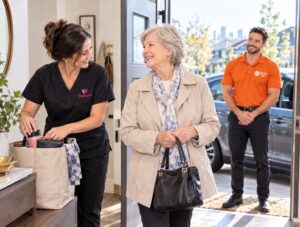
Transportation and Everyday Rides
Transportation can influence independence significantly.
A senior who stops driving may still want to attend appointments, visit friends, shop for groceries, go to a community activity, or complete personal errands.
When transportation becomes difficult, the senior’s world can gradually become smaller.
Companion transportation can help maintain access to the activities that make daily life meaningful.
For families, this can also reduce the pressure of coordinating every individual trip themselves.
Household Assistance
Small household tasks can become disproportionately difficult.
Laundry, tidying, organizing, carrying items, or completing basic errands may take more energy than before.
Support with these activities can help an older adult preserve energy for things that matter more personally.
The goal is not necessarily to have someone take over the entire household.
It can simply mean receiving help with selected tasks.
This flexibility can be especially valuable for seniors who remain highly independent but have a few areas where additional assistance makes life easier.
Companion Care for Seniors and the Importance of Human Connection
Independence does not mean isolation.
A person can live independently and still benefit from meaningful human contact.
Companionship can involve conversation, going for a walk, accompanying a senior on an outing, helping with an errand, or simply being present during part of the day.
For some Montreal seniors, the most valuable part of support may not be a physical task.
It may be having someone to talk with.
Social connection can encourage older adults to remain engaged with their community and daily routines.
Montreal has a wide range of neighbourhood environments, cultural communities, parks, libraries, cafés, community organizations, and social activities. Practical assistance can make it easier for a senior to continue participating in those environments.
BabaTap can therefore complement other resources rather than replace them.
A senior might use public or community services for certain needs, receive support from family members for others, and use companion assistance when additional practical help is useful.
How TapLook Fits Into Aging at Home
TapLook addresses a different part of independent living.
Beauty and wellness are sometimes treated as optional extras, especially when families are thinking about senior support.
But personal grooming, nail care, and wellness routines can contribute to confidence, comfort, self-expression, and social participation.
The challenge for some older adults is not wanting these services.
It is getting to them.
A salon or spa visit may require transportation, arranging a caregiver or family member, walking through unfamiliar spaces, waiting for an appointment, and travelling home afterward.
For a senior with limited mobility or reduced energy, that process can become a significant barrier.
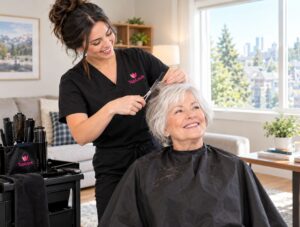
TapLook’s mobile service model can reduce some of those logistical challenges by bringing selected beauty and wellness services closer to the client.
Instead of organizing an entire outing around a beauty appointment, the appointment can become part of the senior’s home routine.
Mobile Beauty and Wellness for Seniors
Imagine a Montreal senior who enjoys regular nail care.
For years, visiting a salon may have been simple.
Later, transportation may become difficult.
The senior may still want the same service but no longer want the effort involved in travelling.
A mobile appointment can change the experience.
The service comes to the senior rather than requiring the senior to organize transportation to the service.
This can be particularly useful for older adults who want to maintain familiar personal-care routines while spending more time at home.
TapLook can also complement companion support.
For example, a family member may arrange BabaTap assistance for transportation and errands while using TapLook for selected mobile beauty and wellness appointments at home.
Each service addresses a different practical need.
Independence Includes Personal Choice
One of the most important elements of aging independently is maintaining decision-making power.
A senior should still be able to decide:
What they want to eat.
When they want to go out.
Who they want to spend time with.
How they want their home organized.
What personal-care services they enjoy.
Which errands matter most.
When they want assistance.
This is why flexible support can be valuable.
Instead of assuming that every senior needs the same package of services, families can consider the individual’s actual routine.
Someone may need two hours of assistance each week.
Another person may need transportation several times a month.
Another may benefit from regular companionship.
Another may simply want occasional mobile wellness services.
The appropriate support can change over time.
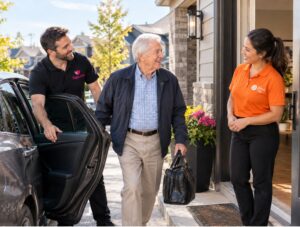
A Family Caregiver’s Role Can Become More Sustainable
Family members often want to help an aging parent as much as possible.
However, being available for every grocery trip, appointment, errand, household task, and personal-care need can become difficult.
This is especially true when adult children have full-time jobs, children of their own, relationships, or live in another part of Montreal or outside the city.
Practical support can distribute responsibilities.
Instead of one family member becoming responsible for everything, the family can identify which tasks require family involvement and which tasks can be supported by outside services.
That can make family involvement more sustainable.
It can also change the emotional dynamic.
Family visits can focus more on spending time together rather than completing a checklist of chores.
A daughter can visit her mother simply to have coffee.
A son can spend an afternoon talking with his father rather than using the entire visit for grocery shopping and cleaning.
Support services can create more room for family relationships.
TapLook and BabaTap Address Different Everyday Needs
TapLook and BabaTap should not be viewed as identical services.
They can complement each other because they address different aspects of daily life.
TapLook focuses on bringing selected beauty and wellness services closer to clients.
BabaTap focuses on practical companion assistance and everyday support.
This distinction is useful when families are building a support plan.
For example:
A senior may use TapLook for mobile nail or beauty services.
The same senior may use BabaTap for grocery shopping.
Another senior may use BabaTap for transportation and errands.
A family might coordinate TapLook appointments around an older adult’s preferred schedule while using companion assistance for other activities.
The result is a more individualized approach.
Home Care for Seniors Does Not Always Mean Full-Time Care
Many families associate the phrase Home Care for Seniors with extensive assistance.
In reality, the amount of help an older adult needs can vary considerably.
A senior may be fully independent in many areas while requiring help with only one or two activities.
This is why families should start by identifying specific difficulties.
Ask:
What has become harder recently?
Which activities does the senior still want to do independently?
Which activities create safety or transportation concerns?
Which tasks are placing the greatest burden on family members?
Which services could make daily routines easier?
Which needs are medical and which are non-medical?
These questions can help families avoid automatically choosing a level of support that does not match the senior’s actual situation.
Recognizing When Additional Support May Be Useful
A change in routine can be an early sign that an older adult needs practical assistance.
Examples can include:
Frequently postponing grocery shopping.
Avoiding activities because transportation is difficult.
Missing social events because leaving home has become inconvenient.
Struggling to keep up with household tasks.
Relying increasingly on family members for errands.
Giving up personal-care appointments that were previously important.
Spending more time alone because getting out requires too much effort.
Feeling overwhelmed by ordinary weekly responsibilities.
These signs do not automatically mean that a senior needs intensive care.
They may simply indicate that a few practical services could make independent living more sustainable.
Combining Companion Support With Existing Community Resources
Families in Montreal do not have to choose between private support and public resources.
Depending on a person’s situation, public programs and community services may be available.
The Quebec government provides information on home help, transportation, housing, health and social services, and other programs for seniors.
Montreal’s local health and social-service network also provides home-support resources for eligible individuals experiencing loss of independence or other circumstances requiring assistance.
Families should determine eligibility directly with the appropriate service provider or CLSC because programs, assessments, and eligibility requirements can differ.
BabaTap and TapLook can be considered alongside these resources rather than as substitutes for clinical healthcare.
That distinction is particularly important.
If a senior needs nursing care, physiotherapy, occupational therapy, medical assessment, or other professional healthcare, those needs should be addressed through the appropriate healthcare system.
If the challenge is getting groceries, receiving practical companionship, arranging everyday transportation, or maintaining a personal-care routine, non-medical services may be relevant.
The Role of CLSCs in Montreal
CLSCs are an important part of Quebec’s local health and social-service network.
For seniors who are experiencing difficulties with independence, a CLSC can be an important starting point for understanding available home-support services.
Montreal’s health-service organizations describe home support as a way to help people remain functional at home for as long as possible.
This reflects a broader principle of aging in place.
The objective is not simply to provide assistance.
It is to support a person’s ability to continue living safely and meaningfully within their familiar environment.
Families can therefore think about support as a network.
The healthcare system can address clinical needs.
Community organizations can provide social and recreational resources.
Family members can provide emotional and practical support.
BabaTap can assist with selected everyday tasks and companion needs.
TapLook can bring selected beauty and wellness services into the home.
Together, these pieces can contribute to a more complete support environment.
Why Transportation Can Be an Independence Issue
Transportation deserves special attention.
When a senior stops driving, the impact can extend far beyond getting from one location to another.
Transportation affects access to:
Grocery stores.
Medical appointments.
Pharmacies.
Community activities.
Religious or cultural events.
Hair and beauty services.
Parks and recreational activities.
Visits with friends.
Family gatherings.
A lack of transportation can therefore contribute to reduced activity and increased dependence on family members.
BabaTap’s transportation and companion support can be useful when a senior needs assistance getting through an ordinary day without necessarily requiring medical transportation.
Families should always select transportation based on the senior’s actual mobility and medical requirements.
A non-medical companion service is not a substitute for specialized medical transportation when a person’s condition requires medical monitoring or specialized equipment.

Making the Home Routine Easier
Independent living often depends on dozens of small routines.
Taking out household items.
Preparing meals.
Shopping.
Doing laundry.
Organizing personal belongings.
Keeping appointments.
Maintaining social connections.
Getting personal services.
Going outside.
When several of these routines become difficult at the same time, the overall burden can feel much larger than any single task.
This is where practical assistance can make a meaningful difference.
A senior does not necessarily need someone beside them all day.
Sometimes a few targeted services can remove the obstacles that are preventing independent living.
Companion Care for Seniors Can Support More Than Errands
Companionship is not simply about having another person in the home.
It can help maintain routine and engagement.
A companion might accompany a senior on a walk.
They might help with a shopping trip.
They might accompany an older adult to a community activity.
They might provide conversation during an otherwise quiet afternoon.
They might help the senior complete an ordinary errand that has become difficult to manage alone.
These activities can preserve a sense of normal life.
For families, companionship can also provide reassurance that a loved one has additional social contact beyond occasional family visits.
Supporting Dignity While Providing Assistance
Good senior support should protect dignity.
That means recognizing that an older adult is still an individual with preferences, opinions, habits, and personal boundaries.
Instead of saying, “You cannot do this anymore,” families can ask, “What would make this easier for you?”
That small change in language can make support feel collaborative rather than restrictive.
For example, a senior may not want someone else to choose groceries.
They may simply want someone to help with transportation and carrying bags.
Another senior may not want help cleaning the entire home.
They may want assistance with one difficult household task.
Another may not want to stop visiting a beauty professional.
They may simply need the service to come to them.
This approach keeps the senior involved.
How Families Can Build a Personalized Support Plan
A simple four-step process can help families organize support.
Step 1: Identify the Problem
Start with the specific difficulty.
Is transportation the issue?
Is grocery shopping difficult?
Is household maintenance becoming overwhelming?
Is the senior becoming socially isolated?
Is personal-care access becoming inconvenient?
Step 2: Separate Medical and Non-Medical Needs
This is essential.
Medical concerns should be directed to qualified healthcare professionals.
Non-medical needs can potentially be addressed through companion, transportation, household, community, or wellness services.
Step 3: Start With Targeted Assistance
Do not automatically assume that a senior needs extensive support.
Try addressing the specific problem first.
If grocery shopping is the issue, solve transportation and shopping.
If beauty appointments are becoming difficult, consider mobile services.
If loneliness is the problem, consider companionship and community activities.
If several needs overlap, combine services appropriately.
Step 4: Review the Plan Over Time
Needs can change.
A senior who needs very little support today may require additional assistance later.
Conversely, temporary support may become unnecessary after recovery from an illness or injury.
A flexible plan can adapt to these changes.
Home Care for Seniors and the Goal of Aging in Place
The central idea behind aging in place is simple.
People should have opportunities to remain in familiar environments when that environment continues to meet their needs and safety requirements.
Home support can help make this possible.
However, independence should not be confused with doing everything alone.
True independence can include choosing when to accept help.
A senior can remain independent while receiving transportation.
A senior can remain independent while someone helps with groceries.
A senior can remain independent while enjoying companionship.
A senior can remain independent while receiving mobile beauty and wellness services.
Accepting assistance does not automatically reduce independence.
In many situations, the right assistance can help preserve it.
Why TapLook and BabaTap Can Work Together
TapLook and BabaTap address different parts of the everyday aging experience.
TapLook can make selected beauty and wellness routines easier by bringing services closer to the senior.
BabaTap can help with practical companion support, transportation, groceries, household assistance, and everyday activities.
Together, they can help families think beyond the traditional idea of care.
Instead of asking only, “Who will take care of Mom?” a family can ask:
“What does Mom need help with?”
“What does she still want to do herself?”
“Which activities make her feel independent?”
“What obstacles are preventing her from doing those activities?”
“What support would remove those obstacles?”
This approach can create a more respectful and flexible aging-at-home plan.
A Montreal Senior’s Week With the Right Support
Consider a fictional example.
Margaret is an older adult living independently in Montreal.
She enjoys her apartment, prepares simple meals, keeps in contact with friends, and likes maintaining her appearance.
Her daughter lives nearby but works full-time.
Margaret has not needed full-time assistance.
However, grocery shopping has become tiring, and getting to personal-care appointments requires more planning.
The family decides to use targeted support.
BabaTap helps with selected grocery trips and practical errands.
TapLook provides a mobile beauty appointment at home.
Margaret continues preparing her meals, deciding what she buys, communicating with friends, and managing her personal routine.
Her daughter still visits regularly, but her visits no longer have to revolve around completing every household task.
The services have not replaced Margaret’s independence.
They have helped protect it.
Companion Care for Seniors and Family Peace of Mind
Family caregivers often worry because they cannot be physically present all the time.
Practical companion support can provide another layer of assistance.
This does not mean that a companion service can replace family relationships.
It means that families can share responsibilities.
An adult child can remain emotionally involved without being the only person responsible for every practical need.
That can make family caregiving more sustainable over the long term.
Personal Wellness Is Part of Quality of Life
Senior support should not focus exclusively on chores.
Quality of life includes how a person feels about themselves.
Personal grooming, nail care, beauty routines, relaxation, and social participation can all contribute to confidence and enjoyment.
For some seniors, continuing these routines helps preserve normalcy.
TapLook’s mobile model can make selected services more accessible to people who find traditional salon visits inconvenient.
That can be especially useful when transportation is the main obstacle rather than the service itself.
Practical Support Without Taking Over
The strongest aging-at-home plans are often those that provide assistance without unnecessarily taking control away from the senior.
This can mean:
Helping instead of replacing.
Accompanying instead of directing.
Supporting instead of deciding.
Listening instead of assuming.
Adapting instead of imposing a fixed schedule.
BabaTap’s companion model can fit this philosophy for practical everyday activities.
TapLook can contribute by making selected personal-care and wellness routines easier to access from home.
Final Thoughts: Making Independent Living More Sustainable in Montreal
Living independently at home is not simply about being able to complete every task without assistance.
It is about maintaining control over the important parts of everyday life.
For Montreal seniors, that may mean remaining in a familiar neighbourhood, continuing established routines, seeing friends, shopping for preferred foods, enjoying personal-care services, attending activities, and making their own choices.
When certain tasks become difficult, support can help remove those barriers.
BabaTap can provide practical non-medical companion assistance for activities such as transportation, grocery shopping, household help, and everyday errands.
TapLook can complement that support by bringing selected beauty and wellness services into the home.
Together, these services can become part of a broader network surrounding an older adult.
That network may also include family members, healthcare professionals, CLSCs, community organizations, transportation resources, and other senior services.
The important point is that no single service needs to handle every need.
A senior’s support plan can be built around the person.
If medical assistance is required, appropriate healthcare services should be involved.
If the challenge is everyday transportation, errands, household support, companionship, or access to personal wellness, non-medical services may provide practical assistance.
If a senior simply needs a little help to continue doing the things they already enjoy, targeted support may be enough.
For families searching for Home Care for Seniors in Montreal, the most useful question may therefore not be, “How much care does this person need?”
A better starting point can be:
“What kind of support would help this person continue living the life they want?”
That question keeps independence at the centre of the conversation.
It recognizes that aging does not have to mean giving up familiar routines.
It recognizes that accepting help does not automatically mean losing independence.
And it creates room for flexible services that support everyday life while respecting the senior’s choices.
For Montreal families, TapLook and BabaTap can be considered as complementary pieces of that broader picture. One can help bring beauty and wellness closer to home. The other can help with practical companion support and everyday activities.
When these types of services are thoughtfully combined with family involvement, healthcare resources, and community support, seniors may have more opportunities to remain connected to the places, routines, and people that make home meaningful.
Bài viết liên quan: