
How TapLook and BabaTap Help Seniors Live Independently at Home in Brandon is an important topic for families who want an aging parent to remain comfortable, active, and connected while continuing to live in a familiar home environment. In Brandon, Manitoba, seniors and their families can access a range of community resources designed to support independent living, including home care programs, transportation options, senior support services, housing resources, and community-based assistance. Manitoba recognizes that many older adults can continue living in their own homes when they receive appropriate help with daily routines and basic needs.
For families searching online for Senior Home Care, the phrase can mean many different things. Some older adults need clinical or personal care, while others simply need help with transportation, groceries, errands, light household activities, companionship, or beauty and wellness services at home. This distinction matters because independent living does not always require full-time caregiving. Sometimes a few hours of practical assistance can make everyday life considerably easier.
BabaTap focuses on non-medical senior companion support, including practical activities such as rides, grocery assistance, light household help, errands, and companionship. TapLook complements this type of support through mobile beauty and wellness services that can bring selected personal-care experiences directly to a senior’s home. Together, these services can address some of the everyday barriers that make aging at home more difficult.
Brandon families may also encounter organizations such as Prairie Mountain Health, Age-Friendly Brandon, Brandon Seniors for Seniors, and other community resources when looking for assistance. Manitoba’s transportation guidance notes that mobility and access to transportation are important parts of helping older adults remain independent and participate in shopping, appointments, volunteering, social activities, and family life.
The goal is not to suggest that every senior needs the same type of service. Instead, families can look at the specific activities that have become difficult and identify the appropriate layer of support. For some seniors, that may be formal home care. For others, it may be companion assistance, transportation, household help, or an at-home beauty appointment. Understanding those differences can help families create a practical aging-in-place plan.

What Does Independent Living Mean for Seniors in Brandon?
Independent living does not necessarily mean doing everything without assistance.
An older adult may still manage personal routines, prepare meals, communicate with family, make decisions, organize their schedule, and enjoy their home independently while needing help with selected activities.
For example, a senior may no longer feel comfortable driving but may still be perfectly capable of deciding where they want to go. They may need someone else to provide transportation, but they do not necessarily need someone to manage their entire day.
Another senior may be able to maintain most of their home but find certain household tasks physically tiring. Someone else may need help carrying groceries, accompanying them to appointments, or simply having another person available for conversation and social interaction.
This is why independent living should be viewed as a spectrum.
Manitoba’s aging-in-place resources explain that many seniors can remain active and independent in their own homes with appropriate assistance, while other seniors may eventually require more intensive support.
The right support can therefore help an older adult preserve control over their daily routine instead of immediately changing their living arrangement.
Why Families Search for Home Care for Seniors in Brandon
Families often begin looking for assistance when they notice small changes.
A parent may stop driving at night.
Grocery shopping may become exhausting.
Housekeeping may take much longer than it used to.
Appointments may become harder to attend.
A senior who once regularly visited friends may begin staying home because transportation has become inconvenient.
An adult child may realize that they are spending several hours every weekend completing errands for a parent.
These situations can lead families to search for Home Care for Seniors in Brandon.
However, the term home care can refer to very different types of support.
Manitoba’s publicly funded home care system is intended to help eligible residents remain at home and may involve assessment, care planning, service coordination, personal care, and other health-related support depending on individual needs.
At the same time, a senior may need practical assistance without requiring medical care.
That is where companion services can become relevant.
Senior Home Care Versus Companion Support
Senior Home Care can involve services connected with health needs, personal care, activities of daily living, or formal care planning.
Companion support has a different emphasis.
The focus is often on practical and social activities that help an older adult continue with normal life.
Examples may include:
Driving to a grocery store
Picking up groceries
Accompanying a senior while shopping
Helping with errands
Providing companionship
Assisting with light household activities
Accompanying a senior outside the home
Helping a senior attend an appointment
Providing practical support during everyday activities
These services are not a substitute for nursing or medical treatment.
A family should assess the senior’s needs carefully and use qualified healthcare or home care professionals when medical or personal-care needs require them.
For seniors who remain largely independent, however, companion support can address a different set of challenges.

How BabaTap Supports Seniors Living at Home
BabaTap is designed around practical, non-medical companion support for older adults.
Consider a Brandon senior who has stopped driving.
The senior may still want to visit the grocery store every week.
They may want to attend appointments.
They may want to visit a friend.
They may simply want to go out for lunch or complete an errand.
Without transportation, each activity becomes more difficult.
A companion service can help address that practical barrier.
The same principle applies to grocery shopping.
A senior may be able to prepare meals but have difficulty carrying several bags. Instead of changing their entire living arrangement, the family can look at whether grocery assistance would solve the immediate problem.
This is one reason Companion Care for Seniors can fit naturally into an aging-in-place plan.
It provides help where the difficulty actually exists.
Transportation Is an Important Part of Independence
Transportation is more than simply getting from one location to another.
It can affect whether a senior remains connected with their community.
Manitoba specifically identifies transportation as an important component of an age-friendly community because access to transportation allows older adults to shop, attend appointments, meet friends and family, volunteer, and remain involved in everyday activities.
For a Brandon senior, losing access to a personal vehicle can therefore have consequences beyond driving.
It can change their routine.
It can reduce social interaction.
It can make grocery shopping harder.
It can make appointments more complicated.
It can increase reliance on adult children.
Practical transportation assistance can help reduce those barriers.
This does not mean every senior needs the same transportation arrangement. Families should consider mobility, destination, schedule, accessibility requirements, and whether an escort or companion is needed.
Grocery Assistance for Older Adults
Grocery shopping is another everyday activity that can become challenging with age.
The challenge may not be choosing food.
A senior may still enjoy planning meals and selecting products.
The difficulty might be transportation, walking through a large store, carrying bags, or completing the trip without assistance.
A companion can help make the process more manageable.
For some families, the support may involve driving and accompanying the senior.
For others, it may involve helping obtain groceries and bringing them home.
This kind of assistance can support an older adult’s established routine without requiring a major change in their lifestyle.
Light Household Assistance and Aging at Home
A clean and organized home can contribute to comfort and confidence.
Yet certain household tasks may become harder over time.
Vacuuming, carrying supplies, changing household items, organizing belongings, or completing errands can require more physical effort than they once did.
Families should distinguish light practical assistance from skilled healthcare services.
If an older adult needs clinical assessment, rehabilitation, nursing, or personal-care assistance, appropriate healthcare professionals should be involved.
If the need is primarily everyday household support, a companion service may be worth considering.
The objective is to remove practical obstacles while allowing the senior to continue managing the aspects of home life they can comfortably handle.
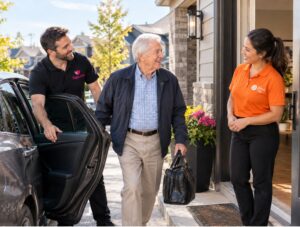
Companionship Is Also Part of Independent Living
Independence is not only about physical ability.
Social connection matters too.
An older adult may live safely at home but experience fewer opportunities to interact with other people after retirement, the loss of a spouse, reduced driving, or changes in their social circle.
Manitoba’s community support resources recognize the role of senior centres, transportation programs, meal programs, and other community services in helping older adults remain involved and independent.
Companionship can be simple.
It may mean having someone to talk with.
It may involve accompanying a senior while shopping.
It may mean going outside for an activity.
It may involve helping with an errand that the senior does not want to complete alone.
These seemingly ordinary moments can make a weekly routine feel more active and connected.
Where TapLook Fits Into Independent Living
TapLook approaches senior support from a different direction.
Instead of focusing on transportation or household assistance, TapLook can bring mobile beauty and wellness services directly to clients.
For some seniors, traveling to a salon or spa can become inconvenient.
Transportation may be difficult.
Weather may create another barrier.
A family member may have to take time away from work to provide a ride.
A mobile service can reduce some of those logistical challenges by bringing the appointment closer to the senior.
This can be particularly useful for seniors who value grooming, personal presentation, relaxation, and familiar at-home experiences.
The service should not be confused with medical treatment or clinical personal care.
It is a beauty and wellness service that can complement an older adult’s broader independent-living routine.
Why At-Home Beauty Services Can Matter to Seniors
Personal grooming is sometimes treated as a minor concern when families discuss aging.
For the senior, it may be much more meaningful.
Maintaining a preferred hairstyle, having nails cared for, or simply enjoying a familiar beauty routine can contribute to a person’s sense of identity and normalcy.
When transportation becomes difficult, these routines may disappear.
A mobile beauty service can remove one logistical obstacle.
Instead of arranging transportation to a salon, the senior may be able to receive a selected service at home, subject to service availability and suitability.
That can make personal wellness easier to maintain while the senior continues living in familiar surroundings.
Building a Support Network Instead of One Large Solution
Aging at home does not have to depend on one service doing everything.
A practical support network may include:
Family members
Primary healthcare providers
Formal home care when eligible
Community senior programs
Transportation services
Companion support
Mobile beauty and wellness services
Friends and neighbours
Meal or grocery assistance
The Brandon community already has multiple types of senior resources. Manitoba also points families toward home care, transportation, community supports, supportive housing, and other options as needs change.
The most useful question is often not “What is the one service my parent needs?”
Instead, ask:
“Which parts of my parent’s weekly routine are becoming difficult?”
That question can lead to a much more practical answer.
Recognizing When a Senior Could Benefit From Additional Help
Families do not always need to wait for a major change before considering support.
Small changes can be useful signals.
Perhaps a parent has stopped going grocery shopping because driving has become uncomfortable.
Perhaps the parent regularly asks a son or daughter to pick up household items.
Perhaps appointments are being postponed because transportation is inconvenient.
Perhaps the parent rarely leaves home anymore.
Perhaps household tasks are becoming overwhelming.
Perhaps a parent simply wants more company during the week.
None of these situations automatically means that the senior needs intensive care.
They may indicate that a few practical supports could make independent living easier.
A family can start by identifying the specific problem rather than applying a broad label.

A Simple Weekly Assessment for Families
Families in Brandon can create a simple weekly activity list.
For example:
Monday: grocery shopping
Tuesday: household tasks
Wednesday: appointment
Thursday: social activity
Friday: personal wellness appointment
Weekend: family visit
Then ask which activities are difficult.
If Wednesday’s problem is transportation, look for transportation or companion assistance.
If Tuesday’s problem is light housekeeping, consider appropriate household support.
If Friday’s problem is getting to a salon, explore whether an at-home beauty appointment could be suitable.
If the main problem is loneliness, consider companionship and community programs.
This approach prevents families from automatically choosing a level of care that is greater than necessary.
How BabaTap and TapLook Can Complement Each Other
The two services address different aspects of everyday senior life.
BabaTap can help with practical companion needs.
TapLook can help with mobile beauty and wellness needs.
Imagine an older adult living independently in Brandon.
She manages her meals and medications herself.
She keeps track of her appointments.
She enjoys spending time at home.
However, she no longer drives.
Once a week, BabaTap could potentially provide practical support for errands, shopping, transportation, or companionship, depending on the requested service.
On another day, TapLook could bring an appropriate beauty service to her home.
Neither service needs to take control of her daily life.
Instead, both can fit around the routine she already has.
That is an important principle of aging in place.
Support should ideally enable the senior to continue participating in decisions and activities rather than unnecessarily replacing their independence.
Home Care for Seniors Does Not Always Mean the Same Thing
When families search for Home Care for Seniors, they should first identify what type of assistance is actually needed.
If a senior needs medication management, nursing, wound care, rehabilitation, bathing assistance, or other health-related services, formal healthcare or home care resources may be appropriate.
If the senior mainly needs rides, groceries, errands, companionship, or light practical assistance, non-medical companion support may be more relevant.
Brandon’s publicly funded home care resources distinguish between services such as personal care, home support, health care aide assistance, nursing care, and other options. A Brandon community resource brochure also identifies companion support among private home care offerings, illustrating that families may encounter several different categories of assistance.
Understanding these categories helps prevent confusion.
A family should not expect a companion service to provide medical care.
Likewise, a senior who only needs occasional practical assistance may not necessarily require an intensive care arrangement.
When Formal Home Care May Be More Appropriate
Companion support is not designed for every situation.
A senior may eventually require professional healthcare assistance.
Warning signs can include significant difficulty with activities of daily living, changing health needs, mobility concerns, medication-related issues, or safety problems that require qualified assessment.
Manitoba’s home care program assesses individual needs and considers existing supports and community resources when determining eligibility and service needs.
Families should therefore involve appropriate healthcare professionals when a senior’s needs go beyond ordinary companionship and practical assistance.
This is especially important when safety, health, mobility, or personal care becomes a concern.
The purpose of companion support is to complement an appropriate care plan, not replace professional medical services.
Creating a More Comfortable Home Environment
Independent living is influenced by the home itself.
A senior may be able to remain at home more comfortably when everyday obstacles are reduced.
This may involve:
Better organization
Accessible frequently used items
Adequate lighting
Clear walking paths
Transportation arrangements
Regular grocery support
Household assistance
Community activities
Companionship
Appropriate healthcare support
Manitoba’s Safe and Healthy Home for Seniors resources also recognize the role of home accessibility and safety improvements in helping seniors remain in the community longer.
Families can therefore look beyond caregiving alone.
The physical environment and the senior’s weekly routine both matter.
Supporting a Senior Without Taking Away Control
One of the most important considerations is dignity.
An older adult may resist assistance if they feel that other people are taking over their life.
The language families use can make a difference.
Instead of saying:
“You cannot do this anymore.”
Try:
“Would you like some help with this?”
Instead of:
“You need someone to take care of you.”
Try:
“Would it make your week easier if someone helped with the errands?”
Instead of:
“You should stop going out.”
Try:
“Would you like someone to accompany you?”
These small differences reinforce the idea that the senior remains an active participant.
The purpose of support is not to make every decision for the older adult.
It is to make desired activities more accessible.
Companion Care for Seniors and the Aging-in-Place Approach
Companion Care for Seniors can be particularly useful when the senior remains capable of making decisions but needs assistance with practical activities.
For example, a senior may decide:
“I want to go grocery shopping on Saturday.”
The companion can help make the trip possible.
The senior still chooses what to buy.
The senior remains involved in the activity.
The support simply reduces the logistical burden.
The same principle can apply to appointments, errands, community activities, and social outings.
This can be a meaningful distinction between support and replacement.
How Families Can Combine Family Time With Professional Support
Adult children often feel pressure to handle everything themselves.
That approach can become difficult when they have full-time jobs, children, long commutes, or responsibilities in another city.
A companion service can help divide responsibilities.
For example:
A daughter may visit every Sunday.
BabaTap may provide practical assistance during the week.
A healthcare provider may handle medical needs.
TapLook may provide a mobile beauty appointment when requested.
A community senior program may provide social activities.
This creates a network rather than placing every responsibility on one family member.
It can also make family visits more meaningful.
Instead of spending the entire Sunday doing errands, a daughter may have more time to talk, share a meal, watch a movie, or simply enjoy being together.
Brandon Resources and the Broader Community
Families should also consider local community resources when creating an aging-at-home plan.
Manitoba identifies senior centres, transportation programs, meal programs, and Support Services to Seniors as part of the broader community support landscape.
Brandon’s local senior resource information also identifies organizations and services connected with older adults, including Age-Friendly Brandon and Brandon Seniors for Seniors.
These resources can complement private services.
A family may therefore build a plan that combines community resources with private assistance according to the senior’s circumstances.
There is no universal model.
The right combination depends on the older adult’s preferences, abilities, schedule, health needs, transportation situation, and family support.
Questions to Ask Before Arranging Companion Support
Before choosing a service, families can ask:
What exactly does the service provide?
Is it medical or non-medical?
Can transportation be arranged?
Can the companion accompany the senior during errands?
Can grocery assistance be provided?
Is light household help available?
How are schedules arranged?
What happens if the senior’s needs change?
What tasks are outside the service’s scope?
How does the family communicate with the service?
These questions help ensure expectations are clear.
They are particularly important when the family lives outside Brandon and cannot supervise every part of the arrangement personally.
Questions to Ask About At-Home Beauty Services
For a mobile beauty appointment, families can ask:
Which services are available at home?
Is the senior’s home suitable for the service?
What preparation is required?
What appointment times are available?
Are there any mobility or accessibility considerations?
Does the senior need assistance before or after the appointment?
A mobile beauty service is intended to make personal wellness more convenient, but families should still ensure that the chosen service is appropriate for the senior’s circumstances.
The Long-Term Value of Small Forms of Assistance
Aging at home is often influenced by many small details.
One transportation problem may lead to missed appointments.
One grocery problem may lead to poor meal planning.
One difficult household task may create unnecessary stress.
One week without social contact may become a pattern of isolation.
One canceled beauty appointment may seem insignificant, but repeated barriers can gradually reduce participation in normal activities.
Practical support can address some of these obstacles before they become larger problems.
This is why Companion Care for Seniors can be viewed as one part of a broader independent-living strategy.
The goal is not to promise that every senior can remain at home indefinitely.
Instead, the goal is to provide appropriate support for as long as living at home remains suitable and safe.
A Practical Example in Brandon
Consider a fictional Brandon senior named Margaret.
Margaret is 78 and lives in her own home.
She is independent with most daily routines.
She enjoys preparing meals, reading, watching television, and talking with her grandchildren.
Her main challenge is transportation.
She stopped driving because she no longer feels comfortable behind the wheel.
As a result, grocery shopping has become difficult.
She also avoids some social activities because she does not want to ask her daughter for a ride every time.
Her daughter works full-time and has children of her own.
Rather than immediately looking for full-time caregiving, the family identifies the actual problems.
Transportation.
Shopping.
Occasional errands.
Companionship.
A service such as BabaTap may potentially address selected practical needs.
For personal grooming, Margaret could also explore whether an appropriate TapLook mobile service is available for her needs.
Her daughter continues visiting.
Her healthcare providers remain responsible for healthcare.
Community programs remain available.
Margaret still manages her daily decisions.
The support simply removes several practical obstacles.
This is the essence of a flexible aging-at-home approach.
The Difference Between Independence and Doing Everything Alone
One of the biggest misconceptions about independence is that accepting help means losing independence.
In reality, independence can mean having the ability to make choices about your own life.
A senior may choose to receive assistance with transportation while continuing to decide where they go.
They may receive grocery assistance while choosing their own food.
They may receive companionship while maintaining their own household routine.
They may receive a mobile beauty service while continuing to choose how they want to look and feel.
Support can therefore be compatible with independence.
The key is whether the support respects the senior’s preferences, abilities, boundaries, and decisions.
Home Care for Seniors in Brandon Should Start With the Actual Need
Families searching for Home Care for Seniors in Brandon can benefit from starting with a simple needs assessment.
Ask:
What can the senior comfortably do alone?
What has become difficult?
What activities have stopped?
What tasks are family members currently doing?
Which needs are medical?
Which needs are practical?
Which needs are social?
Which needs involve transportation?
Which needs could potentially be solved with a few hours of support?
This approach creates a clearer picture.
It also helps families avoid treating every aging-related challenge as a need for intensive care.
A Flexible Model for Aging at Home
A practical aging-at-home model may look different for every person.
For one senior:
Family + formal home care + transportation
For another:
Family + companion support + community programs
For another:
Family + grocery assistance + mobile beauty services
For another:
Formal healthcare + home support + companion assistance
The important thing is that the services match the actual needs.
BabaTap can occupy the practical companion-support layer.
TapLook can provide an additional mobile beauty and wellness option.
Formal healthcare and home care programs remain important when a senior has clinical or personal-care needs.
Community organizations can provide additional social and practical resources.
Together, these different layers can create a more comprehensive support network.
Final Thoughts: Helping Brandon Seniors Stay Connected to the Life They Choose
How TapLook and BabaTap Help Seniors Live Independently at Home in Brandon is ultimately about more than two services.
It is about understanding what independence means for an older adult.
For many seniors, independence does not mean refusing all assistance.
It means continuing to live in a familiar home, make personal decisions, maintain routines, see friends and family, attend appointments, shop for preferred foods, enjoy personal grooming, and participate in the community.
The right support can help remove barriers to those activities.
BabaTap can provide practical non-medical companion support for selected everyday needs such as transportation, grocery assistance, errands, household help, and companionship.
TapLook can complement that support by bringing appropriate mobile beauty and wellness services into the home, reducing the need for a senior to travel for certain personal-care experiences.
At the same time, families should understand the difference between companion services and formal healthcare. Manitoba’s home care system exists to support eligible residents with health and daily-living needs, while community programs and other services can address additional aspects of independent living.
For families in Brandon, the most useful starting point is therefore not simply asking whether a parent needs care.
Ask what the parent needs help doing.
If the answer is transportation, grocery shopping, errands, companionship, light practical assistance, or access to convenient beauty and wellness services, smaller forms of support may make a meaningful difference.
If the answer involves medical care, personal care, significant mobility challenges, or safety concerns, professional assessment should be part of the plan.
When these distinctions are understood, families can build support around the senior rather than forcing the senior into a one-size-fits-all care model.
That is what aging in place can look like at its most practical: maintaining independence where possible, adding help where needed, respecting personal choices, and creating a support network that allows an older adult to continue participating in the life they value.
For Brandon seniors and their families, Companion Care for Seniors can be one piece of that larger picture, while mobile beauty and wellness services can provide another practical layer of support. The result is not about doing everything alone. It is about having the right assistance available so that independence can continue for as long as it remains appropriate.
Bài viết liên quan: