
How TapLook and BabaTap Help Seniors Live Independently at Home in Saskatoon is an important topic for older adults and families who want to make aging at home more comfortable, practical, and sustainable. For many seniors in Saskatoon, independence does not mean doing every task alone. It means having the right support available when everyday activities become more difficult while still maintaining control over personal routines, choices, and lifestyle. This is where services such as Senior Home Care, companionship, transportation assistance, household support, beauty and wellness services, and practical help can become valuable parts of an aging in place plan.
Saskatoon is home to a growing community of older adults who may prefer to remain in familiar neighbourhoods rather than immediately move into a retirement residence or personal care home. Saskatchewan’s home care system also recognizes the importance of helping people remain independent at home, with services that can include assessment, care coordination, nursing, homemaking, meal services, and other forms of support based on individual needs.
At the same time, not every senior who needs help at home requires medical care. Sometimes the challenge is much more practical. An older adult may need someone to drive them to a grocery store, accompany them to an appointment, help with errands, assist with light household tasks, or simply spend time with them. This type of everyday support can complement formal healthcare and help seniors continue participating in their communities.
BabaTap focuses on practical companion support for seniors, while TapLook brings beauty and wellness services closer to older adults through convenient personal services. Together, these approaches can address different parts of daily life. One can help with errands, transportation, household assistance, and companionship, while the other can make personal grooming and wellness more accessible without requiring a senior to leave home unnecessarily.
For families researching Senior Home Care in Saskatoon, understanding how these services fit together can make it easier to create a personalized support network that respects independence, dignity, comfort, and personal choice.

What Does Independent Living Mean for Seniors in Saskatoon?
Independent living can look different from one senior to another.
For one person, independence may mean preparing breakfast, walking around the neighbourhood, attending appointments, and shopping independently. For another, independence may mean staying in their own home while receiving assistance with transportation, groceries, cleaning, personal grooming, or social activities.
The important point is that receiving support does not automatically mean giving up independence.
In fact, appropriate assistance can help preserve independence by removing practical barriers.
Consider an older adult who no longer feels comfortable driving during winter. That person may still be fully capable of deciding what groceries to purchase, attending social activities, visiting friends, or managing personal affairs. The problem is transportation.
A companion service can help solve that specific problem without changing the senior’s entire lifestyle.
Similarly, a senior may be able to live comfortably at home but find it increasingly difficult to travel to a salon for a haircut or beauty appointment. A mobile beauty and wellness service can bring the appointment closer to the senior.
This is the philosophy behind combining different forms of support.
Rather than treating senior care as one large category, families can consider the individual activities that make everyday life challenging and identify practical solutions for each one.
The Growing Importance of Aging in Place in Saskatoon
Aging in place means continuing to live in a familiar home and community while adapting available support as needs change.
For many older adults, the home represents more than a physical building. It may contain decades of memories, personal belongings, familiar routines, photographs, neighbours, and connections to the surrounding community.
Moving can therefore represent a significant lifestyle change.
Remaining at home may allow seniors to maintain familiar routines and relationships. However, aging in place works best when families recognize challenges early.
These challenges can include:
• Difficulty driving
• Grocery shopping becoming physically demanding
• Trouble managing household errands
• Reduced ability to perform heavy cleaning
• Feeling uncomfortable going out alone
• Difficulty reaching salons or wellness appointments
• Social isolation
• Reduced confidence with transportation
• Family members having limited time to provide regular assistance
• Seasonal weather making transportation and outdoor activities more difficult
This is where flexible support becomes useful.
The goal is not necessarily to arrange intensive care immediately. Instead, families can consider what assistance would make daily life easier while allowing the senior to continue doing everything they can comfortably manage themselves.
How BabaTap Supports Seniors With Everyday Independence
BabaTap is designed around practical companion support rather than medical treatment.
That distinction is important for families searching for Home Care for Seniors because the phrase can refer to very different types of services.
Some seniors need professional medical or personal care. Others primarily need help with everyday activities that have become difficult because of age, reduced mobility, lack of transportation, or limited family availability.
BabaTap can fit into the second category by supporting practical daily activities.
Transportation and Rides
Transportation can become one of the biggest obstacles to independent living.
A senior may no longer drive because of personal preference, confidence, vehicle ownership, weather conditions, or family concerns. Public transportation may also be inconvenient for certain trips.
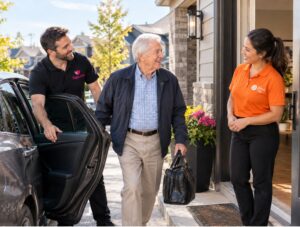
Having a companion available for transportation can help seniors continue attending appointments, shopping for groceries, visiting friends, attending community activities, or completing errands.
The senior remains involved in the activity.
The companion provides the practical support needed to make the activity possible.
Grocery Shopping
Grocery shopping is another area where a small amount of assistance can preserve independence.
A senior may still want to choose their own food, compare products, and decide what meals to prepare. Carrying bags, driving, or navigating a large store may simply be more difficult.
Companion assistance can make the process easier while preserving the senior’s participation and decision-making.
Household Assistance
Light household tasks can gradually become tiring.
Tasks such as organizing items, handling errands, light cleaning, or other practical household activities may take considerably longer for an older adult than they once did.
Flexible assistance can reduce the physical burden without requiring the senior to leave their home.
Companionship
Independence is not only about physical tasks.
Social connection matters as well.
A senior who lives alone may have fewer opportunities for conversation and shared activities. Regular companionship can provide another source of social interaction.
A companion might talk with the senior, accompany them on an outing, help with an errand, or simply spend time together.
This is one reason Companion Care for Seniors can be an important part of a broader aging in place strategy.
How TapLook Supports Senior Comfort and Personal Wellness
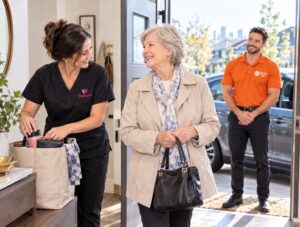
TapLook addresses another part of independent living: personal grooming, beauty, and wellness.
As people age, going to a salon or wellness location may become less convenient. Transportation, mobility challenges, winter weather, fatigue, or simply the desire to remain at home can make traditional appointments harder to manage.
TapLook brings beauty and wellness services closer to the senior.
Depending on the available service, this can include nail care, massage therapy, and haircuts designed around the needs of older adults.
The value is not simply cosmetic.
Personal grooming can contribute to confidence, comfort, routine, and social participation.
A haircut can help a senior feel prepared for a family gathering.
A nail appointment can become a pleasant personal-care routine.
A massage appointment can provide a relaxing wellness experience.
The broader principle is accessibility.
When a service can come to the senior rather than requiring the senior to travel, the process can become easier to incorporate into everyday life.
Why TapLook and BabaTap Work Well Together
TapLook and BabaTap address different needs, but both can contribute to a senior’s ability to remain comfortable at home.
BabaTap focuses on practical everyday support.
TapLook focuses on personal beauty and wellness.
Together, they can help address several areas of aging in place:
• Transportation
• Grocery shopping
• Errands
• Household assistance
• Companionship
• Personal grooming
• Beauty services
• Wellness experiences
• Social participation
• Maintaining familiar routines
This broader approach recognizes that senior independence is multidimensional.
A person may be physically capable of living at home but need help getting to appointments.
Another senior may be independent with errands but appreciate at-home grooming services.
Someone else may mainly need regular companionship.
There is no single definition of what a senior needs.
Understanding Senior Home Care in Saskatoon
When families search for Home Care for Seniors, it is important to understand the difference between medical care, personal care, household assistance, and companion services.
Saskatchewan’s public home care system provides services based on assessed needs and can include professional healthcare services and supportive services.
Other organizations in Saskatoon provide additional forms of home support.
For example, community organizations offer services such as housekeeping, light meal preparation, and moving or downsizing support for people who need assistance to remain independent at home.
There are also local organizations offering companion support, transportation accompaniment, shopping assistance, outings, and other practical services.
This means families do not necessarily need to view senior support as a choice between complete independence and moving into a care facility.
There can be many levels of assistance between those two options.
Home Care for Seniors Does Not Always Mean Medical Care
The phrase Senior Home Care can sometimes create confusion.
A family might search for home care because a parent needs help, but the parent may not require nursing or medical treatment.
Instead, the family might be looking for:
• A ride to the grocery store
• Help with errands
• A companion for an appointment
• Light household support
• Someone to accompany a senior outside the home
• Assistance with shopping
• A friendly visitor
• Mobile grooming services
These needs can be described as practical or non-medical support.
Understanding this distinction helps families select services that match the actual situation.
If a senior needs nursing, clinical assessment, rehabilitation, medication management, or other professional healthcare services, families should consult appropriate healthcare providers.
If the challenge is transportation, companionship, errands, household assistance, or accessibility, companion services may provide a useful complement.
The Role of Companion Care in Aging in Place
Companion Care for Seniors can help bridge the gap between living completely alone and requiring intensive professional care.
Companionship may involve simple activities.
A senior and companion might have coffee, go shopping, take a walk, attend an event, visit a community space, or complete an errand together.
These activities may seem ordinary, but ordinary activities are often what make independent living meaningful.
Independence is not just about remaining inside a home.
It is about continuing to participate in life.
A companion can help make community participation more accessible.
This can be particularly useful when adult children live in another neighbourhood, have demanding work schedules, or cannot provide assistance every day.
The purpose is not to replace family.
Instead, practical companion support can complement family involvement.
Supporting Family Members Without Taking Away Senior Independence
Adult children often want to help aging parents, but modern family responsibilities can make daily assistance difficult.
A son or daughter may have a full-time job, children, household responsibilities, and other commitments.
Even when family members live nearby, they may not be able to drive across Saskatoon several times a week.
This can create stress for both the senior and the family.
The senior may hesitate to ask for help.
The family may worry that they are not doing enough.
A flexible support service can reduce some of this pressure.
For example, a family could arrange practical assistance for specific activities while continuing to remain closely involved in important decisions.
This creates a shared support model.
The senior retains control.
The family remains connected.
A companion provides practical assistance.
Healthcare professionals remain responsible for healthcare needs when required.
Winter and Transportation Challenges in Saskatoon
Saskatoon’s climate makes transportation planning particularly relevant for older adults.
Winter conditions can make walking, driving, parking, and outdoor errands more difficult.
For seniors who already have mobility limitations or reduced confidence, winter can create an additional barrier to independence.
A senior may choose to stay home more often simply because going outside feels complicated.
Reliable transportation assistance can make essential and social trips easier to manage.
This may include grocery shopping, appointments, pharmacy visits, family visits, or community activities.
The larger objective is to prevent transportation limitations from unnecessarily reducing a senior’s quality of life.
Personal Grooming as Part of Independent Living
Personal grooming is sometimes treated as a minor concern when discussing senior care.
However, grooming can have an important place in a person’s routine.
Getting a haircut, receiving nail care, or enjoying a wellness service can provide a sense of normalcy and personal choice.
For a senior who finds travel difficult, having these services available at home can make a meaningful difference.
TapLook’s approach is centered on bringing beauty and wellness services to the customer.
This can make personal care more accessible without requiring an older adult to coordinate transportation for every appointment.
The result is a more convenient experience that can fit naturally into an aging in place lifestyle.
Creating a Personalized Support Plan for a Senior in Saskatoon
There is no universal formula for independent living.
Families can start by identifying what the senior can comfortably manage alone and what activities are becoming difficult.
A simple assessment might ask:
What can the senior already do independently?
Consider cooking, dressing, personal routines, shopping, walking, household tasks, social activities, and transportation.
What activities are becoming difficult?
Look for tasks that take longer, require more physical effort, or create anxiety.
What support would make the biggest difference?
The answer might be transportation rather than personal care.
It might be companionship rather than housekeeping.
It might be mobile grooming rather than traditional salon visits.
How frequently is support needed?
Some seniors may need occasional assistance.
Others may benefit from recurring weekly support.
What should remain under the senior’s control?
Whenever possible, seniors should remain involved in decisions about their routines, schedules, preferences, and activities.
This approach can help support independence rather than unintentionally replacing it.
Combining Public, Professional, Family, and Companion Support
A strong senior support network can involve several different resources.
Saskatchewan’s public home care system may provide assessed healthcare and supportive services.
Professional home care providers may offer personal care and household assistance.
Community organizations may help with practical household needs.
Family members can provide emotional support and make important decisions together with the senior.
Companion services can provide transportation, errands, social interaction, and practical assistance.
Beauty and wellness providers such as TapLook can support grooming and personal wellness.
These services do not have to compete with one another.
They can work together.
Why Flexible Support Matters
Senior needs can change over time.
A person who only needs transportation today may need additional household assistance later.
Someone who currently manages personal grooming independently may eventually prefer mobile services.
Another senior may simply need more companionship after giving up driving.
Flexible support allows families to adjust without immediately making a major lifestyle change.
This is especially valuable for seniors who strongly prefer to remain in familiar surroundings.
A Practical Example of Aging in Place in Saskatoon
Imagine a senior living independently in Saskatoon.
They are comfortable preparing meals, managing their finances, taking care of personal routines, and maintaining their home.
However, they no longer drive.
Shopping has become difficult.
Winter makes outdoor travel uncomfortable.
Their daughter works full time and has young children.
The senior does not require intensive medical care.
Instead of changing the entire living arrangement, the family could create a practical support schedule.
BabaTap could assist with transportation and grocery shopping.
A companion could help with errands and provide social interaction.
TapLook could provide mobile beauty and wellness appointments.
The family could continue visiting and handling responsibilities that require family involvement.
If healthcare needs change, professional healthcare services can be added separately.
This model allows support to grow around the senior rather than forcing the senior into a completely different lifestyle.

The Difference Between Assistance and Dependence
One of the biggest misconceptions about senior support is that accepting assistance automatically reduces independence.
In reality, the opposite can sometimes be true.
A person who receives help with a difficult task may be able to continue doing many other things independently.
For example, transportation assistance may allow a senior to continue choosing their own groceries.
Companionship may give a senior confidence to attend community events.
Mobile grooming may allow someone to maintain their personal routine without worrying about transportation.
Household assistance may reduce physical strain while allowing the senior to remain in their own home.
The right assistance can therefore function as a tool for independence.
Choosing Services That Respect Senior Preferences
Every senior has personal preferences.
Some people want frequent conversation.
Others prefer quiet assistance.
Some seniors enjoy shopping with a companion.
Others prefer having groceries picked up.
Some people love regular salon visits.
Others prefer receiving beauty services at home.
The best support arrangement should consider these differences.
Families should talk directly with the senior about what type of assistance feels useful.
The senior’s preferences should be part of the conversation rather than treating the person as a passive recipient of care.
Why Familiarity Matters
Familiar surroundings can provide comfort.
A favourite chair, familiar kitchen, neighbourhood park, nearby friends, and established routines all contribute to a sense of belonging.
Support services can help seniors maintain those routines.
This is particularly important when the support is designed around the person’s existing lifestyle.
BabaTap can help with practical activities that allow seniors to remain connected to their community.
TapLook can bring personal wellness into the home.
Together, these services can help reduce some of the everyday obstacles associated with aging.
Building a Stronger Senior Support Network in Saskatoon
Independent living is rarely supported by one service alone.
It is usually a network.
That network may include:
• The senior
• Family members
• Healthcare professionals
• Saskatchewan Health Authority resources
• Home care providers
• Community organizations
• Companion services
• Transportation services
• Beauty and wellness providers
• Friends and neighbours
Each part can address a different need.
For families, the objective is to understand where the gaps are and find appropriate resources to fill them.
Frequently Asked Questions
What is Senior Home Care in Saskatoon?
Senior Home Care can refer to a broad range of services designed to help older adults remain comfortable and supported at home. Depending on the provider, services can include healthcare, personal care, homemaking, transportation, companionship, meal support, and household assistance.
Does every senior who needs help require medical home care?
No. Some seniors primarily need practical assistance with transportation, errands, shopping, household activities, or companionship. Medical needs should be assessed and handled by appropriate healthcare professionals.
What is the purpose of companion services?
Companion services can help seniors remain socially connected while receiving practical assistance with everyday activities. This may include outings, shopping, appointments, errands, or simply spending time together.
How can BabaTap help seniors in Saskatoon?
BabaTap focuses on practical companion support such as rides, grocery shopping, errands, household assistance, and companionship. These services can help seniors manage everyday activities while continuing to live at home.
How can TapLook help older adults?
TapLook provides mobile beauty and wellness services designed to make personal grooming and wellness more accessible. Services can include options such as haircuts, nail care, and massage therapy.
Can companion services replace healthcare?
No. Companion services are not a replacement for nursing, medical treatment, rehabilitation, or other professional healthcare. They can complement healthcare by addressing practical everyday needs.
Why is transportation important for aging in place?
Transportation allows seniors to continue accessing groceries, appointments, social activities, community events, and other parts of daily life. When driving becomes difficult, reliable transportation support can help preserve community participation.
Can a senior receive help without giving up independence?
Yes. Support can be structured around the activities the senior finds difficult while allowing them to continue managing everything they can comfortably do themselves.
Final Thoughts: Helping Seniors Continue Life at Home
How TapLook and BabaTap Help Seniors Live Independently at Home in Saskatoon is ultimately about more than individual services. It is about creating practical support around an older adult’s existing lifestyle.
Independent living does not require a senior to handle every task alone.
It means having enough flexibility and support to continue making personal choices, maintaining routines, connecting with other people, and enjoying familiar surroundings.
BabaTap can contribute by helping with practical activities such as transportation, grocery shopping, errands, household assistance, and companionship.
TapLook can contribute by bringing beauty and wellness experiences closer to seniors, making personal grooming more convenient and accessible.
Together, these services can complement broader Senior Home Care resources in Saskatoon.
For families exploring Home Care for Seniors, the most useful first step is often to identify the specific barriers affecting everyday life. Is transportation becoming difficult? Is grocery shopping exhausting? Is the senior spending too much time alone? Is getting to a salon becoming inconvenient? Are family members struggling to provide assistance during the week?
Once those challenges are clear, families can consider targeted support rather than changing the senior’s entire lifestyle.
For some older adults, a few hours of practical assistance each week may make a meaningful difference.
For others, regular Companion Care for Seniors can provide a combination of social connection and everyday assistance.
The broader goal is to create a support system that grows with the senior’s needs while respecting personal preferences.
Saskatoon seniors deserve opportunities to remain connected to their homes and communities for as long as it is appropriate and safe to do so. With the right combination of family involvement, healthcare resources, practical companion assistance, transportation, household support, and accessible wellness services, aging in place can become a more manageable and personalized experience.
Home Care for Seniors should not be understood as one single service. It can be a coordinated collection of resources designed around the individual.
For one senior, independence may mean having a trusted companion for grocery shopping.
For another, it may mean receiving a haircut at home.
For someone else, it may mean having transportation to an appointment or simply having someone available for conversation and a community outing.
These seemingly small forms of assistance can support a much larger objective: helping seniors continue living their lives with dignity, choice, comfort, and connection.
When practical support is available at the right time, seniors may be better positioned to remain active participants in their own lives.
And when families have access to flexible support, they can spend more time being family members rather than trying to manage every practical task alone.
That is the real value of combining companion support, accessible wellness services, community resources, and appropriate healthcare. It creates a more complete approach to aging in place in Saskatoon.
Companion Care for Seniors can provide the human connection and practical assistance that make everyday activities easier.
Home Care for Seniors can encompass the wider network of support that helps an older adult remain safe, comfortable, and independent at home.
With thoughtful planning, personalized assistance, and services that respect the individual, seniors in Saskatoon can continue to enjoy the familiarity of home while receiving the support they need for everyday life.
Bài viết liên quan: