
How TapLook and BabaTap Help Seniors Live Independently at Home in Charlottetown. Growing older does not necessarily mean giving up the comfort, routines, or familiarity of home. For many older adults in Charlottetown, Prince Edward Island, staying at home can provide a strong sense of independence, dignity, and emotional security. At the same time, living independently can become more difficult when everyday tasks such as transportation, grocery shopping, household chores, personal appointments, or simply having someone nearby become challenging. This is where practical community-based support can make a meaningful difference. Families searching for Senior Home Care, Home Care for Seniors, or Companion Care for Seniors are often looking for solutions that help an older parent remain safely and comfortably at home without immediately moving into a residential care setting. TapLook and BabaTap represent two different but complementary approaches to supporting seniors with everyday needs. TapLook can help bring beauty, wellness, and personal care services closer to seniors, including those who prefer services at home, while BabaTap focuses on practical companionship and everyday assistance such as rides, grocery shopping, errands, and household support. In a community such as Charlottetown, where seniors may want to remain connected to familiar neighborhoods, local businesses, family members, healthcare providers, and community destinations, these types of non-medical services can become part of a broader independent-living plan. Locations and organizations such as Queen Elizabeth Hospital, the University of Prince Edward Island, Confederation Centre of the Arts, Charlottetown’s residential neighborhoods, shopping areas, pharmacies, and community spaces can all be part of a senior’s regular routine. The goal is not to replace family relationships or clinical healthcare. Instead, practical support can reduce everyday barriers so older adults can continue participating in the activities that make home life meaningful.
Aging in place has become an important consideration for many families. An older adult may be capable of living at home but still need occasional assistance to make that lifestyle sustainable.
That distinction matters.
A senior who needs help with transportation does not necessarily need full-time care. Someone who finds grocery shopping tiring may not need to move into assisted living. An older adult who enjoys having a professional visit for a beauty or wellness service may simply want that service brought into the home.
Independent living is often supported by small pieces of assistance that fit naturally into an individual’s existing lifestyle.

What Does Independent Living Mean for Seniors in Charlottetown?
Independent living can look different from one person to another.
For one senior, independence may mean preparing breakfast, managing a home, and walking around the neighborhood without assistance.
For another, independence may mean remaining at home while receiving occasional help with transportation, errands, cleaning, appointments, personal grooming, or social activities.
The important point is that support does not automatically eliminate independence.
In many cases, the right assistance can actually make independence more sustainable.
A senior may continue making decisions about where to go, what to buy, whom to visit, and how to spend the day while receiving help with the physical or logistical parts of those activities.
This is particularly important for families who live outside Charlottetown or who have demanding work and family responsibilities of their own.
A daughter may want to take her parent grocery shopping every week, but work commitments may make that impossible.
A son may want to drive his father to an appointment, but he may live in another province.
A family member may want to visit regularly but cannot always be available for errands or household tasks.
Practical senior support can fill some of these gaps.
Where BabaTap Fits Into Independent Senior Living
BabaTap is designed around practical companionship and everyday assistance rather than traditional medical care.
This distinction is important when families begin researching senior services.
Many searches use broad terms such as Senior Home Care because families are trying to find help for an older adult at home. However, the actual need may be much simpler.
Perhaps the senior needs someone to drive them to a store.
Perhaps they need assistance picking up groceries.
Perhaps the home needs some basic cleaning.
Perhaps they simply want a reliable companion for an outing.
These needs can fall into the broader conversation around Home Care for Seniors without necessarily requiring nursing care or medical home health services.
BabaTap can be positioned as practical support that helps seniors maintain their normal routines.
Transportation Assistance
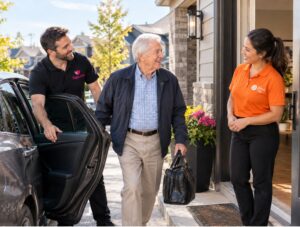
Transportation is one of the most important factors affecting independent living.
When an older adult stops driving, ordinary activities can become complicated.
Going to the grocery store can require coordinating with family.
Visiting a friend can become difficult.
Getting to a pharmacy may depend on public transportation schedules.
Attending an appointment may require someone else to take time off work.
A companion transportation service can reduce these obstacles.
The objective is not simply getting from one location to another. Transportation can help a senior continue participating in everyday life.
A ride to a grocery store may support independence.
A ride to a community event may support social connection.
A ride to visit family may support emotional well-being.
A ride to a routine appointment may help the senior maintain an established schedule.
Grocery Shopping and Errands
Grocery shopping is another area where occasional support can have a major practical effect.
Some seniors remain fully capable of deciding what groceries they need but find carrying bags, navigating large stores, or arranging transportation difficult.
A companion can help make the process easier.
The senior can remain involved in choosing products and planning meals while receiving assistance with transportation and physical tasks.
This preserves decision-making while reducing unnecessary strain.
Errand support can also include everyday tasks that are easy for a younger person but increasingly tiring for an older adult.
The key is flexibility.
Not every senior needs daily assistance.
Some may need support once a week.
Others may need occasional help when family members are unavailable.
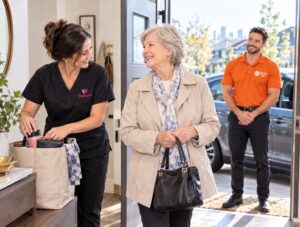
Household Support Can Make Staying at Home Easier
Maintaining a home requires ongoing physical effort.
Cleaning floors, organizing rooms, carrying supplies, changing household items, and completing routine chores can become increasingly difficult with age.
A senior may still be capable of managing their household but appreciate assistance with selected tasks.
This is one reason families often search for Home Care for Seniors when what they actually need is practical non-medical support.
The difference between medical care and household assistance should be clear.
Medical home healthcare may involve licensed professionals providing clinical services.
Companion and household services generally focus on daily living, social interaction, transportation, errands, and practical support.
Understanding this difference can help families choose services that match the actual situation.
TapLook Brings Beauty and Wellness Closer to Seniors
Independent living is not only about completing chores.
Quality of life also includes personal appearance, self-confidence, relaxation, and maintaining familiar routines.
This is where TapLook can play a complementary role.
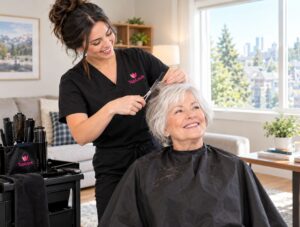
TapLook is associated with mobile beauty, nail, wellness, and personal care services that can bring selected services directly to customers rather than requiring them to travel to a salon or traditional location.
For some seniors, leaving home for a beauty appointment may be tiring or inconvenient.
Mobility limitations, transportation challenges, weather, and scheduling can all make an ordinary salon visit more complicated.
Having appropriate beauty or wellness services available at home can remove some of these barriers.
Personal Care Can Support Confidence
Personal grooming can have an important place in everyday life.
A manicure, nail service, beauty treatment, or wellness appointment may seem like a small activity, but for many older adults it can be part of maintaining personal identity and routine.
Seniors should not be defined only by their healthcare needs.
They also have preferences, hobbies, friendships, memories, personal styles, and routines.
Bringing beauty and wellness services closer to home can help preserve those aspects of everyday life.
TapLook can therefore complement practical companion services by addressing a different part of the independent-living experience.
BabaTap can help with practical activities.
TapLook can help bring selected beauty and wellness experiences closer to home.
Together, these types of services demonstrate that supporting seniors does not have to mean focusing exclusively on medical needs.
Why Non-Medical Support Matters
Families sometimes begin looking for assistance only after a problem becomes obvious.
An older parent may miss an appointment because transportation was unavailable.
A senior may stop grocery shopping independently because carrying bags has become difficult.
A previously social person may begin staying home because getting around town has become inconvenient.
A senior may postpone personal care because traveling to a salon feels exhausting.
These situations can gradually reduce independence.
Non-medical services can address some of these practical barriers before they become larger lifestyle disruptions.
The purpose is not to assume that every senior needs assistance.
Instead, it is to recognize that occasional help can make independent living more realistic.
The Role of Family Caregivers
Family caregivers often want to do everything themselves.
However, family support has practical limitations.
Children may live in different cities.
Grandchildren may have school schedules.
Adult family members may work full time.
Spouses may have their own responsibilities.
Even families that are highly involved can benefit from reliable supplementary support.
The goal is not to replace family.
Instead, services such as BabaTap can give family caregivers another resource for everyday activities.
A family member may remain responsible for major decisions while a companion helps with errands and transportation.
This can create a more sustainable arrangement for everyone involved.
How Charlottetown Seniors Can Think About Support
When considering independent living in Charlottetown, families can begin by looking at what is actually becoming difficult.
Rather than asking, “Does my parent need home care?” it can be more useful to ask specific questions.
Does the senior need help getting around?
Are grocery trips becoming difficult?
Is cleaning becoming physically demanding?
Does the senior need someone to accompany them on errands?
Are they becoming less socially active because transportation is difficult?
Would at-home beauty or wellness services make their routine easier?
These questions can produce a clearer picture of the appropriate support.
Not every challenge requires the same solution.
Some situations call for family assistance.
Others may be addressed through companion services.
Some require professional healthcare.
The best approach is often the one that matches the actual need rather than using one broad category for every situation.
Combining Practical Help With Everyday Quality of Life
A strong independent-living plan does not need to be complicated.
For many seniors, it can consist of several simple forms of support that work together.
BabaTap may assist with transportation, groceries, errands, companionship, and household tasks.
TapLook may provide convenient beauty and wellness services closer to home.
Family members may handle important decisions, regular visits, financial matters, and emotional support.
Healthcare professionals may provide clinical services when medically necessary.
Each element has a different role.
This creates an important distinction between independence and isolation.
A senior can receive support while continuing to live an independent life.
Independence does not necessarily mean doing everything alone.
It can mean having enough control, choice, and appropriate assistance to continue living according to personal preferences.
Companion Support Can Reduce Everyday Isolation
Social connection is another major part of life at home.
A senior who no longer drives may gradually reduce outings.
If family members are busy, opportunities for conversation can become less frequent.
A person who once regularly visited stores, community spaces, friends, or local events may begin spending most of their time at home.
Companionship can help address this type of everyday isolation.
A companion may provide conversation during an outing, help with transportation, or accompany a senior while completing an errand.
These activities are simple, but they can create structure in the week.
This is an important part of the broader idea of Companion Care for Seniors.
The purpose is not necessarily to provide medical supervision.
Instead, it can provide human presence and practical assistance that makes ordinary activities easier.
Transportation and Independent Living Are Closely Connected
Transportation deserves special attention because it affects many other areas of senior life.
Without reliable transportation, an older adult may have difficulty reaching stores, community activities, family gatherings, personal appointments, and healthcare facilities.
That is why senior transportation can be an important component of Companion Care for Seniors.
A companion ride can be about much more than the vehicle itself.
It can help a senior continue participating in the community.
For families considering services in Charlottetown, transportation needs may include routine local trips, grocery shopping, personal appointments, social outings, and other everyday destinations.
When transportation becomes predictable, seniors may feel more comfortable planning their days.
RideSenior and the Importance of Hospital Discharge Transportation
RideSenior fits into this broader ecosystem from a different direction.
Its role is particularly relevant when a senior or patient is ready to leave a hospital and needs non-medical transportation home.
Hospital discharge can be stressful for families.
A patient may have completed their hospital treatment, but getting from the hospital to home can still require coordination.
The family may not have a suitable vehicle.
The patient may have mobility challenges.
The caregiver may be working.
The hospital may have procedures that must be completed before the patient can leave.
Non-medical hospital discharge transportation is designed to address the transportation portion of this transition.
In the type of service described by RideSenior, there can be two common pickup approaches.
The first involves the transportation team going directly to the patient’s hospital floor or ward.
This is often the preferred arrangement when the hospital requires the transportation provider or designated person to come to the ward before the patient can be released.
The team may complete the required acknowledgement or discharge-related paperwork process, assist with the transition from the ward, and escort the patient down to the vehicle.
The second approach involves meeting the patient in a hospital lobby or waiting area.
The exact process depends on hospital procedures and the patient’s circumstances.
For seniors, the first approach can be particularly useful when leaving the ward independently is difficult or when the hospital requires a ward-level pickup.
This type of support does not replace clinical care.
Instead, it addresses the practical journey from hospital to home.

From Hospital to Home: Why the Transition Matters
The trip home may be only a short distance, but the transition itself can be significant.
After spending time in a hospital, an older adult may be tired, uncomfortable, or uncertain about the process of getting home.
Family members may already be managing prescriptions, appointments, household preparations, and communication with healthcare providers.
Having transportation assistance can remove one practical responsibility from the list.
This is where RideSenior can complement broader senior support services.
BabaTap can focus on everyday companionship and practical assistance.
TapLook can bring selected beauty and wellness services closer to seniors.
RideSenior can support transportation needs related to hospital discharge and returning home.
These services address different moments in an older adult’s life.
When Families Search for Home Care
The phrase Senior Home Care can cover a very broad range of needs in everyday search behavior.
A family may use it when looking for a nurse.
Another family may use it when looking for companionship.
Someone else may simply need transportation.
Another person may need household assistance.
This broad terminology can create confusion.
Families should identify the actual service requirement before selecting a provider.
If the need is medical, a qualified healthcare provider should be considered.
If the need is companionship or practical assistance, a non-medical service may be more appropriate.
If the need is transportation after hospital discharge, a specialized transportation provider may be relevant.
This distinction helps seniors receive support that matches their circumstances.
Signs That a Senior May Benefit From Additional Support
Families can look for practical changes rather than assuming that aging itself means a person needs extensive care.
Possible signs include:
Difficulty getting to regular appointments
Avoiding grocery shopping because transportation is difficult
Increasing difficulty carrying groceries or household supplies
Reduced participation in social activities
Difficulty maintaining routine household tasks
Reluctance to leave home because getting around has become complicated
Needing occasional assistance with errands
Feeling more comfortable when someone accompanies them outside the home
Wanting personal care or beauty services but finding travel inconvenient
None of these signs automatically means a senior requires medical care or residential care.
They may simply indicate that some additional support could make life easier.
Building a Flexible Support Schedule
One advantage of non-medical services is flexibility.
A senior may not need assistance every day.
A family might arrange transportation once a week.
Grocery assistance might be needed every few days or only during certain periods.
Household help might be scheduled periodically.
A TapLook appointment might occur when the senior wants a beauty or wellness service.
This flexibility allows families to build support around the individual’s lifestyle.
For example, a weekly schedule could include a grocery trip with a companion, a separate beauty appointment at home, and occasional transportation for social activities.
The schedule can change as needs change.
That can be more comfortable than immediately adopting a full-time care model when full-time care is not necessary.
Why Aging in Place Can Feel More Personal
Home is more than a physical location.
It contains familiar furniture, photographs, neighborhood memories, routines, and personal possessions.
For many seniors, remaining at home means remaining connected to the environment they know.
A familiar neighborhood can make daily life feel predictable.
Nearby stores may be part of long-standing routines.
Friends and relatives may live close by.
Local destinations in Charlottetown may have personal significance.
Support services can help preserve these connections.
When a senior has transportation and practical assistance available, leaving home for an activity does not necessarily require a family member to reorganize their entire day.
That can make independent living more sustainable.
How TapLook and BabaTap Complement Each Other
TapLook and BabaTap serve different needs, but their roles can fit naturally into an independent-living strategy.
BabaTap is centered on companionship and practical everyday support.
TapLook is centered on mobile beauty, nail, and wellness services.
For a senior, both can reduce the inconvenience of traveling outside the home.
Imagine an older adult who no longer drives.
They may need help going grocery shopping.
They may also want a regular manicure or beauty appointment.
Instead of depending on family for every activity, different services can address different needs.
This is a practical example of Companion Care for Seniors working alongside lifestyle and wellness services.
The objective is not to create dependency.
The objective is to make everyday independence easier to maintain.
How Families Can Choose the Right Type of Support
Before arranging a service, families should consider several questions.
What does the senior actually need help with?
How frequently is assistance required?
Does the service need to be medical or non-medical?
Does the senior need transportation?
Would companionship be helpful?
Can services be provided at home?
Does the provider understand the needs of older adults?
Is the service flexible enough to change as circumstances change?
For transportation after hospitalization, families should also ask how the provider handles hospital pickup.
If the hospital requires pickup from the ward, the family should confirm whether the transportation team can go to the appropriate floor.
They should also ask whether the service includes escorting the patient from the ward to the vehicle.
If lobby pickup is permitted, the family should confirm where the meeting point is.
These practical details can make the discharge process much smoother.
Home-Based Services Can Support Dignity
One of the strongest arguments for appropriate non-medical support is that it can allow seniors to retain control over their routines.
A senior can continue deciding what groceries to purchase.
They can choose when to visit friends.
They can decide which beauty services they want.
They can continue living in their own home.
Support becomes an enabling resource rather than a replacement for independence.
This is the broader purpose behind Home Care for Seniors when the term is used to describe practical assistance rather than clinical care.
The senior remains at the center of the decision.
Charlottetown as a Community for Aging in Place
Charlottetown offers a familiar environment for many older adults who have spent years building connections across Prince Edward Island.
The city includes residential neighborhoods, shopping areas, healthcare facilities, educational institutions, cultural destinations, and community spaces.
For an older adult, access to these places can contribute to an active daily routine.
But access depends partly on mobility and transportation.
When driving becomes difficult, a senior may gradually lose access to activities that were once easy.
Support services can help reduce that barrier.
A companion ride, grocery trip, household assistance visit, or at-home wellness appointment may appear small individually.
Together, these services can contribute to a more sustainable independent lifestyle.
A Practical Example of an Independent-Living Plan
Consider a hypothetical Charlottetown senior who lives alone and remains capable of managing most daily decisions.
The senior can prepare meals, manage personal finances, communicate with family, and maintain many household routines.
However, driving has become difficult.
The family lives nearby but cannot provide transportation every day.
A practical support plan might include periodic BabaTap assistance for grocery shopping and errands.
The senior could continue selecting groceries and deciding what to purchase while receiving help with transportation.
For personal grooming, the senior could arrange an appropriate TapLook mobile service when desired.
If the senior later requires transportation home after a hospital stay, RideSenior could provide non-medical discharge transportation according to the hospital’s release procedures.
This example demonstrates how different services can support different needs without assuming that the senior must immediately transition away from independent living.
Independent Living Does Not Mean Doing Everything Alone
Perhaps the most important idea for families to understand is that independence and assistance are not opposites.
A senior can accept help and remain independent.
A person can receive transportation and still choose where to go.
A senior can receive household assistance and still manage their own home.
A person can receive companionship and still maintain their own social relationships.
A patient can receive hospital discharge transportation and still return to their own home.
The right support can remove obstacles while leaving important decisions with the senior.
That principle is central to modern approaches to Home Care for Seniors and aging in place.
The Connection Between Everyday Support and Hospital Transitions
Independent living also requires planning for unexpected events.
A senior who normally manages well at home may occasionally require hospitalization.
After discharge, transportation can become one of the first practical questions.
Who will pick the patient up?
Can the family reach the hospital in time?
Does the hospital require someone to come to the ward?
Does the patient need assistance getting from the floor to the vehicle?
Is a lobby pickup acceptable?
These questions should be considered before the discharge moment whenever possible.
RideSenior’s non-medical hospital discharge transportation model can be relevant when a patient needs assistance moving from the hospital to home.
The ward pickup approach can be particularly important when hospital procedures require the transportation team to meet the patient on the floor before release.
The alternative is a lobby pickup when the hospital and patient’s circumstances allow it.
A Broader View of Senior Support
Senior support should not be reduced to a single service category.
An older adult’s needs can include transportation, companionship, household assistance, personal wellness, social connection, and hospital-to-home transportation.
Different providers can address different parts of that picture.
TapLook can help seniors access selected beauty and wellness services at home.
BabaTap can help with practical companion-based activities.
RideSenior can help with non-medical transportation, including hospital discharge transportation for patients returning home.
Families can evaluate each service according to the specific need rather than searching for one provider to handle everything.
Final Thoughts
Helping seniors live independently at home in Charlottetown is often about making everyday life easier rather than changing the senior’s entire lifestyle.
Small forms of assistance can have a meaningful effect.
A ride to the grocery store can preserve a familiar routine.
Help with errands can reduce physical strain.
Companionship can make an outing more enjoyable.
Household assistance can make maintaining a home more manageable.
An at-home beauty or wellness appointment can preserve a personal routine.
Hospital discharge transportation can make the transition from hospital to home more organized.
TapLook and BabaTap contribute to different parts of this picture, while RideSenior addresses an important transportation need when a patient is leaving the hospital.
For families researching Home Care for Seniors, the most useful starting point is often to identify the exact challenge rather than immediately assuming that full-time care is necessary.
If the challenge is companionship, practical assistance may be appropriate.
If the challenge is mobility, transportation may be the priority.
If the challenge is accessing beauty and wellness services, mobile services can provide a convenient alternative.
If the challenge is returning home after hospitalization, non-medical hospital discharge transportation can provide an important bridge between the hospital and the senior’s home.
The central goal remains the same: helping older adults maintain choice, familiarity, dignity, and participation in everyday life for as long as living independently remains appropriate for them.
When practical services are coordinated around the senior’s preferences, support can become an extension of independence rather than a replacement for it.
And that is why services such as TapLook, BabaTap, and RideSenior can each have a meaningful place in the broader conversation about aging at home.
Bài viết liên quan: