
How TapLook and BabaTap Help Seniors Live Independently at Home in Halifax. Growing older at home can be a meaningful choice for seniors in Halifax who want to remain connected to the neighbourhoods, routines, friends, and communities they already know. For many older adults, however, living independently does not mean doing everything alone. Everyday responsibilities such as getting to an appointment, shopping for groceries, keeping the home organized, maintaining personal grooming routines, or simply having reliable companionship can gradually become more difficult. This is where practical support can make a meaningful difference. Home Care for Seniors is often searched by families looking for assistance that allows an aging parent to remain at home, although the type of support needed may range from household help and companionship to transportation and personal beauty services rather than clinical nursing care. In Halifax, families can also encounter established public programs and community resources designed to help older Nova Scotians remain independent. Nova Scotia Health provides home and community care, while the province has supported initiatives such as CAPABLE, which combines professional assessment and practical home modifications to help eligible seniors remain safely at home. Against this broader aging-in-place environment, TapLook and BabaTap can serve a different but complementary purpose. BabaTap focuses on practical senior companion assistance, while TapLook brings convenient beauty and personal grooming services to clients at home. Together, these services can address some of the everyday barriers that may make independent living harder. Rather than replacing medical professionals, family caregivers, or publicly funded home care, they can become part of a wider support network that helps seniors maintain routines, comfort, confidence, and social connection. For Halifax seniors and their families, understanding how these services fit together can make it easier to build a personalized plan for remaining at home while preserving dignity and independence.

Understanding Independent Living for Seniors in Halifax
Independent living is sometimes misunderstood as complete self-sufficiency.
For many seniors, independence has a different meaning.
A senior may still be capable of making decisions, managing personal routines, preparing simple meals, communicating with family members, and living safely in a familiar home while needing occasional assistance with tasks that have become physically tiring or inconvenient.
This distinction is particularly important when families begin searching for support.
An older adult may not need full-time care or a move to a residential setting. Instead, they may need someone to accompany them to an appointment, help with groceries, assist with household errands, provide friendly company, or make certain daily routines easier.
Nova Scotia’s Department of Seniors and Long-Term Care explicitly identifies remaining in homes and communities longer as an important area of support. The province’s home and community care system is designed for people who need assistance to remain independent at home, with services intended to supplement help already received from family, friends, or community supports.
That broader concept of independence creates space for different types of services.
Some needs are clinical.
Some are personal.
Some are household-related.
Others are social.
And many are simply practical.
TapLook and BabaTap are particularly relevant to this last group because independent living often depends on small forms of assistance that make ordinary life easier.
Why Seniors May Need More Support Without Wanting to Leave Home
Aging can change how difficult everyday activities feel.
A grocery trip that once took 30 minutes may become exhausting when carrying bags, navigating parking lots, and walking through a large store are involved.
A visit to a medical appointment may require transportation and someone to accompany the senior.
Household cleaning may become harder because bending, reaching, lifting, or standing for long periods is uncomfortable.
Personal grooming can also become less convenient when traveling to a salon becomes difficult.
None of these situations automatically means a senior needs institutional care.
In many cases, the person simply needs the right support at the right time.
This is one reason the concept of aging in place has become important in Halifax and throughout Nova Scotia.
The province’s CAPABLE initiative, delivered with VON Nova Scotia, was designed around the idea that practical changes to the home and daily activities can help eligible seniors remain independent. The program has used teams involving a nurse, occupational therapist, and handyperson to identify improvements such as better lighting, furniture rearrangement, grab bars, safer steps, and other accessibility changes.
The lesson is broader than the program itself.
Independence is often supported by a combination of solutions rather than a single service.
A safer home can help.
Transportation can help.
Companionship can help.
Household assistance can help.
Personal grooming support can help.
Family involvement can help.
Professional healthcare can help when medical needs are present.
For many families, the goal is not to find one organization that does everything. The goal is to create a practical network around the senior.
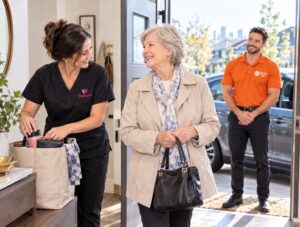
Where BabaTap Fits Into Senior Independence
BabaTap is designed around practical senior companion support rather than medical treatment.
This distinction matters.
When a family searches online for terms such as Senior Home Care, Home Care for Seniors, or senior care at home, they may actually be looking for several different things.
They might want someone to help an aging parent with errands.
They might need assistance with grocery shopping.
They might want help keeping the home tidy.
They might need someone to accompany a senior outside the home.
They may simply want an older parent to have another trusted person around during parts of the day.
These needs are not necessarily the same as nursing care.
BabaTap can be positioned within this practical companion-support category.
For a Halifax senior who wants to remain at home, assistance with ordinary activities can preserve independence because the senior does not necessarily have to give up control simply because certain tasks have become more difficult.
For example, a senior may still choose what groceries to purchase, but receive help getting them.
A senior may still decide when to clean the house, but receive assistance with physically demanding household tasks.
A senior may still want to attend an activity or appointment, but appreciate having a companion or transportation arrangement that makes the trip manageable.
This approach respects the senior’s role in decision-making.
The objective is assistance without unnecessarily taking over.
Home Care for Seniors Versus Companion Support
Families should understand that the phrase “home care” can describe very different services.
In Nova Scotia, publicly coordinated Home Care is part of the province’s home and community care system. Nova Scotia Health Continuing Care assesses individual needs and determines appropriate services. The province states that Home Care is available to Nova Scotians who need support to remain independent at home and that it supplements assistance already provided by family, friends, and community supports.
That is different from a private companion service.
Companion assistance generally focuses on non-medical daily-life support.
Depending on the provider and the client’s arrangement, this can include activities such as:
• Companionship and conversation
• Grocery shopping
• Running errands
• Household assistance
• Accompaniment
• Support with everyday routines
• Assistance getting out into the community
These services can be particularly useful for seniors who remain generally independent but have developed limitations in specific areas.
A family may therefore use several types of support at the same time.
For example, Nova Scotia Health may coordinate appropriate home care services while family members provide emotional support and a service such as BabaTap assists with selected daily activities.
This layered approach can be easier for families to manage than assuming that one provider must meet every need.
How TapLook Supports Seniors at Home
Personal grooming is another part of independent living that can be overlooked.
When seniors find transportation increasingly difficult, routine beauty appointments may become less frequent.
For some people, that may seem minor.
For the senior, it may not be minor at all.
Hair care, nail care, and other personal grooming routines can contribute to confidence, comfort, self-expression, and a sense of normalcy.
TapLook brings beauty services into the client’s preferred environment, making personal care more convenient for people who may find traveling to a salon challenging.
For seniors in Halifax, an at-home beauty appointment can remove several barriers at once.
There is no need to arrange a separate trip to a salon.
There may be less waiting.
The senior can remain in a familiar environment.
Family members may not need to reorganize their schedules around transportation.
Most importantly, the senior can continue maintaining a personal routine without having to leave home simply to access the service.
TapLook therefore addresses a different part of independent living from BabaTap.
BabaTap can help with practical everyday activities and companionship.
TapLook can help with personal beauty and grooming at home.
The two services can complement one another because independence is not only about safety and basic daily functioning. It is also about preserving ordinary routines and personal choice.
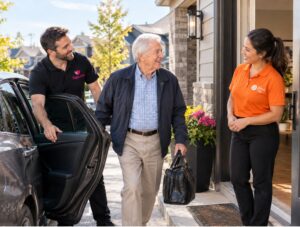
The Importance of Dignity in Aging at Home
Families sometimes approach senior support from a problem-solving perspective.
That is understandable.
They see an aging parent struggling with certain tasks and immediately begin asking what services are available.
But the senior’s perspective matters just as much.
An older adult may be concerned about losing control over daily decisions.
They may not want strangers taking over household routines.
They may feel uncomfortable asking children for help with personal tasks.
They may not want to move away from a familiar Halifax neighbourhood.
They may want to continue looking after themselves even when they need some assistance.
This is why flexible support can be valuable.
A companion service does not necessarily mean that someone takes control of the senior’s life.
Instead, assistance can be structured around what the individual actually needs.
If grocery shopping is difficult but meal planning is still enjoyable, the senior can remain involved in deciding what to buy.
If cleaning the bathroom is physically demanding but the senior still wants to manage other areas of the home, assistance can focus on the demanding tasks.
If traveling to a beauty appointment is inconvenient but the senior still wants regular grooming, an in-home service can bring the appointment closer to the person.
The principle is simple: support the person without unnecessarily replacing their independence.
Halifax’s Growing Focus on Aging in Place
Halifax is part of a province that has increasingly emphasized ways for seniors to remain in their homes and communities.
The provincial government describes supporting seniors so they can stay in their homes and communities longer as one of the Department of Seniors and Long-Term Care’s priorities.
Programs such as CAPABLE demonstrate how independence can involve environmental modifications as well as professional guidance. In 2024, the program expanded into additional Halifax Regional Municipality communities, including areas such as Dartmouth, Fairview, Armdale, Rockingham, and Purcells Cove.
Financial assistance can also matter.
As of September 2026, Nova Scotia’s Seniors Care Grant provides eligible seniors with up to $750 toward qualifying household, healthcare, and home-heating expenses. The province lists examples including house cleaning, laundry, grocery and meal delivery, snow removal, small home repairs, and certain healthcare services.
These initiatives illustrate an important reality: helping seniors remain at home can involve many different kinds of assistance.
There is no single definition of independence.
Building a Personalized Support Network for a Halifax Senior
Every senior has a different combination of abilities, preferences, family circumstances, and home environment.
One person may need transportation.
Another may need household assistance.
Another may primarily need companionship.
Another may be comfortable with almost everything but struggle with personal grooming appointments because leaving home is inconvenient.
A practical support plan begins by identifying those specific challenges.
Families can consider questions such as:
What tasks has the senior stopped doing because they have become difficult?
Which activities still matter most to the senior?
Does the senior need help every day or only occasionally?
Are transportation difficulties preventing participation in normal activities?
Would companionship reduce isolation?
Would at-home personal services make routines easier?
Does the senior have medical needs that require licensed or clinically appropriate care?
Are there home safety concerns that should be assessed by qualified professionals?
Answering these questions can help separate medical needs from practical lifestyle support.
This distinction is important because a companion service should not be presented as a replacement for medical care when clinical care is required.
Nova Scotia Health’s Continuing Care system remains an important resource for seniors who require home care or support following a hospital stay. The province advises individuals or families needing assistance to remain at home to contact Continuing Care for an assessment and care planning.
BabaTap and TapLook can sit alongside this broader ecosystem by addressing practical aspects of everyday life.
When Combining BabaTap and TapLook Makes Sense
Consider a Halifax senior who lives alone in a familiar home.
The senior can prepare meals, communicate clearly, manage personal decisions, and maintain most daily routines independently.
However, grocery shopping has become tiring.
House cleaning takes longer.
Getting to appointments is inconvenient.
The senior also misses regular salon visits because arranging transportation has become difficult.
A family might interpret these changes as a sign that the senior can no longer live independently.
But another approach is to identify each barrier individually.
BabaTap may help address selected companion and everyday support needs.
TapLook may bring beauty and grooming services into the home.
Family members may handle other responsibilities.
Healthcare professionals can address medical concerns when they arise.
Community programs can provide additional resources.
The result is not necessarily more care.
It can instead mean more targeted support.
That distinction is central to aging in place.
A senior does not have to choose between doing everything alone and leaving home.
There can be a middle ground where support is added gradually as needs change.

A Practical Philosophy for Senior Independence
The most useful question is not always, “How much care does this senior need?”
A better starting question can be:
“What does this senior need help with so they can continue doing the things they value?”
That shift changes the conversation.
It recognizes abilities rather than focusing only on limitations.
It also allows families to build support around real-life routines.
For one Halifax senior, independence may mean continuing to live in a longtime family home.
For another, it may mean remaining socially active.
For another, it may mean being able to maintain personal grooming without depending on a family member for every appointment.
For someone else, it may simply mean having reliable help with groceries and household tasks.
Companion Care for Seniors can be part of that practical framework when the primary need is non-medical support and human connection.
At the same time, professional home care should remain available when the person’s needs become clinical or require qualified healthcare professionals.
The strongest support plan is therefore one that recognizes the difference between these categories while allowing them to work together.
Looking Ahead: Supporting Independence as Needs Change
Senior independence is not a fixed condition.
Needs can change gradually.
A person who needs only occasional assistance today may require additional support later.
Likewise, a senior who temporarily needs more help after an illness or hospitalization may regain some independence with appropriate recovery and support.
This means families do not necessarily need to make permanent decisions based on one difficult period.
Instead, they can regularly reassess the situation.
Is the senior still managing safely at home?
Which tasks are becoming difficult?
Are there new transportation barriers?
Has social isolation increased?
Is personal grooming becoming harder?
Are household tasks creating unnecessary physical strain?
Are there medical concerns that require professional assessment?
These questions can help families adjust support without automatically assuming that a move away from home is necessary.
For seniors who value familiar surroundings, this flexibility can be particularly meaningful.
How Family Caregivers Can Work With BabaTap and TapLook
Family members remain an important part of many seniors’ support networks.
A daughter may call her parent every morning.
A son may visit several times a week.
A spouse may provide day-to-day assistance.
A relative may coordinate appointments, groceries, transportation, or household responsibilities.
However, family caregivers also have their own jobs, children, homes, and responsibilities.
This can create a difficult situation when an aging parent needs more practical assistance than the family can consistently provide.
This is where Home Care for Seniors can become an important search topic for Halifax families. However, families should first identify what type of support is actually required.
If the need involves medical treatment, medication management, clinical assessment, wound care, rehabilitation, or other healthcare-related services, the appropriate healthcare provider should be involved.
If the need involves companionship, errands, grocery shopping, household assistance, or other everyday activities, a non-medical companion service may be more appropriate.
TapLook can address another practical need by bringing beauty and grooming services into the senior’s home.
This creates an opportunity for family caregivers to divide responsibilities more effectively.
Instead of a daughter taking an afternoon off work to drive her parent to a salon, an in-home beauty appointment may remove that particular responsibility.
Instead of a family member spending an entire weekend handling errands, selected companion-support tasks may be arranged separately.
The purpose is not to reduce family involvement.
It is to make family involvement more sustainable.
Supporting Seniors Without Taking Away Their Independence
One of the most important principles of aging at home is maintaining personal choice.
A senior may need help without wanting someone else to make every decision.
This distinction can influence how companion services are provided.
For example, when helping with grocery shopping, the senior should remain involved in deciding what they want to purchase whenever possible.
When assisting with household tasks, the support should reflect the senior’s preferences and priorities.
When arranging an appointment, the senior should understand what is being scheduled and when.
When choosing an at-home beauty service through TapLook, the senior can continue making personal decisions about grooming and appearance.
This approach supports autonomy.
It also helps families avoid viewing aging exclusively through the lens of decline.
A senior who needs assistance with certain activities may still have considerable independence in other areas.
That independence deserves to be protected.
Companion Care for Seniors and Everyday Social Connection
Companionship is another important element of independent living.
Living alone does not automatically mean that a senior is lonely. Some older adults enjoy quiet routines and considerable time by themselves.
However, reduced mobility, retirement, the loss of friends or a spouse, transportation difficulties, and changes in family schedules can reduce social contact over time.
A companion can provide another opportunity for conversation and human connection.
This can be particularly valuable when companionship is incorporated naturally into everyday activities.
A grocery trip can become an opportunity to talk.
An errand can become a reason to leave the house.
A household task can be completed while the senior has someone nearby.
A trip to an appointment can feel less stressful when the senior is not navigating the journey alone.
The value is not simply that another person is physically present.
The value is having practical support that can make ordinary activities more accessible.
For Halifax seniors who want to remain connected to their communities, this can support a lifestyle built around participation rather than withdrawal.
Combining Practical Support With Personal Grooming
TapLook and BabaTap address different aspects of everyday senior life.
BabaTap is focused on practical companion assistance.
TapLook focuses on mobile beauty services that can be provided in the client’s preferred environment.
When considered together, they can support several elements of a senior’s routine.
Imagine a senior who has gradually stopped going to a salon because traveling has become inconvenient.
The senior still enjoys having their hair, nails, or other beauty needs professionally maintained.
An in-home appointment can eliminate the need for a separate salon trip.
Now consider that the same senior also finds grocery shopping and certain household tasks increasingly tiring.
Those needs can be considered separately through appropriate companion support.
This is an example of a broader aging-in-place philosophy.
Not every difficulty requires a medical solution.
Sometimes the most useful solution is simply to remove an everyday obstacle.
Home Care for Seniors Should Be Matched to Actual Needs
Families often begin looking for “home care” after noticing several small changes.
Perhaps the senior is missing appointments.
Perhaps the home is less tidy than it used to be.
Perhaps groceries are becoming difficult to manage.
Perhaps the senior has stopped participating in social activities.
Perhaps personal grooming has become less frequent.
Rather than treating all these signs as one large problem, families can separate them into categories.
Medical or Clinical Needs
These may include healthcare services that require appropriately qualified professionals.
Examples can include nursing care, clinical monitoring, rehabilitation, or other health-related services.
Families should use appropriate healthcare channels when these needs are present.
Household and Practical Needs
These may include:
• Grocery shopping
• Errand assistance
• Light household support
• Assistance organizing everyday activities
• Accompaniment
• Non-medical transportation coordination
These are areas where a companion service may potentially be useful depending on the provider and individual arrangement.
Personal Grooming Needs
These can include beauty appointments that a senior would prefer to receive at home.
TapLook can help address this category by bringing mobile beauty services directly to the client.
Social Needs
These can include conversation, accompaniment, participation in community activities, and maintaining regular human interaction.
BabaTap’s companion model can be relevant to this category when the service arrangement includes companionship.
Separating needs in this way helps families create a more precise support plan.
When a Senior Lives Alone in Halifax
Living alone can be perfectly appropriate for an independent older adult.
The important question is whether the person’s environment and support network continue to meet their needs.
Families can look for practical indicators rather than assuming that living alone is inherently unsafe.
Can the senior obtain groceries?
Can they maintain their household?
Can they get to important appointments?
Do they have reliable ways to communicate with family?
Are they maintaining regular personal routines?
Do they have opportunities for social connection?
Are there obvious hazards in the home?
Are there new difficulties that have appeared suddenly?
These questions can reveal where targeted assistance may be helpful.
For example, a senior may be completely capable of living alone but find carrying groceries increasingly difficult.
Another may manage household tasks but struggle with transportation.
Another may be comfortable at home but feel isolated because family members cannot visit frequently.
The appropriate response can depend on the specific challenge.
Transportation and Senior Independence
Transportation is often closely connected with independence.
Even when a senior can safely remain at home, difficulty getting around can limit access to appointments, shopping, social activities, community programs, and personal services.
Halifax has a range of transportation and community resources for older adults, and families can explore options based on mobility, destination, frequency, and individual circumstances.
The important point is that transportation should be considered part of the larger independence plan.
If a senior cannot easily leave home, other services can become more important.
An in-home beauty service such as TapLook can eliminate one type of trip.
Companion assistance may help with selected errands.
Appropriate transportation services can address necessary journeys.
Medical transportation needs should be handled according to the senior’s medical and mobility requirements.
Together, these solutions can reduce the number of barriers between the senior and the activities they want to continue.
Preparing for Changes After a Hospital Stay
A hospitalization can temporarily change what an older adult can manage at home.
A senior who previously handled grocery shopping, cleaning, and appointments independently may need additional assistance during recovery.
Families should distinguish between temporary recovery support and ongoing medical needs.
If healthcare professionals identify clinical requirements, those should be addressed through the appropriate healthcare system.
For everyday activities, however, families may also need to think about practical arrangements.
Who will help with groceries?
Who can assist with errands?
Who can provide companionship?
How will the senior get to follow-up appointments?
Can personal grooming be maintained at home while mobility is limited?
These questions can help families prepare before the senior returns home.
A combination of public services, healthcare professionals, family assistance, transportation, and non-medical companion support may be appropriate depending on the person’s circumstances.
Companion Care for Seniors as Part of an Aging-in-Place Plan
Aging in place does not mean refusing assistance.
It means creating enough support for a senior to continue living in a familiar environment when that remains appropriate.
This can involve changing the home.
It can involve arranging transportation.
It can involve asking family members for help.
It can involve professional healthcare.
It can involve companion assistance.
It can involve bringing personal services into the home.
The strength of the plan comes from matching each service to a genuine need.
BabaTap can therefore be viewed as one component within a broader network.
Its role is practical and non-medical.
The service can potentially help with activities such as companionship, grocery shopping, household assistance, and errands, depending on the service arrangement.
TapLook contributes to another part of the picture by making beauty and grooming services more accessible from home.
Neither service should be presented as a substitute for healthcare when healthcare is required.
Instead, they can complement the support already available to a senior.
Helping Seniors Maintain Familiar Routines
Routine is often an important part of feeling independent.
A senior may have a preferred grocery store.
They may enjoy a particular weekly activity.
They may have a regular beauty routine.
They may prefer shopping at a certain time.
They may enjoy conversations with familiar people.
They may have lived in the same Halifax neighbourhood for many years.
When mobility or energy decreases, these routines can gradually disappear.
Practical support can help preserve them.
A companion can assist with an errand.
An at-home beauty professional can bring a familiar type of appointment into the home.
Family members can continue visiting without having to handle every practical task themselves.
This allows the senior’s routine to evolve rather than disappear.
That can be an important distinction for families trying to support an older parent respectfully.
A Flexible Approach for Different Stages of Aging
Senior needs can change over time.
A person may initially need only occasional assistance.
Later, they may need help several times a week.
Following an illness, they may temporarily require more intensive support.
After recovery, some assistance may no longer be necessary.
A flexible support model allows families to respond to these changes.
For example, a senior might initially use companion support for grocery shopping once a week.
Later, household assistance may become more important.
At the same time, TapLook can continue providing personal grooming services at home according to the senior’s preferences.
If medical needs develop, the family can add appropriate healthcare services rather than expecting the companion provider to perform clinical tasks.
This creates a layered model in which support changes as circumstances change.
What Families Should Consider Before Arranging Services
Before arranging any senior support service in Halifax, families can ask several practical questions.
What Does the Senior Actually Want?
The senior’s preferences should be part of the conversation whenever possible.
Do they want to remain at home?
Which activities are becoming difficult?
What kind of assistance feels comfortable?
Which routines do they want to preserve?
What Tasks Require Professional Healthcare?
Families should identify whether any needs involve medical care.
If they do, the appropriate healthcare provider should be consulted.
Which Tasks Are Non-Medical?
These may include errands, companionship, grocery shopping, household assistance, or other practical activities.
Would At-Home Services Remove Transportation Barriers?
For personal grooming, an in-home option may be convenient when traveling to a salon is difficult.
How Often Is Assistance Needed?
A senior may need help once a week rather than every day.
Understanding frequency can make the support plan more realistic.
Can the Family Continue Its Current Responsibilities?
The objective is not necessarily to replace family involvement.
It can be to make the family’s role sustainable.
Home Care for Seniors and the Meaning of Independence
The phrase “independent senior” should not be interpreted as “senior who never needs help.”
Real independence can include knowing when to accept assistance.
An older adult may continue making decisions, living in their preferred home, maintaining friendships, choosing their activities, and managing many personal responsibilities while receiving help with selected tasks.
That is still independence.
For Halifax families, this perspective can make senior support less binary.
There is no need to view the situation only as “everything is fine” or “the senior needs to move.”
There can be many stages between those extremes.
Practical companion assistance can address some needs.
At-home beauty services can address others.
Family members can provide emotional support.
Community organizations can provide additional resources.
Healthcare professionals can manage medical needs.
Public home care programs can provide assessed services when appropriate.
Each component has a different role.
How TapLook and BabaTap Complement Each Other
The combination of TapLook and BabaTap can be understood through three simple ideas: convenience, continuity, and choice.
Convenience
Services come closer to the senior.
BabaTap can assist with selected everyday activities.
TapLook can bring beauty services into the home.
This can reduce unnecessary travel and logistical challenges.
Continuity
Both services can support regular routines.
A senior can continue receiving assistance with selected everyday tasks while maintaining personal grooming routines at home.
Choice
The senior remains part of the decision-making process.
They can determine what assistance they want and which routines matter most to them.
This is especially important because independent living should not simply be measured by how many tasks someone can perform without help.
It should also consider whether the person can continue living according to their own preferences.
Creating a Sustainable Senior Support Plan in Halifax
A practical senior support plan can begin with a simple weekly review.
Families can identify:
• Which tasks the senior handles independently
• Which tasks are becoming difficult
• Which tasks require occasional assistance
• Which activities are important for social connection
• Which personal routines should be preserved
• Which needs require professional healthcare
• Which transportation challenges exist
• Which family responsibilities are becoming difficult to sustain
From there, support can be added where it has the greatest practical value.
This approach avoids arranging more assistance than necessary while also preventing families from waiting until a small problem becomes a major crisis.
It also gives the senior an opportunity to participate in decisions about their own life.
The Bigger Picture of Aging at Home in Halifax
Halifax seniors have access to a broader ecosystem of public programs, healthcare services, community organizations, transportation resources, family networks, and private services.
No single service can address every aspect of aging.
That is not a weakness.
It is simply a reflection of how different senior needs can be.
A nurse and a companion do different jobs.
A transportation provider and a beauty professional do different jobs.
A family member and a household support provider can also have different roles.
When those roles are clearly understood, families can create a more balanced support system.
For seniors who want to remain at home, this can mean receiving assistance without unnecessarily surrendering control over everyday life.
Final Thoughts: Helping Halifax Seniors Stay Independent at Home
The goal of supporting an older adult at home should not simply be to make life easier for the family.
It should also be to help the senior maintain dignity, personal choice, familiar routines, and meaningful independence.
For some Halifax seniors, the right solution may include publicly coordinated home and community care.
For others, family support may be sufficient for most needs.
Some may benefit from transportation assistance.
Others may need practical companion support for groceries, errands, household activities, or social interaction.
And some may appreciate the convenience of having beauty and grooming services delivered directly to their homes.
This is where TapLook and BabaTap can occupy complementary roles.
BabaTap focuses on non-medical companion assistance that can help make everyday life more manageable.
TapLook focuses on bringing beauty and personal grooming services to the client rather than requiring the client to travel to a salon.
Together, these services reflect an important principle of aging in place: support does not have to mean giving up independence.
A senior can receive help and still make decisions.
A senior can live at home and still have a support network.
A senior can need assistance with groceries without needing someone to control their daily routine.
A senior can receive an in-home beauty service while continuing to choose how they want to look and feel.
And a family can remain deeply involved without having to personally handle every practical responsibility.
For families exploring Companion Care for Seniors, the most useful approach is to start with the individual’s actual needs, preferences, safety considerations, and healthcare requirements. From there, appropriate services can be combined in a way that supports the senior without unnecessarily replacing their independence.
Ultimately, independent living in Halifax is not about doing everything alone. It is about having the right support available when it is needed, while preserving the person’s ability to choose where they live, how they spend their time, and which everyday routines matter most.
That is the role that practical services such as BabaTap and TapLook can play within a larger aging-in-place strategy: not replacing family, healthcare, or community resources, but helping fill the everyday gaps that can make remaining at home more comfortable, convenient, connected, and sustainable.
Bài viết liên quan: